Power the Van Off-Grid: 5 Camper-Van Solar Panels (2026)
A camper van's roof is the real constraint on solar, not your budget. You have a small, often curved, fan-and-vent-crowded rectangle to work with, so the right panel is the one that fits the space you have and the way you park, not the one with the biggest wattage on the box. The honest split is three ways: rigid panels you bolt down, flexible panels you glue to a curved roof, and portable panels you set out when you stop. We cross-read the spec sheets from Renogy, EcoFlow, BougeRV, and Newpowa against hands-on van-build sources that actually measure output, including Footprint Hero's bench tests, FarOutRide, and EXPLORIST.life. The load-bearing finding: real roof panels deliver about 70 to 80 percent of their rated watts once heat and a flat mount take their cut, and flexible panels are the short-lived option. Plan for the real number, and buy flexible only when your roof shape leaves no choice.
- 01 Renogy 100W (RNG-100D-SS) , top pick, the compact rigid panel most vans build around at $88
- 02 BougeRV 200W N-Type , high-output step up, 25% cells in a smaller footprint at $180
- 03 Newpowa 100W , best value, the cheapest credible mono panel at $70
- 04 EcoFlow 220W NextGen , best portable, fold-and-aim, pairs with a power station at $299
- 05 Renogy 200W Flexible , stealth pick for a curved roof, with an honest lifespan caveat at $308
How they compare.
| Rank | Product | Best for | Price | Our score |
|---|---|---|---|---|
| 01 | Renogy 100W (RNG-100D-SS)
Top Pick
| The modular rigid default | $88
Buy → | 9.1/10 |
| 02 | BougeRV 200W N-Type 16BB | Max watts in the least roof space | $180
Buy → | 8.9/10 |
| 03 | Newpowa 100W 9BB | Cheapest credible mono | $70
Buy → | 8.6/10 |
| 04 | EcoFlow 220W Bifacial | Portable, no install | $299
Buy → | 8.5/10 |
| 05 | Renogy 200W Flexible | Curved or stealth roofs only | $308
Buy → | 8.0/10 |
Prices are current Amazon prices at time of publication and can change. Scores reflect our editorial evaluation, not vendor input.
Our #1 pick: Renogy 100W 12V Monocrystalline (RNG-100D-SS, ASIN B07GF5JY35).
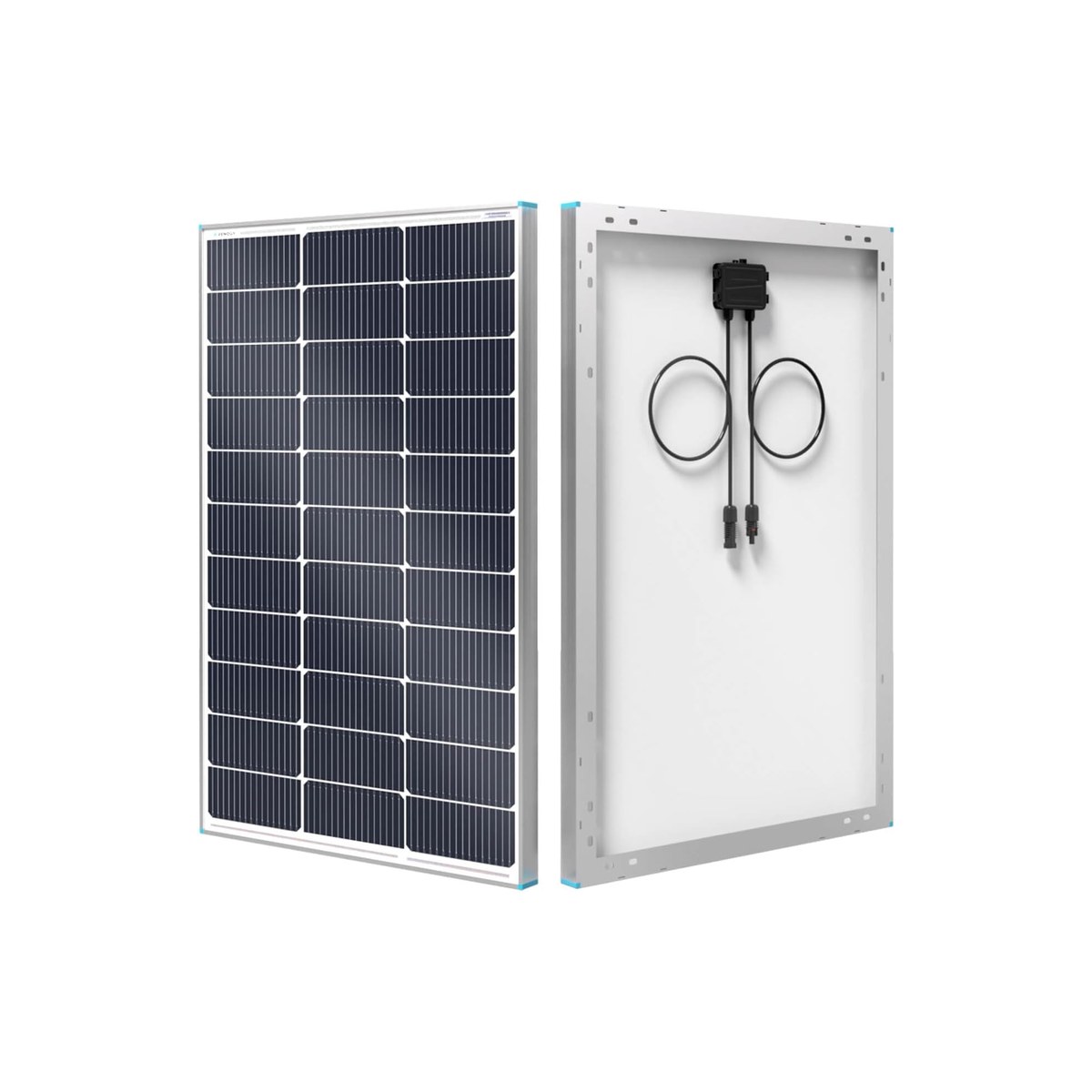
Renogy 100W 12V Monocrystalline (RNG-100D-SS, ASIN B07GF5JY35)
The compact, proven rigid panel most van roofs are built around.
Who it's for: This is the default rooftop panel for a van build. At 100W it is a module, not a finished system, and that is the point: you buy two for a 200W array, three or four for 300 to 400W, sizing to your roof and your draw. For a fridge, fans, lights, and device charging, two to four of these Renogy 100 watt solar panels is the common answer.
What we found: At 41.8 by 20.9 inches and about 14 pounds it is tuned for a van roof, where every inch around the fan and vents is contested. The cells are standard 22% mono, proven and durable, with IP65/IP67 weatherproofing and standard MC4 connectors that pair with any MPPT controller. Renogy's bracket, gland, and cable ecosystem is the deepest of any brand here, which quietly saves you time when you are sealing a roof. Plan on roughly 70 to 80 percent of the 100W rating in real flat-mount, heat-derated use.
Bottom line: If you want the safe, modular, well-supported rooftop panel and do not need to chase maximum efficiency, this is it, and it is the panel most first-time van builds end up standing on. Start with two for 200W and add a third or fourth as loads grow; standard MC4 wiring makes it easy. If your roof is tight and you want fewer, higher-output panels, step up to the BougeRV 200W N-type below; if you would rather not drill the roof at all, look at the EcoFlow portable.
- + 22% monocrystalline at about $88, with a 25-year-class build (2,400 Pa wind / 5,400 Pa snow load)
- + Compact 41.8 by 20.9 inches and about 14 pounds, sized so two fit side by side on a Transit or Sprinter roof
- + IP65 junction box and IP67 connectors; standard MC4 so it works with any MPPT controller
- + Renogy's bracket, gland, and cable ecosystem is the deepest here, which matters when you are wiring a roof
- × Standard 22% mono is now behind the 25% N-type cells in the BougeRV and Renogy's own N-type line
- × Like any rigid panel, it needs a separate MPPT charge controller (budget another $30 to $120)
- × 100W is a building block, not a whole system; most vans need two to four
Prices were accurate when we last checked and change often. The eBay figure is the lowest new listing we found, and its search can include newer or older models. We may earn a commission from these links, at no extra cost to you.
Runner-up: BougeRV 200W N-Type 16BB Bifacial (ASIN B0D4F2QLBK).
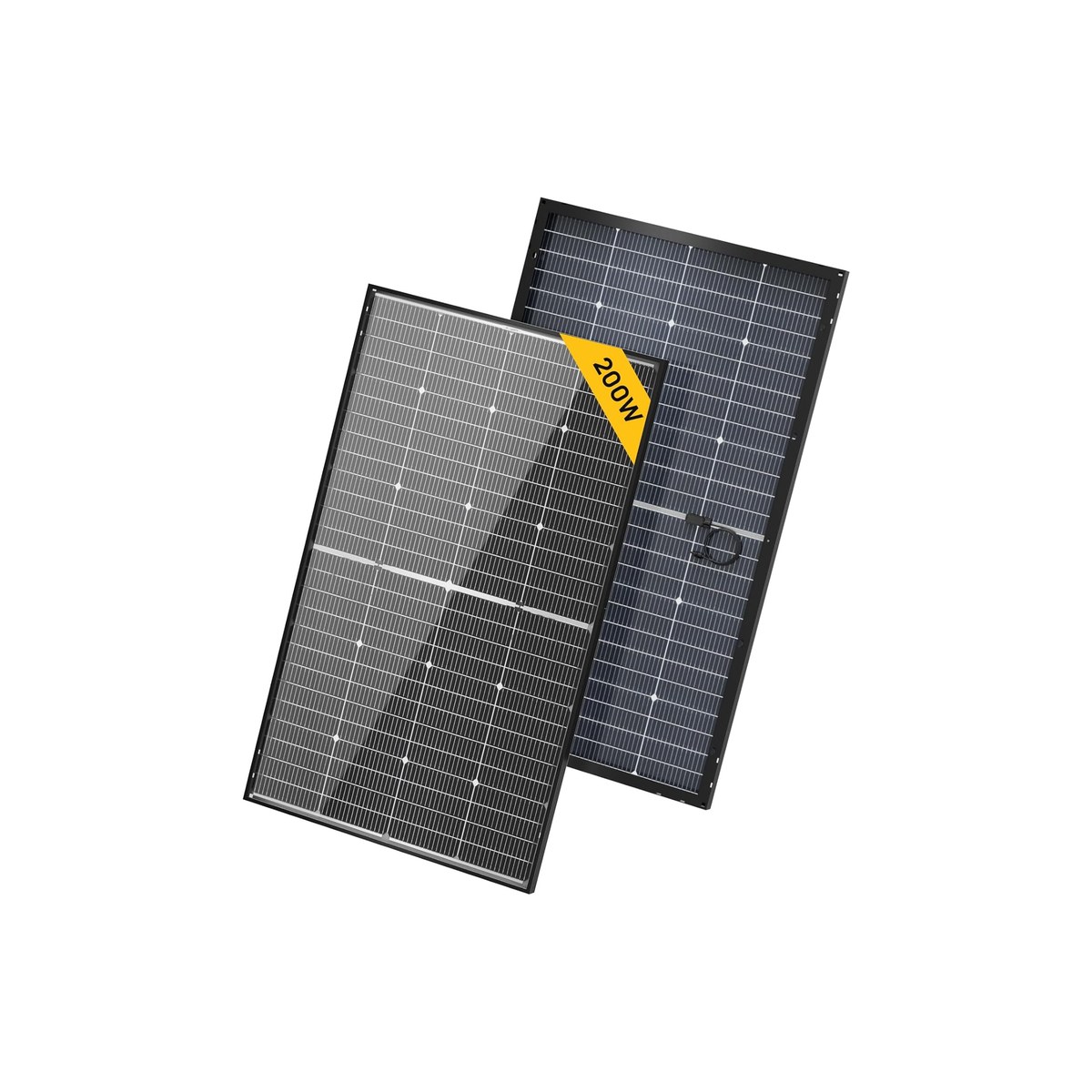
BougeRV 200W N-Type 16BB Bifacial (ASIN B0D4F2QLBK)
Twenty-five-percent cells and the smallest footprint per watt here.
Who it's for: When roof space is the binding constraint, not budget, this is the smart move. One or two 200W N-type panels deliver a serious array in less area than four 100W panels, leaving room for the fan, the vent, and the Maxxair. It suits a Transit or Sprinter build that wants 200 to 400W without tiling the whole roof.
What we found: The standout is the 25% N-type cell, the highest efficiency in this lineup, in a panel BougeRV says is up to 26 percent smaller than a conventional 200W. That compact, high-output combination is exactly what a crowded van roof rewards. The bifacial back side is largely wasted mounted flush, since there is no reflective ground under a roof, so treat this as a high-efficiency front-side 200W panel, not a bifacial bonus. It is rated to a 2,400 Pa load and uses standard MC4.
Bottom line: Buy this when you want maximum watts in minimum roof space and value the longer N-type lifespan, which is the right call for a high-draw build on a fan-crowded roof. The trade is that you are paying for the front-side efficiency, not the bifacial marketing, so judge it as a compact 200W panel. If you would rather build modularly with proven, cheaper blocks, the Renogy 100W is the safer default; if you want the cheapest panel that still works, the Newpowa is below.
- + N-type cells at 25% efficiency, the highest here, so you get more watts in the same roof area
- + Markedly compact for a 200W panel, which is the whole point on a fan-crowded van roof
- + N-type's longer rated service life (around 30 years) ages slower than standard P-type mono
- + About $180, cheaper per watt than buying two separate 100W panels in many cases
- × 22.8 pounds and a larger single panel; you want a clear roof span for it
- × Bifacial rear cells gain little flush on a roof (no reflective surface underneath), so you are really buying the 25% front side
- × Still needs a separate MPPT charge controller
Prices were accurate when we last checked and change often. The eBay figure is the lowest new listing we found, and its search can include newer or older models. We may earn a commission from these links, at no extra cost to you.
Budget pick: Newpowa 100W 12V Monocrystalline 9-Busbar (ASIN B09D74LL9T).
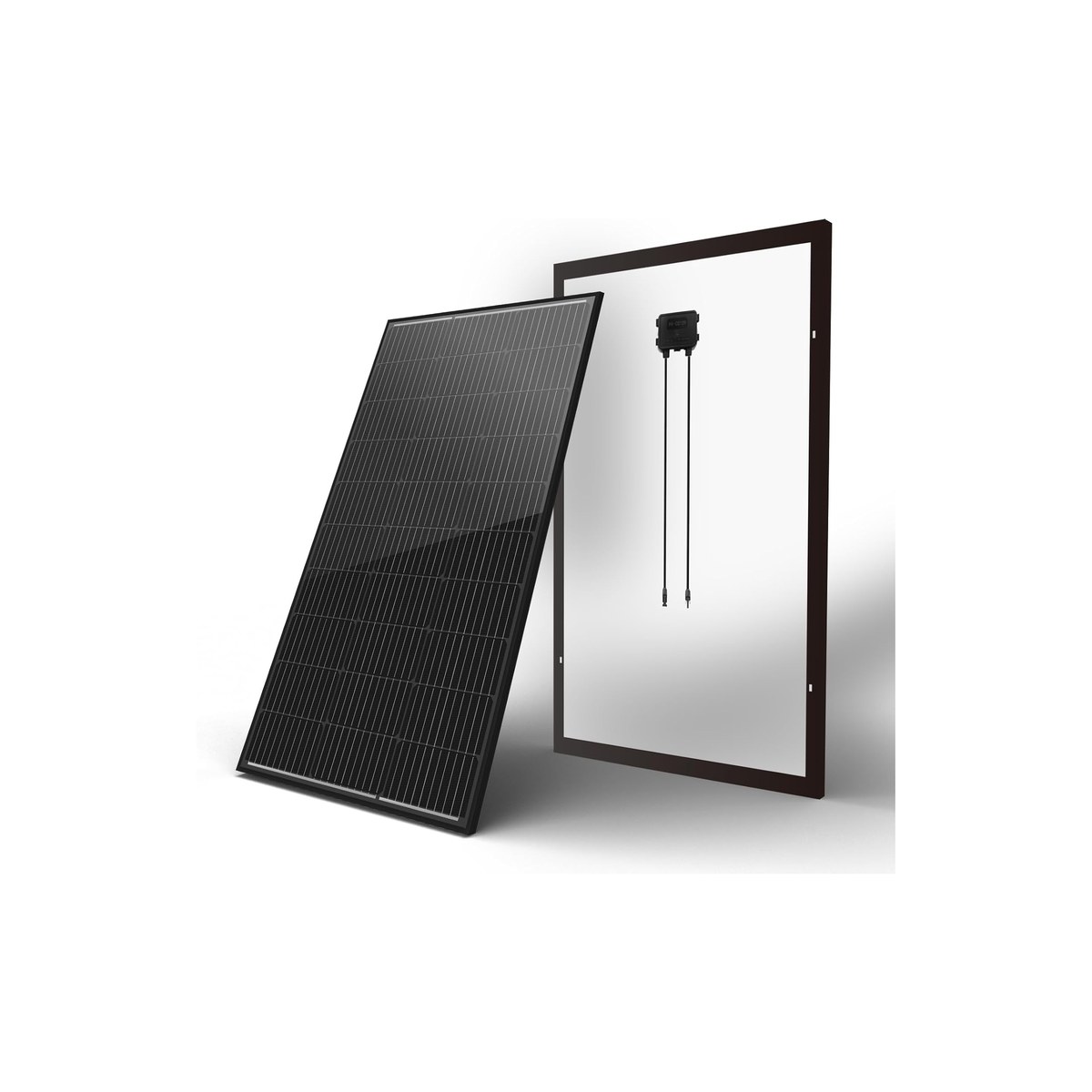
Newpowa 100W 12V Monocrystalline 9-Busbar (ASIN B09D74LL9T)
The cheapest credible mono panel here, and a tested performer.
Who it's for: The budget build. If you are wiring a van on a tight number and want an honest mono panel rather than a no-name with inflated watt claims, this is the one. It does the same job as the Renogy top pick for less money, trading brand support and a couple of efficiency points for the lowest credible price.
What we found: At about $70 it is the cheapest panel here that we would actually trust, and the trust is earned. Footprint Hero's hands-on test measured 68.6W at a weak December noon and called the build sturdy and well-made, with quality MC4 connectors and a solid junction box. The 9-busbar mono cells are a generation behind the N-type panels above but perfectly adequate flat-mounted, where you lose 20 to 30 percent to heat and angle anyway. It mounts in the same footprint as the Renogy, so a two-up 200W array costs you well under $200 in panels.
Bottom line: If price is the deciding factor and you want a tested, durable mono panel rather than a no-name gamble, buy the Newpowa and put the savings toward a better charge controller. If you want the deeper bracket-and-support ecosystem or plan to expand the array over time, the small upcharge for the Renogy 100W is worth it. If you want efficiency over price, the BougeRV N-type is the move.
- + About $70, the lowest credible price here, roughly $18 under the Renogy 100W
- + 9-busbar mono with a sealed junction box; a tester called it sturdy and well-built
- + Standard size and MC4, so it drops into the same two-up roof layout as the Renogy
- + Independently bench-tested (Footprint Hero measured 68.6W at weak winter noon), so the value is real, not just cheap
- × No higher-efficiency cells and a thinner support ecosystem than Renogy
- × Finished mid-pack on raw output in head-to-head testing
- × Needs a separate MPPT charge controller, like any rigid panel
Prices were accurate when we last checked and change often. The eBay figure is the lowest new listing we found, and its search can include newer or older models. We may earn a commission from these links, at no extra cost to you.
Also worth considering.
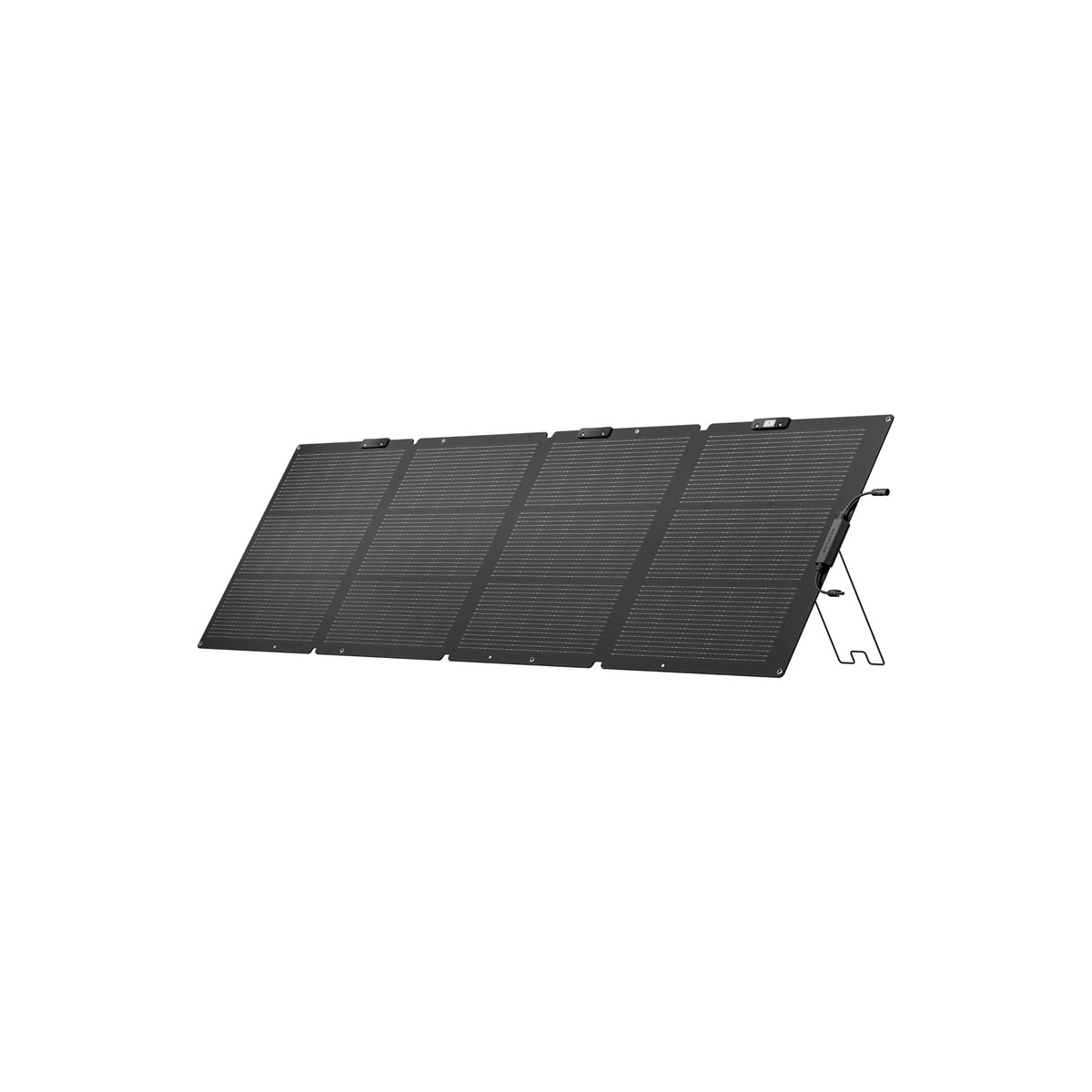
EcoFlow 220W NextGen Bifacial Portable (ASIN B0D2H94PS6)
Fold it out, aim it at the sun, no roof drilling or charge controller.
Who it's for: The no-install path. If you run a portable power station instead of a wired house bank, or you rent and cannot modify the roof, a portable panel is the whole answer: unfold it when you park, plug it into the station, and the station's built-in charge controller does the rest. No MPPT to buy, no holes in the roof.
What we found: The NextGen 220W uses N-type cells at 25 percent efficiency and an IP68 rating, the toughest here, with an adjustable kickstand case. Because you tilt a portable panel toward the sun and a roof panel cannot, real-world harvest per rated watt is often better than a flat roof panel. The trade is weight and price: about 20 pounds and $299, a clear upcharge per watt over rigid panels, and it takes interior space when packed. If you already own a Jackery station, the Jackery SolarSaga 200W is the plug-and-play equivalent. For a smaller fold-down option, a portable 100 watt solar panel covers a laptop-and-phone load, and a Renogy portable solar panel or a Jackery portable solar panel pairs with most power stations too.
Bottom line: This is the easy on-ramp, and it pairs directly with the power station from our companion guide. Buy it if you want solar without a roof project. If you are committing to a permanent build, rooftop rigid panels cost less per watt and never need setting up.
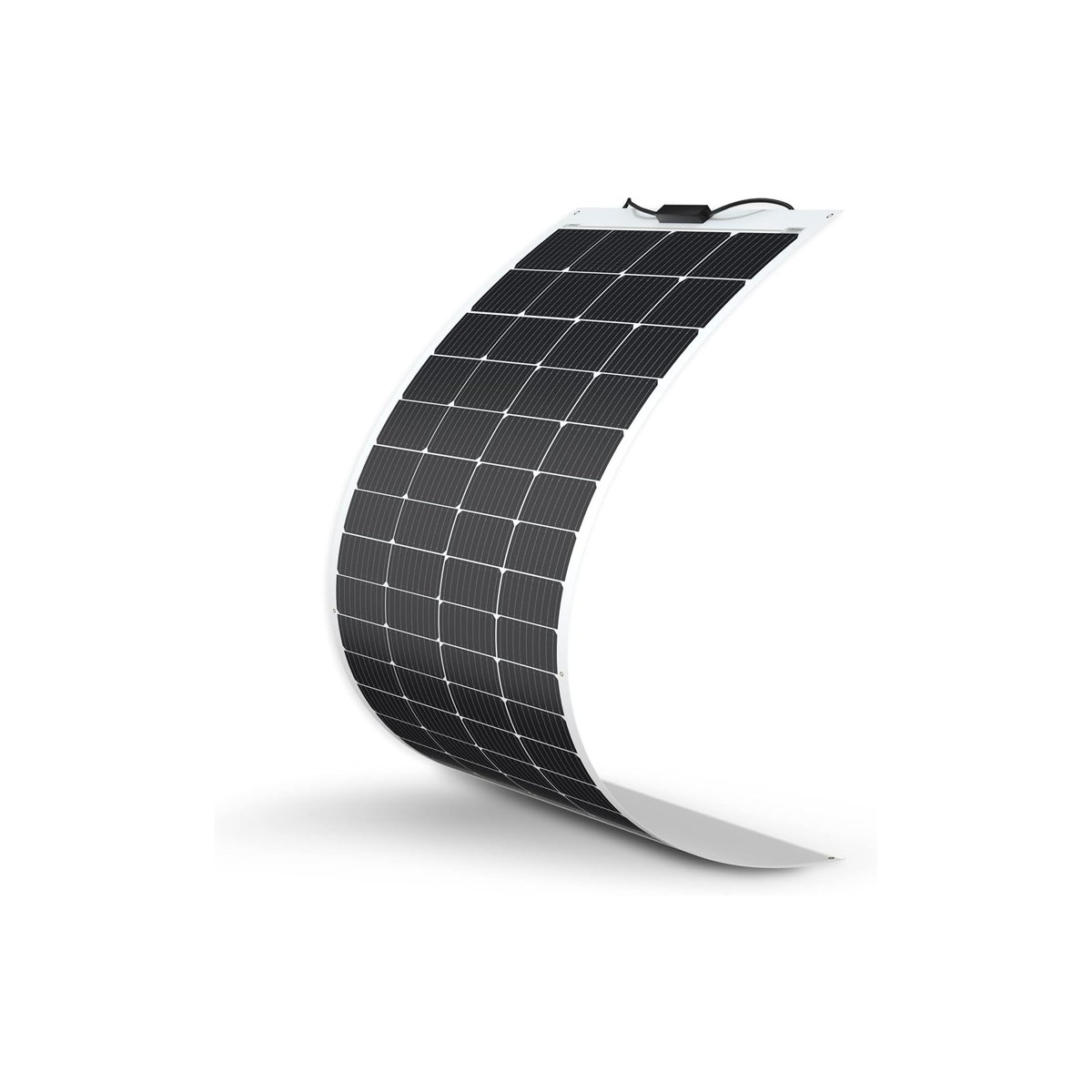
Renogy 200W Flexible 240° (ASIN B0DXPMFNDN)
Stealth and curve-hugging, but the shortest-lived panel here.
Who it's for: The narrow case where rigid will not work. A high-roof Sprinter or ProMaster with a pronounced crown, or a stealth build that cannot show panels or drill the roof, is where a flexible panel earns its place. It flexes up to 240 degrees, weighs a fraction of a rigid 200W, glues down flush, and disappears. The listing is even sold for vans by name.
What we found: Here is the honesty this category needs. Flexible panels are the short-lived option, and it is not close. Glued flat to the roof they get no airflow underneath, so they run hot, which both derates output and accelerates delamination. Warranties run one to five years against twenty-five for rigid, and a flexible panel glued flat often lasts roughly 8 to 15 years instead of 25-plus, with poorly mounted ones delaminating within a few years from edge-lift and road vibration. At about $308 this 200W flexible costs more than the BougeRV 200W rigid and lasts a fraction as long. The standard fix is to mount it on a thin corrugated-plastic spacer for an air gap, which helps but does not erase the trade.
Bottom line: Buy a flexible panel only when your roof shape or a stealth requirement genuinely rules out rigid, and go in knowing you may replace it in a few years. If your roof can take a rigid panel at all, the Renogy 100W or BougeRV 200W will outlast it many times over for less money.
Skip this guide if...
You might not need rooftop solar at all. If you mostly camp where you can plug in, or you only get out a few weekends a year, a portable power station you recharge at home covers you without a roof project. If you drive most days, a DC-to-DC charger that tops your house battery from the alternator while you move can do more than a small solar array, for less. And if you are renting the van or cannot modify the roof, the portable EcoFlow panel above is the whole solution. Rooftop solar pays off for people who park off-grid for days at a time; for everyone else it can be over-building.
Don't bother with.
- × Skip Gluing a flexible panel straight onto bare van metalWith no air gap the panel runs hot, which both cuts output and accelerates delamination, the exact heat-driven failure that shortens a flexible panel's life from decades to a few years. If you must run flexible, mount it on a thin corrugated-plastic spacer for airflow.
- × Skip No-name panels under $50 per 100W with vague watt claimsSub-credible panels routinely overstate wattage and ship weak cells that fade fast; the listed watts rarely survive a load test. The Newpowa 100W at about $70 is the floor for a panel we would trust.
- × Skip Oversizing the array before you know your daily watt-hoursMost van-builders buy too many panels and too little battery. Size the array to your measured daily use and your worst-case sun hours first; four 100W panels feeding a tiny battery is wasted money and roof space.
How we picked.
How we picked: real output, van-roof fit, and a straight take on flexible
Every panel leads with a rated wattage, but a van roof never sees rated conditions. We weighted the things that actually decide a van build: real output after heat and a flat mount take their cut (plan on 70 to 80 percent of the rating), physical size and weight against a small, fan-crowded roof, mount type (rigid, flexible, or portable), cell efficiency, and weatherproofing. We cross-read manufacturer spec sheets against hands-on sources that measure output, including Footprint Hero's bench tests, FarOutRide, and EXPLORIST.life, and treated measured numbers as the tiebreaker.
The lineup is built around the decision a van-builder actually faces, which is not brand but mount type. Most roofs want rigid panels; curved or stealth roofs sometimes need flexible; renters and power-station users want portable. We picked the best in each, and we are blunt about the flexible trade-off because the category is full of roundups that are not.
How many solar panels does a camper van need?
Start from your daily watt-hours, not a panel count. Add up each load: a 12V fridge is the big one at roughly 30 to 60 amp-hours a day, plus fans, lights, a laptop, and a water pump. Most one or two person van builds land around 700 to 1,200 watt-hours a day. A rough rule: 100 watts of panel produces about 30 amp-hours, or 350 watt-hours, in a decent day of sun, but plan for 70 to 80 percent of that in the real world.
The four-step version: add up your daily watt-hours, divide by your worst-case peak sun hours (use four, not six, to size for cloudy and shoulder seasons), add a 30 percent buffer for heat and angle losses, and that is your panel wattage. A setup pulling 1,200 watt-hours a day comes out near 400 watts of panel, which is two 200W panels or four 100W. Pair that with roughly 100 amp-hours of lithium battery per 200 watts of solar.
Rigid vs flexible vs portable solar panels for a van
Rigid panels are the default: cheapest per watt, longest-lived (around 25 years), and the most efficient, at the cost of needing a clear, flat-ish roof span and a few bolt holes. Flexible panels solve a shape problem, conforming to a curved high roof and gluing down flush for a stealth profile, but they run hot, derate, and delaminate, with warranties a fraction of rigid. Portable panels solve an install problem: you set them out when you park, tilt them at the sun, and skip the roof entirely.
For most van builds the answer is rigid on the roof. Reach for flexible only when a curved roof or a stealth requirement genuinely rules rigid out. Reach for portable when you run a power station, rent the van, or want zero roof modification, and accept the price-per-watt upcharge for the convenience.
Do you need a charge controller, and what size?
Every rooftop or flexible panel needs a charge controller between it and the battery; the panel puts out raw, variable DC that will cook a battery without regulation. Use an MPPT controller, not the cheaper PWM type: MPPT harvests roughly 20 to 30 percent more energy and pays for itself within a year on any array over 100 watts. Portable panels paired with a power station are the exception; the controller is built into the station, which is why they are the simplest path.
Size the controller by total panel watts divided by battery voltage, times a 1.25 safety margin. A 400W array on a 12V system comes to 400 divided by 12, which is 33 amps, times 1.25, so buy a 50A MPPT. Renogy, Victron, and similar all make van-appropriate units; match the amperage to your final array, not your first panel. If matching parts feels fiddly, a camper van solar panel kit bundles the panel, an MPPT controller, brackets, and cable together; a van solar panel kit usually costs a little more than sourcing the pieces yourself but removes the guesswork.
Monocrystalline vs N-type: which cell for a van?
All five picks use monocrystalline cells; the split that matters now is standard mono (around 22 percent efficient) versus the newer N-type or TOPCon cells (around 25 percent). N-type fits more watts into the same roof area and is rated for a longer service life, which is why the BougeRV 200W and EcoFlow 220W use it. Two years ago N-type was a price upcharge; in 2026 it is close to standard mono, so on a space-constrained van roof it is often the better buy.
The practical read: if roof space is tight, pay the small N-type upcharge for more watts per square foot. If you are building modularly on a budget with room to spare, standard mono like the Renogy or Newpowa 100W is proven and cheaper. Either way, ignore bifacial claims on roof panels; the rear cells gain almost nothing mounted flush over a non-reflective roof.
Mounting van solar panels without drilling the roof
You do not have to drill a van roof to mount rigid panels. The common no-penetration method is to bond the mounting brackets or corner mounts to the roof with a structural adhesive sealant such as Sikaflex or VHB tape rated for the load, then run the cable in through an existing gland or a sealed entry. Done properly it holds at highway speed and keeps the roof watertight, which is why many converters prefer it to lag bolts.
Flexible panels glue down directly, but as covered above, glue them to a thin corrugated-plastic spacer rather than straight to the metal so air can move underneath. Whatever the mount, leave room around roof fans and vents, and route cables to a single sealed entry point rather than several.
Sizing panels to a Sprinter, Transit, or ProMaster roof
Roof real estate varies by van, and it sets your ceiling. A high-roof Sprinter or Transit has room for three to four 100W rigid panels or two 200W panels around the fans, which covers most full-time builds. A ProMaster's wider, flatter roof fits panels well. A compact or stealth build with a crowded roof is where the compact BougeRV 200W N-type or a flexible panel earns its place, fitting more watts or conforming to the shape.
Lay out your fans, vents, and any roof rack first, then fit panels to what is left, not the other way around. It is easy to buy four panels and find only three fit once the Maxxair and a vent are in place.
FAQs.
Q01 How many solar panels does a camper van need?
+
Q02 What can a 100 watt solar panel actually run?
+
Q03 Do I need a charge controller for van solar panels?
+
Q04 Are flexible solar panels worth it on a van?
+
Q05 Should I use rooftop panels or a portable panel with a power station?
+
Q06 Monocrystalline or N-type solar panels for a van?
+
Q07 How do I mount solar panels on a van roof without drilling?
+
Q08 How much solar can a Sprinter or Transit roof hold?
+
Q09 Does a van solar panel charge the starter battery too?
+
If you, then this.
- IF You want the proven, modular rooftop defaultGET Renogy 100W (RNG-100D-SS)$88 →
- IF You want max watts in the least roof spaceGET BougeRV 200W N-Type Bifacial$180 →
- IF You want the cheapest panel still worth trustingGET Newpowa 100W 9BB$70 →
- IF You would rather not drill the roof (and run a power station)GET EcoFlow 220W NextGen Portable$299 →
- IF Your roof is curved or stealth and rigid will not fitGET Renogy 200W 240° Flexible$308 →
RV & Van Gear: The Complete Guide
The whole-rig picture →Every system in a van, RV, or camper, organized in one place, with the safety and weight floor and the one guide we trust for each.
- Best 100W Solar Panels, tested head-to-head · Footprint Hero
- How to Install Solar Panels on a Camper Van Conversion · FarOutRide
- How to Design and Install Solar on a Camper Van · EXPLORIST.life
- How Much Solar Do I Need? (sizing guide) · Battle Born Batteries