Best 12V Coffee Makers: 5 Picks, and the Honest Power Math (2026)
A 12V coffee maker plugs into your rig's socket and brews off the battery, no shore power needed. The catch nobody prints: heating water is the most power-hungry thing a small appliance does, so a 12V drip maker pulls 14 to 16 amps, runs at the limit of a cigarette-lighter fuse, takes 20 to 45 minutes for a pot, and costs 5 to 11 amp-hours a brew. For most RVers that is the wrong trade. We ran the amp-hour math, read the forums where RVers actually settle this, and verified every listing live on Amazon on June 13, 2026. The honest finding no listicle says out loud: the best coffee in most rigs is not a 12V electric maker at all. It is a manual brewer and a heat source that fits your power, which is why a $50 AeroPress leads this guide and the one true 12V drip is ranked last, on purpose.
- 01 AeroPress Go (B07YVL8SF3) , top pick, the honest best for most RVers, 4.7/12,900, zero amps, ~$50
- 02 OutIn Nano (B0BRKFWPF3) , the cordless electric, self-heating battery espresso, ~$150
- 03 Stanley Classic French Press 48oz (B0B12H6B73) , the group pot, stays hot 4 hours, ~$55
- 04 Coleman Stainless Percolator 12-Cup (B0009PUQSM) , the campfire classic, stovetop, no filters, ~$67
- 05 Dometic PerfectCoffee MC 052 (B00V3G91L4) , the one true 12V drip, ranked last on purpose, ~$160
How they compare.
| Rank | Product | Best for | Price | Our score |
|---|---|---|---|---|
| 01 | AeroPress Go (B07YVL8SF3)
Top Pick
| best overall, the manual brewer most RVers should actually own, zero amps | $49.95
Buy → | 9.2/10 |
| 02 | OutIn Nano (B0BRKFWPF3) | the cordless electric, heats its own water off an internal battery | $149.99
Buy → | 8.7/10 |
| 03 | Stanley Classic French Press 48oz (B0B12H6B73) | the group pot, 4 to 6 cups, insulated to stay hot four hours | $54.68
Buy → | 8.6/10 |
| 04 | Coleman Stainless Percolator 12-Cup (B0009PUQSM) | the big-group campfire classic, stovetop or propane, no filters | $66.82
Buy → | 8.4/10 |
| 05 | Dometic PerfectCoffee MC 052 (B00V3G91L4) | the literal answer: a true 12V drip, ranked last on its amp cost and 3.9 rating | $159.95
Buy → | 7.8/10 |
Prices are current Amazon prices at time of publication and can change. Scores reflect our editorial evaluation, not vendor input.
Our #1 pick: AeroPress Go Portable Coffee Maker Kit, Manual Press Brewer for Travel and Camping, Brews in About Two Minutes (ASIN B07YVL8SF3).
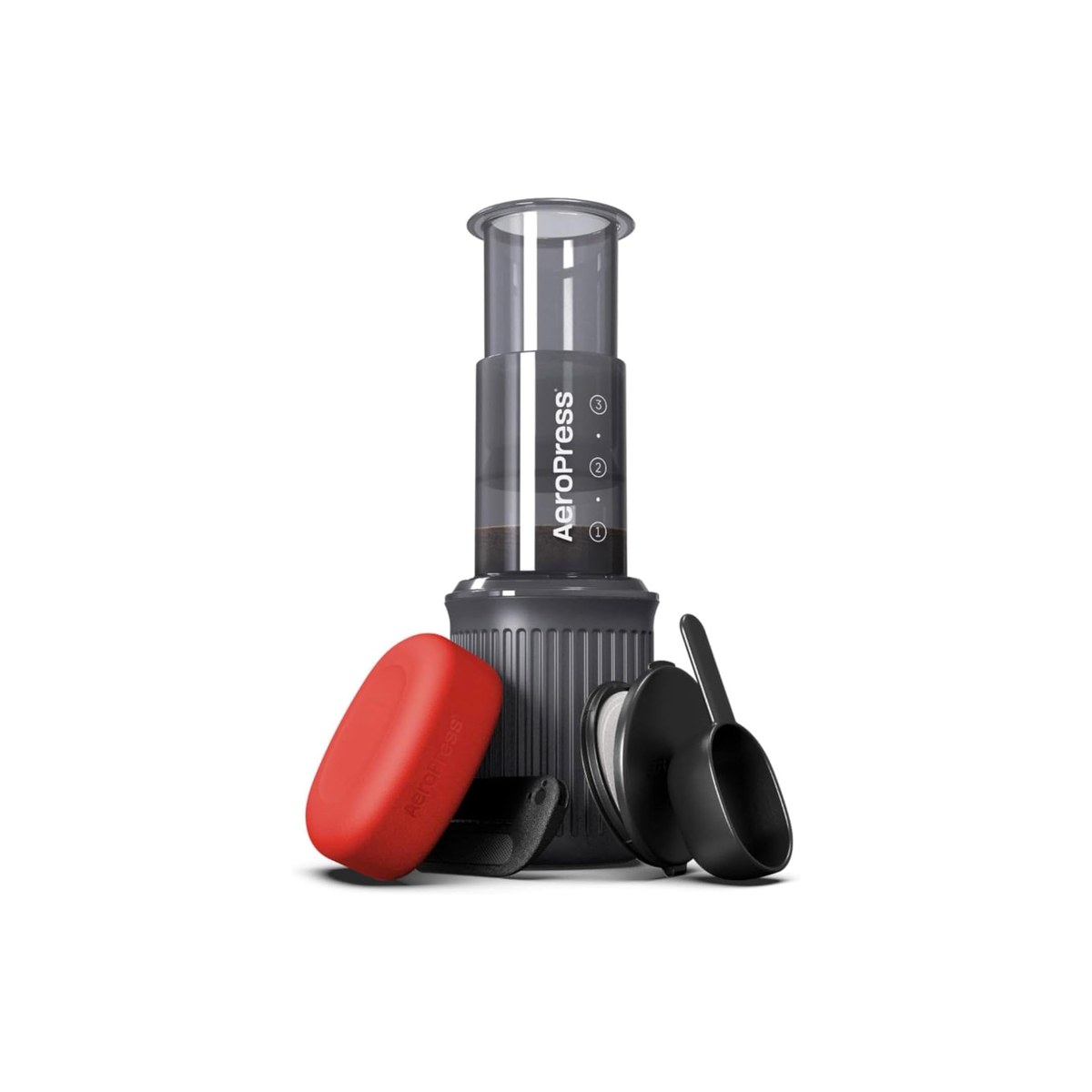
AeroPress Go Portable Coffee Maker Kit, Manual Press Brewer for Travel and Camping, Brews in About Two Minutes (ASIN B07YVL8SF3)
The honest best coffee in most rigs, and it pulls zero amps.
Who it's for: Almost everyone, which is why a manual brewer leads a guide about 12V coffee makers. The AeroPress Go is what serious boondockers, van-lifers, and the RV forums land on after they try the 12V electric route and watch it drain the battery: a press that makes a clean, low-bitterness cup in two minutes and pulls nothing from your power system.
What we found: It is the highest-rated, most-reviewed coffee maker we found in any RV-relevant category, 4.7 stars across nearly 13,000 ratings, and the reason is simple, it makes better coffee than a 12V drip maker, faster, with zero battery cost. The only input it needs is hot water, which on the road comes fastest from a propane stove, two cups in three to four minutes for two to four cents of fuel. Pair it that way and you have skipped the entire amp-hour problem the rest of this category fights. At $49.95 it is also the cheapest pick here.
Bottom line: Buy the AeroPress Go if you want the best coffee-to-effort-to-power ratio on the road, which is most people. Heat your water however suits your rig, a propane stove is fastest and uses no battery, and keep a hand grinder aboard if you care about freshness. If you genuinely want a one-button electric machine and have the battery for it, read on, but try the press first, it is $50 and it is what the experienced crowd actually uses.
- + 4.7 stars across nearly 13,000 ratings, the deepest, highest-rated record of anything in this guide by a wide margin
- + Zero amps: it is a manual press, so it never touches your battery, you supply hot water from any source
- + Brews in about two minutes, packs into its own mug, and rinses clean in seconds, the travel-coffee standard for a reason
- × Needs hot water from somewhere, so it is a brewer, not a one-button machine, and heat it on a 12V kettle instead of propane and you re-enter the amp-hour math, a propane stove is what keeps this at true zero-battery cost
- × Makes one mug at a time, a family wants the French press or the percolator below instead
- × Plastic press and scoop feel utilitarian next to a steel espresso machine, this is camp gear, not a countertop showpiece
Runner-up: OutIn Nano Portable Electric Espresso Machine, Self-Heating Battery Coffee Maker, USB-C Rechargeable, Ground Coffee and Capsule (ASIN B0BRKFWPF3).
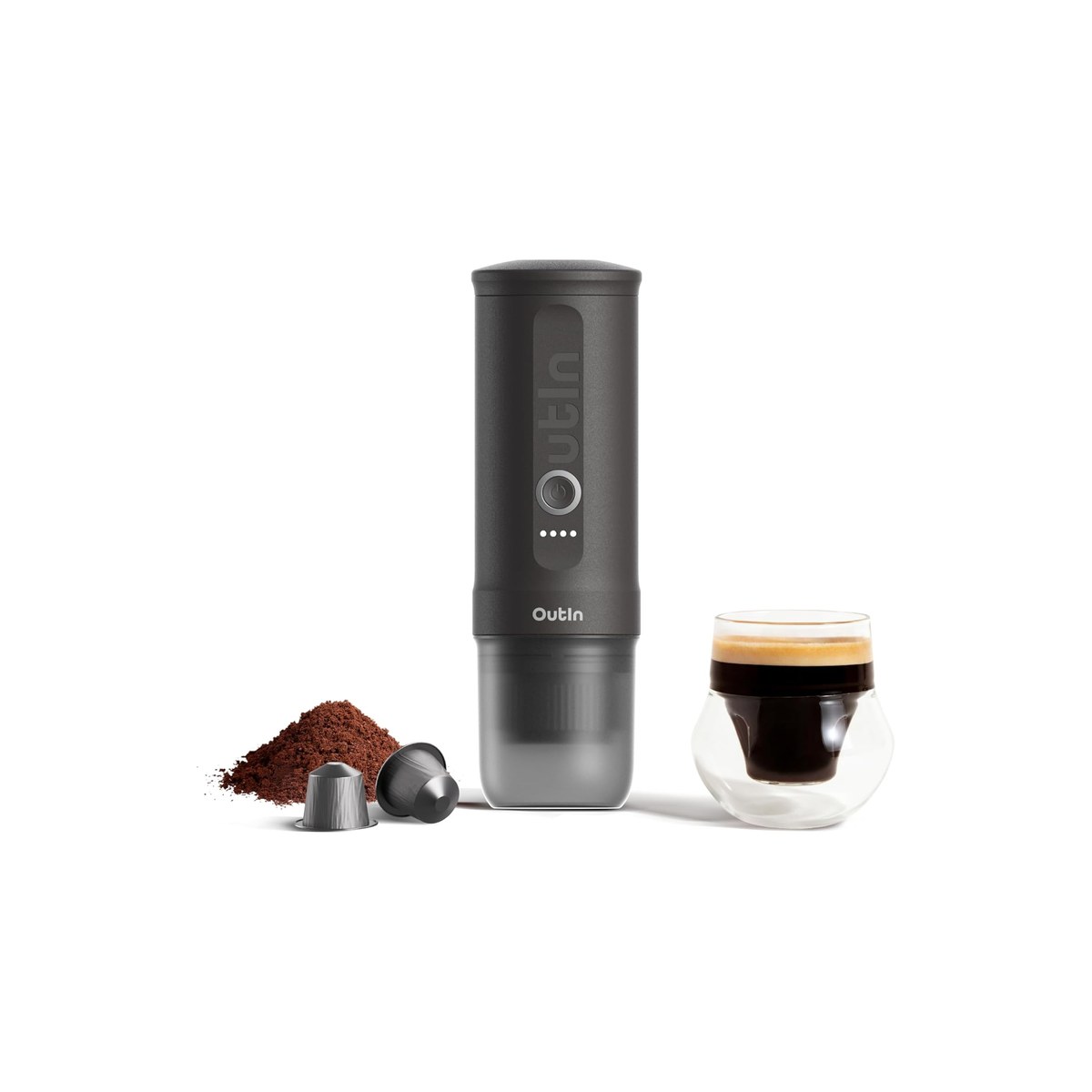
OutIn Nano Portable Electric Espresso Machine, Self-Heating Battery Coffee Maker, USB-C Rechargeable, Ground Coffee and Capsule (ASIN B0BRKFWPF3)
One-button electric, without wiring or a battery drain.
Who it's for: The camper who wants the convenience of push-button electric coffee but has read the amp-hour math and does not want a 14-amp drip maker hanging off the house battery. The OutIn Nano sidesteps the whole problem: it heats its own water from an internal rechargeable battery and tops that battery up from a 12V USB-C port, so the brew itself never draws from your bank.
What we found: It is the rare electric coffee maker that fits RV power honestly, because the energy-hungry heating happens off a battery you recharge on your own schedule, not off the house bank mid-brew. It makes genuine espresso from grounds or capsules in about three minutes, packs to the size of a water bottle, and carries a 4.3-star rating across more than 5,000 reviews, real proof for a niche device. The trade is scope and price: $149.99 buys one small shot at a time, so it is a solo or couple's gadget, not a family brewer, and it is one more battery to keep alive.
Bottom line: Buy the OutIn Nano if you want electric, one-button coffee and the self-heating battery design instead of a socket-draining drip maker, and you are happy with espresso-sized servings. Keep it charged off the 12V port as you drive. If you would rather not manage another battery at all, the AeroPress makes a better cup for a third of the price, you just bring your own hot water. The BougeRV battery drip is the K-cup alternative if pods matter more than espresso.
- + Self-heating off an internal rechargeable battery, the only electric pick here that heats its own water and pulls nothing from the house bank in use
- + Charges from a 12V USB-C port, so the rig tops it up without taxing the battery during the brew
- + 4.3 stars across more than 5,000 ratings, genuine espresso in about three minutes, packs small
- × $150 for one shot at a time, the most expensive way here to make a single small coffee
- × Espresso-style and small, not a pot, a group still wants the French press or percolator
- × Not truly free either: topping it up from the 12V port costs the house bank an amp-hour or two per charge, far less than the Dometic's 14-amp direct draw and on your schedule, but a dead battery means no coffee until it recharges
Budget pick: Stanley Classic Stay-Hot French Press 48oz, Insulated Stainless Steel, Mesh Filter, Makes 4 to 6 Cups (ASIN B0B12H6B73).
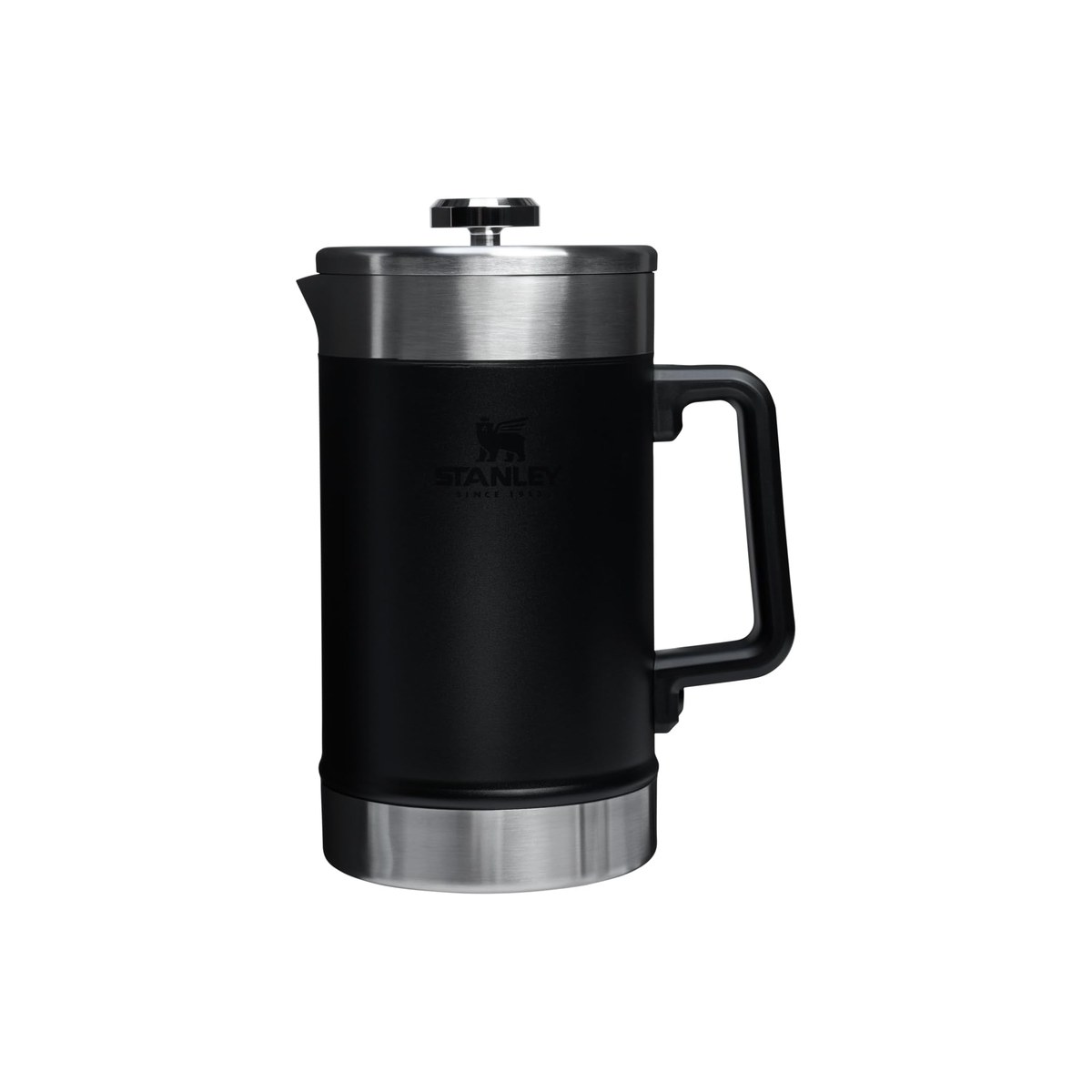
Stanley Classic Stay-Hot French Press 48oz, Insulated Stainless Steel, Mesh Filter, Makes 4 to 6 Cups (ASIN B0B12H6B73)
A real pot for the group, stays hot for hours, zero amps.
Who it's for: The couple or family for whom one mug at a time is not enough. The Stanley Classic French Press makes 48 ounces, four to six cups, in a single brew, and its insulated stainless body keeps the pot hot for hours while everyone surfaces at their own pace. It is the group answer to the AeroPress's solo cup, and like the AeroPress it costs your battery nothing.
What we found: It is the durable, proven group brewer, 4.4 stars across more than 6,400 ratings, stainless instead of breakable glass, with a vacuum-insulated wall that the listing rates to hold heat for four hours, which on a cold morning means coffee that is still hot at second cups. It needs hot water like any press, so it pairs with a propane stove or a kettle, and the only real quirk is the fine grit a French press leaves in the last pour, tamed with a coarser grind. At $54.68 it is barely more than the AeroPress and serves four times the people.
Bottom line: Buy the Stanley when the rig has more than one coffee drinker and you want a pot that stays hot without power, the insulated steel is the right call over glass for travel. Heat the water on the stove, use a coarse grind, and you have group coffee with zero amp-hours spent. For a single drinker the AeroPress is faster and cleaner; for a big crowd around a fire, the Coleman percolator below scales further.
- + 48 ounces, four to six cups in one brew, the group answer where the AeroPress and OutIn make one at a time
- + Insulated stainless steel keeps the pot hot up to four hours, and there is nothing to break on a washboard road
- + 4.4 stars across more than 6,400 ratings, zero battery cost, just add hot water
- × Like any press, you supply the hot water, a propane stove or kettle, it is not a one-button machine
- × French press grit in the last pour is the format's nature, a coarser grind helps
- × Heavier and bulkier than the AeroPress, this is the stay-in-camp pot, not the backpacking brewer
Also worth considering.
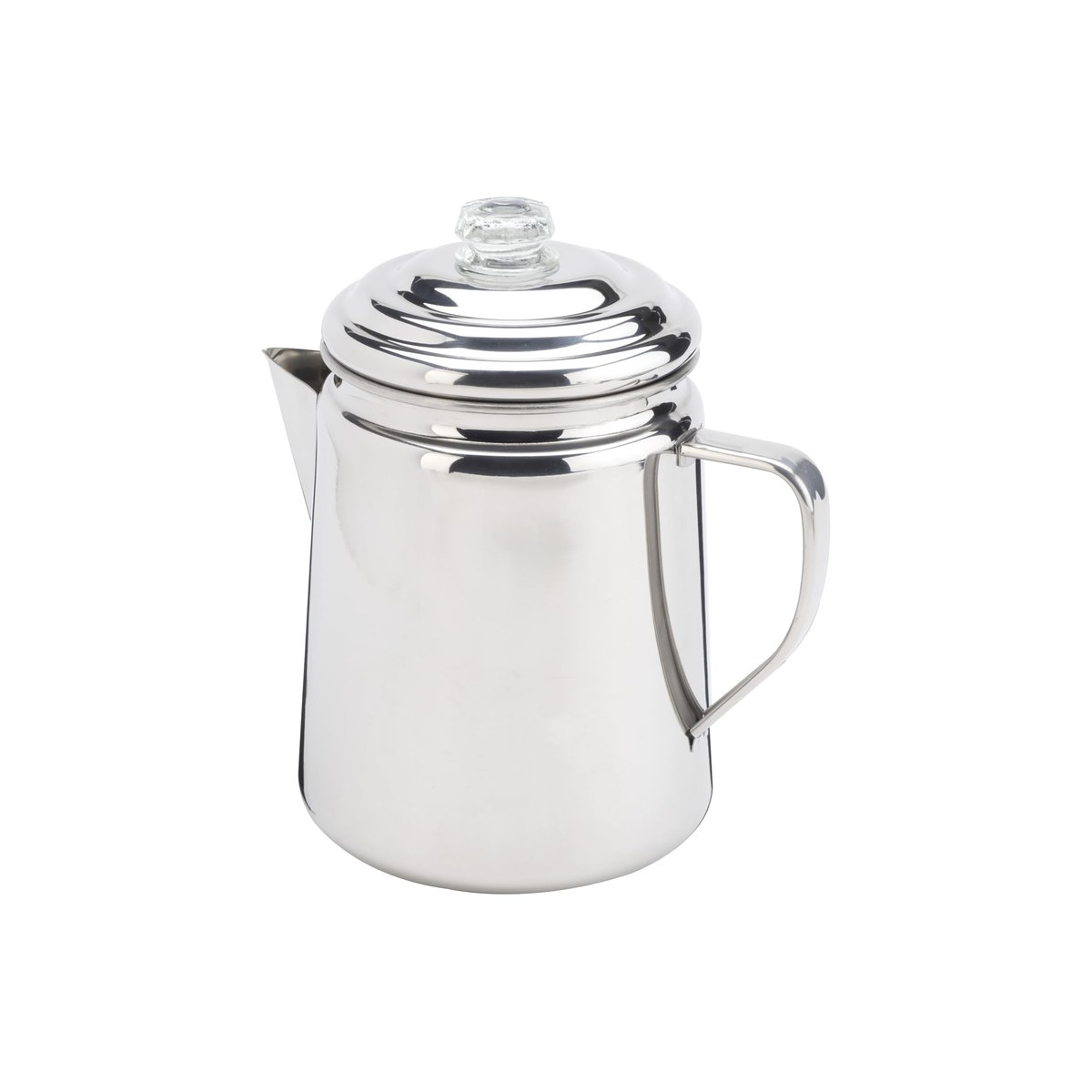
Coleman Stainless Steel Coffee Percolator, 12-Cup, Stovetop and Campfire, No Filters Needed (ASIN B0009PUQSM)
Twelve cups over a flame, no power, no filters.
Who it's for: The big group, the campfire crowd, and the RVer who likes the ritual of a percolator burbling away on the stove. The Coleman 12-cup stainless percolator scales past every other pick here, brewing a full dozen cups over a propane burner or directly on a campfire grate, with no paper filters to pack along and nothing electric to fail on a cold morning.
What we found: It is the durable group-and-campfire classic, 4.5 stars across more than 4,000 ratings, stainless steel that shrugs off camp abuse, and a no-filter design that means one less consumable aboard. It heats on any flame, a propane stove brings it up in minutes, and the percolator action is the old-school method that a lot of RVers grew up on and never left. The trade-offs are the format's: percolators can over-extract if you let them run long, and 12 cups is more pot than a couple needs, so this is the crowd pick, not the solo one.
Bottom line: Buy the Coleman percolator when you are brewing for a group or you simply prefer the campfire-pot ritual, and pull it off the heat as soon as it perks to avoid bitter coffee. It uses no battery and no filters, the whole point for off-grid camps. A couple is better served by the French press or AeroPress; bring it when the campsite is full of people.
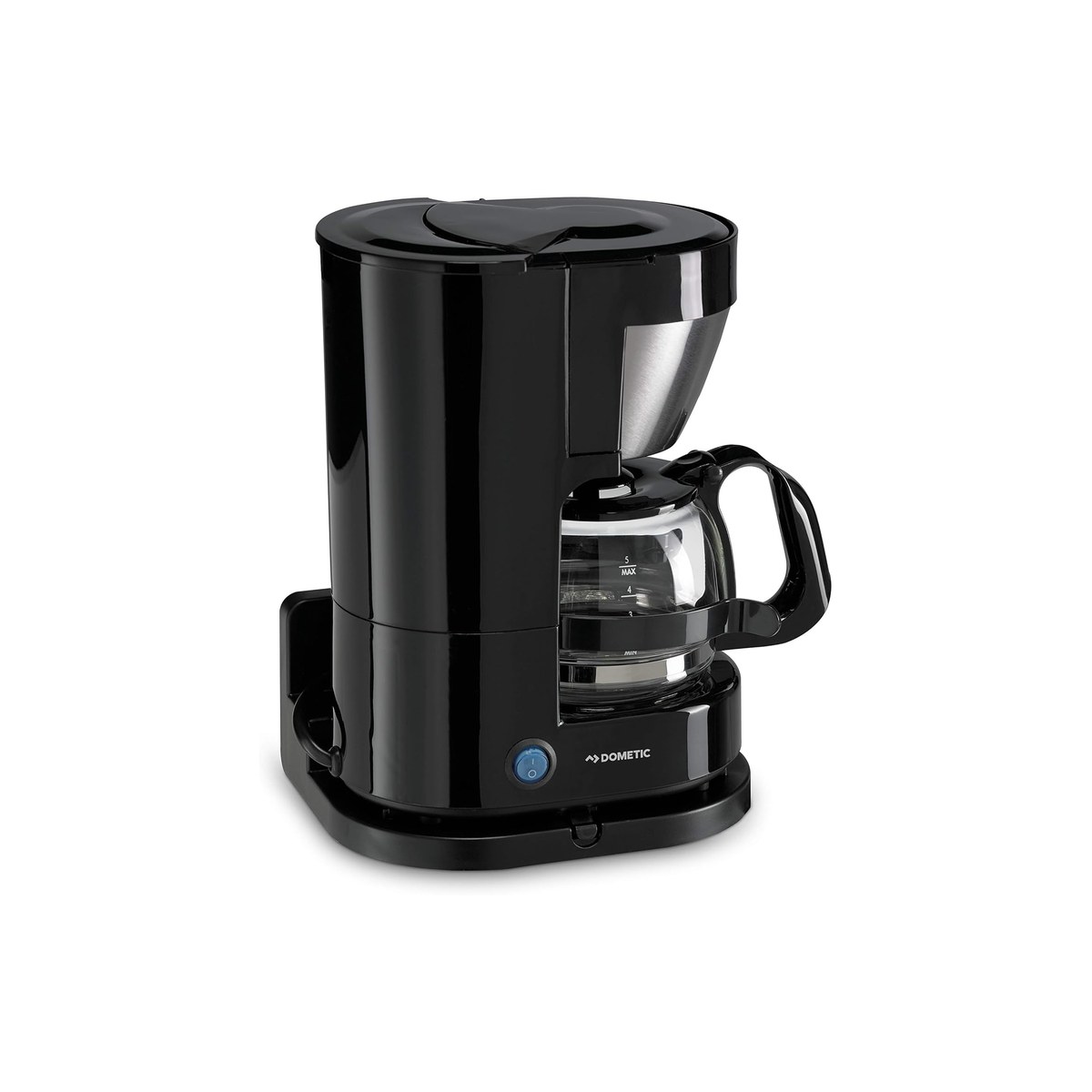
Dometic PerfectCoffee MC 052 Five-Cup 12V Drip Coffee Maker, Plugs Into a 12-Volt Socket (ASIN B00V3G91L4)
The one true 12V drip: 14 amps, 25 minutes, ranked last on purpose.
Who it's for: The buyer who searched for a 12V coffee maker and means it literally, a drip machine that plugs into the cigarette-lighter socket and brews a pot. It makes the most sense for the trucker brewing while the engine runs, or the hookup camper on shore power, where the amp cost lands on the alternator or the pedestal, not a house battery you have to refill.
What we found: The Dometic MC 052 is the genuine-brand version of this product, a 5-cup 12V drip maker, and it is the least-bad of a weak lane, which is why it is here and ranked last. It draws about 170 watts, 14 amps, which runs a 15-amp socket at its limit and blows a 10-amp one, and it takes around 25 minutes for a pot, a brew that costs 5 to 11 amp-hours off a battery. Its 3.9-star rating across more than 2,500 reviews reflects exactly that, slow, power-hungry, with a glass carafe to baby on rough roads. The classic RoadPro alternative rates worse and sells at a broken price.
Bottom line: Buy the Dometic only if a plug-in-and-walk-away 12V drip is genuinely what you want and your power comes from an engine or a hookup, not a battery bank you are trying to conserve. Wire it to a 15-amp-plus socket, accept the wait, and protect the carafe in transit. For anyone on batteries, the picks above make better coffee for less power, which is the entire reason this one sits at the bottom of the list.
Skip this guide if...
Skip the 12V-electric idea entirely if you boondock on a modest battery bank: a 12V drip maker costs 5 to 11 amp-hours a pot, and those are amp-hours your fridge and lights need more than your coffee does. The honest move off-grid is a manual brewer plus a propane stove, which costs zero battery and two to four cents of fuel a brew. And skip this whole guide if you only camp on shore power in a rig with a 120V outlet, just use a normal kitchen coffee maker, the 12V question only matters when wall power is not there.
Don't bother with.
- × Skip Expecting a 12V Keurig that plugs into the socketThere is no true 12V Keurig, and the listings that imply one are misleading. Keurigs are 120-volt machines that pull around 1,470 watts during the heating cycle, so running one in an RV means a 2,000-watt-plus inverter and a battery bank that can deliver roughly 144 amps at 12 volts for the brew, not a cigarette-lighter socket. That is a real setup for a shore-power-equivalent rig, but it is an inverter project, not a 12V coffee maker. If pods are non-negotiable and you do not want the inverter, a battery-powered unit like the OutIn or a BougeRV K-cup brewer is the closer fit, they brew off an internal battery you recharge, not off a socket.
- × Skip The cheap 12V drip maker on a tight batteryA 12V resistive-heating drip maker draws 14 to 16 amps and takes 20 to 45 minutes to brew a small pot, which works out to 5 to 11 amp-hours of battery for one round of coffee. On a 100Ah lithium bank with about 90 usable amp-hours that you also need for the fridge, the pump, the lights, and charging, spending a tenth of it on coffee is a poor trade, and the forums that live this, iRV2 and Good Sam among them, say so bluntly. If your power is an engine alternator or a shore hookup, fine. If it is a battery you are rationing, brew manual.
- × Skip Plugging a 14-amp maker into a 10-amp socketMost 12V drip makers draw about 14 amps, and many car cigarette-lighter sockets are fused at 10. The result is a blown fuse at best and, as RV forums document, a melted socket at worst. RV and truck sockets are often 15 or 20 amps and can handle it, but a 14-amp load on a 15-amp circuit is running at the edge, with no margin for a dirty or corroded contact. Check your socket's fuse rating before you buy any 12V heating appliance, and for anything over 14 amps, wire it to the battery directly rather than trusting a socket.
- × Skip Believing the five-minute brew claimsSome 12V drip listings advertise a five-minute brew. The physics says no: heating 20 ounces of water from cold with 170 watts simply takes longer than that, and independent testing of 12V kettles backs it up, even a 350-watt unit needs about eight minutes to boil and draws 29 amps on a hardwired connection, not a socket, and the common 150-watt-rated units actually draw 180 to 200 watts and take 20 to 25 minutes. A 12V drip maker realistically takes 20 to 45 minutes for a pot. The only way to hit five minutes is to pour in water you already boiled, which defeats the machine. Plan for the real number, or brew manual and skip the wait.
How we picked.
Sources we read and how we picked
We started from the power math, because in this category it decides everything: heating water is the most energy-hungry thing a small appliance does, so we recorded wattage, amp draw at 12 volts, and brew time for every electric option, then checked them against independent kettle-power testing and the RV forums where owners settle this in practice. We verified every listing live on Amazon on June 13, 2026, price, rating, review count, and what the product actually is, since this SERP is thick with 120-volt makers and Keurigs mislabeled as 12V.
Our filter, in order: honest power cost a real battery bank can carry, then coffee quality and proof of it in reviews, then fit to a buyer's setup. That order is why a manual AeroPress leads a guide titled for 12V coffee makers, it makes a better cup for zero amps, and why the one true 12V drip sits last, it is the literal answer to the search but the worst answer for most rigs. We rank the thing people ask for where its real-world quality and amp cost put it, and tell you plainly when the better tool is not the one you typed into the search box. The AeroPress earns the highest score we have given a Road pick, 9.2, because it wins on every axis the filter uses at once, zero amps, the deepest review record here by far, and near-universal fit. Among the manual picks the Stanley edges the Coleman for the number-three slot on review depth, more than 6,400 ratings to the percolator's 4,100 at the same star level, and because a couple or family is the more common rig than a percolator-sized crowd.
The power math: why heating water on 12V is the whole problem
Heating water is watt-intensive, and a 12-volt system makes it worse, because the same power means a big current. A typical 12V drip maker draws 170 to 190 watts, which is 14 to 16 amps at 12 volts, and that single fact drives everything: it runs a 15-amp cigarette-lighter socket at its limit and blows a 10-amp one, and because 170 watts is a fraction of a home maker's 1,000-plus, it brews slowly, 20 to 45 minutes for a pot. The amp-hour cost lands at 5 to 11 amp-hours per brew, which on a 100Ah lithium bank, with about 90 usable amp-hours at 90 percent depth of discharge shared with the fridge and lights, is a meaningful bite for a cup of coffee.
Independent testing makes the inefficiency concrete: a March 2026 measured comparison found 12V kettles rated at 150 watts actually drew 180 to 200 and took 20 to 25 minutes to boil, while a better-insulated 350-watt unit boiled in about eight minutes using less total energy, insulation beats voltage, but 350 watts is 29 amps and needs a hardwired battery connection, not a socket. The contrast that frames this whole guide: an AeroPress plus a propane stove boils two cups in three to four minutes for two to four cents of fuel and zero battery amps. That is why, for anyone rationing battery, the honest 12V-coffee answer is to not heat water on 12 volts at all.
The four ways to make coffee in a rig, and who each is for
There are really four lanes. True 12V electric drip makers plug into the socket and brew unattended, the literal answer and the reason most searches for a 12V coffee maker for a car or truck exist, best for the trucker on engine power or the hookup camper, worst for the battery-rationing boondocker, and represented here by the Dometic, ranked last. A few rigs mount one under the cabinet as a built-in, but it draws the same 14 amps wherever it sits. Battery-powered electrics like the OutIn Nano heat their own water off an internal battery you recharge from a 12V port, sidestepping the house-battery drain, the honest electric pick. Manual brewers, the AeroPress and French press, pull zero amps and need only hot water, which is why the experienced crowd lands on them. And stovetop methods, the percolator and moka pot, brew over a propane flame for groups.
The decision is your power situation, not your taste. On shore power, anything works, including a normal 120V maker, the 12V question is moot. On an engine alternator, a 12V drip makes sense because the alternator replaces what you draw while you drive. On solar with a big lithium bank, a 12V or battery unit is sustainable. But on a modest battery you are rationing, the math is decisive: brew manual, heat water on propane, and spend those amp-hours on the fridge. The pod question lands here too, a Keurig is a 120-volt, 1,470-watt machine that needs a 2,000-watt inverter, the class our RV inverters guide sizes and picks, not a 12V socket.
FAQs.
Q01 What is the best 12V coffee maker?
+
Q02 How many amps does a 12V coffee maker draw?
+
Q03 Can I plug a 12V coffee maker into my cigarette lighter socket?
+
Q04 Can I run a Keurig in my RV?
+
Q05 Will a 12V coffee maker drain my battery?
+
Q06 What is the best coffee maker for boondocking with no power?
+
Q07 Is a 12V kettle better than a 12V drip coffee maker?
+
If you, then this.
- IF you want the best coffee in most rigs for the least powerGET AeroPress Go (B07YVL8SF3; manual, 2-min brew, zero amps, bring hot water)$49.95 →
- IF you want one-button electric without wiring or a battery drainGET OutIn Nano (B0BRKFWPF3; self-heating off its own battery, charges from 12V USB-C)$149.99 →
- IF you need a real pot for a couple or familyGET Stanley Classic French Press 48oz (B0B12H6B73; 4-6 cups, stays hot 4 hours, zero amps)$54.68 →
- IF you are brewing for a big group over a flameGET Coleman Stainless Percolator 12-Cup (B0009PUQSM; stovetop or campfire, no filters)$66.82 →
- IF you genuinely want a plug-in 12V drip and run on engine or shore powerGET Dometic PerfectCoffee MC 052 (B00V3G91L4; 14 amps, needs a 15A-plus socket, baby the carafe)$159.95 →
- IF you boondock with no power and want the honest setupGET AeroPress or French press above, plus heat water on the propane stove, zero battery amps$0 →
- IF you must have a pod machine like a KeurigGET A Keurig needs a 2,000W inverter, not a 12V socket, our RV inverters guide picks and sizes that class$0 →
RV & Van Gear: The Complete Guide
The whole-rig picture →Every system in a van, RV, or camper, organized in one place, with the safety and weight floor and the one guide we trust for each.