Best Wireless Lavalier Mics: The 5 We'd Film a Van, RV, or Boat With (2026)
If you film your travels from a van, RV, or boat, your phone or camera mic picks up the whole cabin and the wind, so your voice comes out thin and distant. A small wireless mic fixes that: clip a transmitter to your shirt and your voice stays clean and close. The catch nobody mentions is reliability. A 2.4GHz wireless link bounces off a metal hull and drops out, so the feature that matters most in a rig is onboard recording, a backup track saved to the mic itself that survives a dropped signal. We don't run a lab. We read the owner-review signal across Amazon and the maker specs for 2026, weighted for a creator filming from a rig, and ranked 5 from a $79 phone pick to a $199 system that records its own 32-bit backup. Two of the five record that safety track; the cheaper three do not, which we flag on each.
- 01 DJI Mic 2 , top pick, two-person system with 32-bit onboard backup, about $199
- 02 Rode Wireless GO III , the camera pick, same onboard 32-bit backup, lighter kit
- 03 DJI Mic Mini , best budget, cheapest and most-reviewed, for phone filming
- 04 Hollyland Lark M2 , value two-person kit, every receiver in the box
- 05 Rode Wireless Micro , simplest phone pick, includes furry deadcats
How they compare.
| Rank | Product | Best for | Price | Our score |
|---|---|---|---|---|
| 01 | DJI Mic 2
Top Pick
| Best overall, onboard backup | $199
Buy → | 8.8/10 |
| 02 | Rode Wireless GO III | Camera rig, 32-bit backup | $177
Buy → | 8.6/10 |
| 03 | DJI Mic Mini | Cheapest, deepest reviews | $79
Buy → | 8.6/10 |
| 04 | Hollyland Lark M2 | Value two-person kit | $99
Buy → | 8.4/10 |
| 05 | Rode Wireless Micro | Simplest phone pick | $86
Buy → | 8.3/10 |
Prices are current Amazon prices at time of publication and can change. Scores reflect our editorial evaluation, not vendor input.
Our #1 pick: DJI Mic 2 (2 TX + 1 RX + Charging Case).
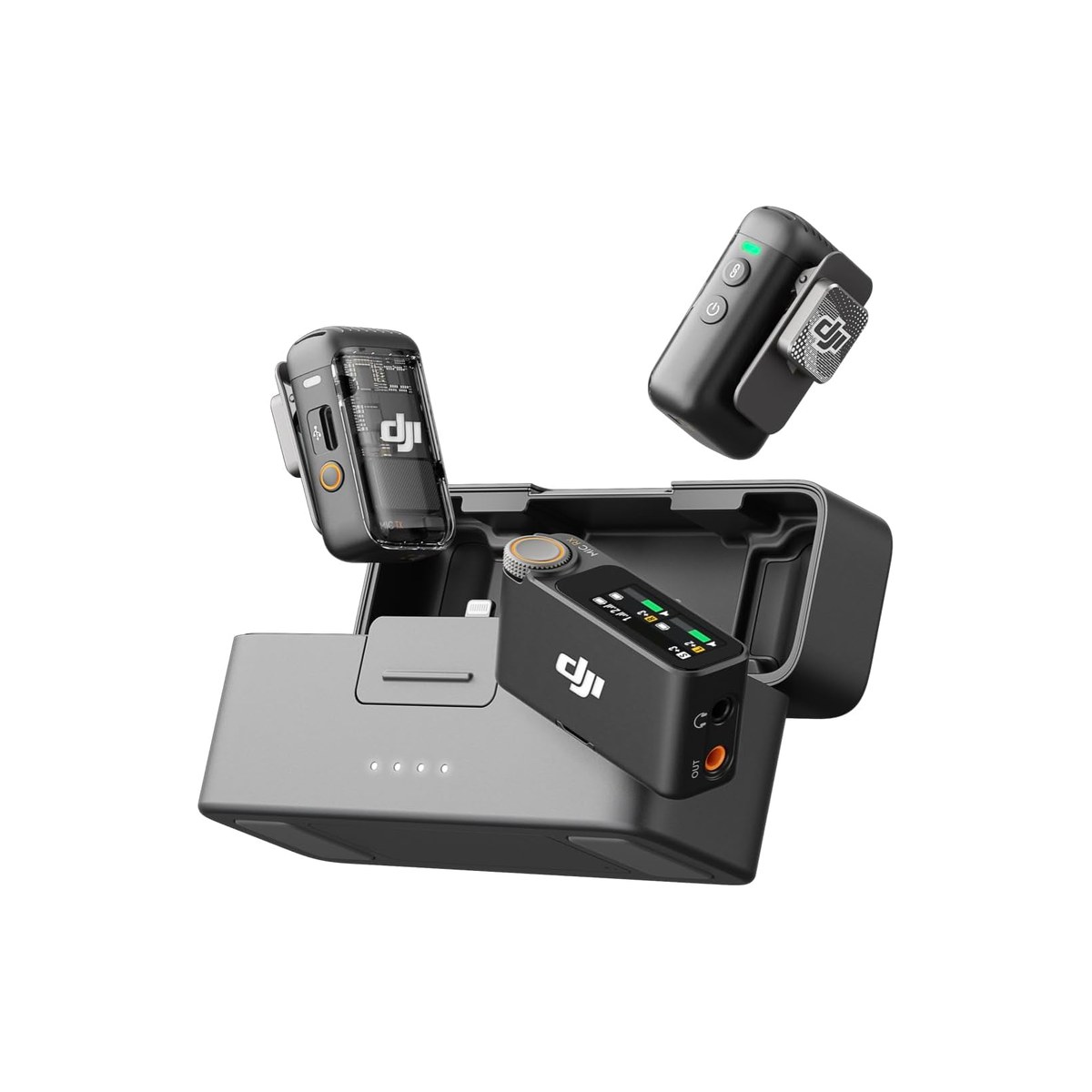
DJI Mic 2 (2 TX + 1 RX + Charging Case)
A two-person system that records a 32-bit backup so dropouts never ruin a take.
Who it's for: the creator who films their travels and cannot afford to lose audio to a dropout. The pick for the vanlifer or liveaboard who vlogs, records walkthroughs, or interviews a passenger, wants two clip-on transmitters for two people, and films around a metal rig where a wireless signal will glitch, so a mic that saves its own backup track is worth the spend.
What we found: the DJI Mic 2 is the most reliable run-and-gun system for a rig, and the reason is the backup. Each transmitter records a 32-bit float track to 8GB of onboard memory, so even if the 2.4GHz link drops out, you still have a clean file to drop into the edit. It is a two-transmitter kit with a charging case, plugs into a phone or a camera, reaches about 250m line-of-sight, and over 4,900 owners rate it 4.7 stars at about $199. The honest catch is that the furry deadcat you need for outdoor wind is a separate purchase, and the newer DJI Mic 3 now exists but still has too few reviews to trust yet.
Bottom line: buy the DJI Mic 2 if you film seriously from a rig and want the safety net of a backup track, and at about $199 with two transmitters it is the most you should need to spend. Add a furry deadcat for outdoor shoots. Step up to the Rode Wireless GO III if you shoot mostly on a camera, or save with the DJI Mic Mini if you film on a phone and can re-shoot a rare dropout.
- + Records a 32-bit float backup track to each transmitter
- + Two clip-on transmitters, charging case, phone and camera ready
- + About 250m range and strong noise cancelling
- + 4.7 stars across nearly 5,000 owners at about $199
- × Furry deadcat for outdoor wind is a separate purchase
- × Pricier than the no-backup phone kits
- × The newer DJI Mic 3 exists but is unproven
Runner-up: Rode Wireless GO III (Gen 3).
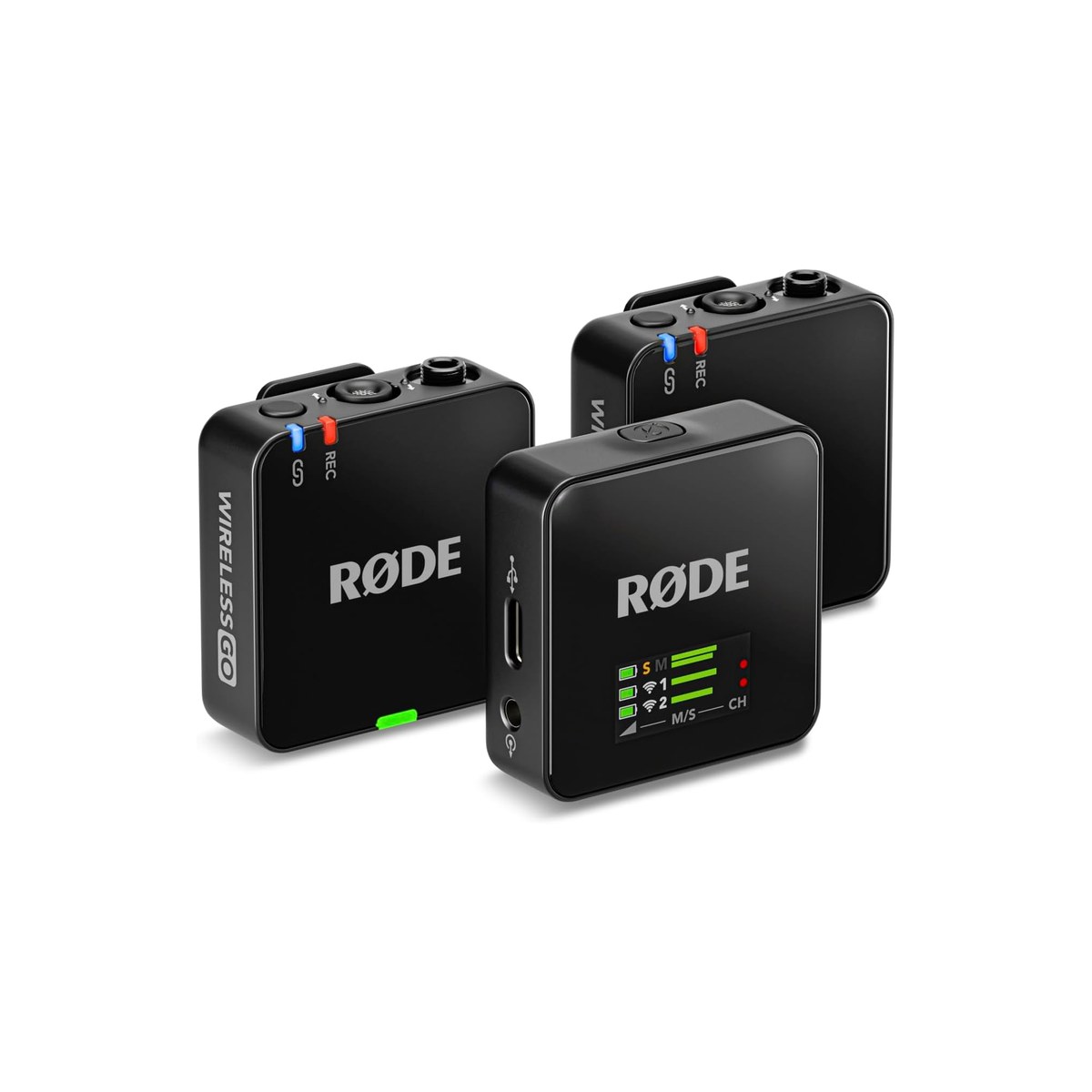
Rode Wireless GO III (Gen 3)
The camera shooter's pick, same onboard 32-bit backup in a smaller kit.
Who it's for: the creator who films mostly on a mirrorless or DSLR camera and wants the same backup-track safety net in a smaller, lighter kit. The pick for the rig videographer who mounts a receiver on a hotshoe, shoots b-roll and pieces to camera, and wants 32-bit float recording so a blown level or a dropped signal is fixable in post rather than re-shot.
What we found: the Rode Wireless GO III is the camera-first alternative to the DJI Mic 2, and it brings the same headline feature, 32-bit float recording onboard, so a clip is recoverable even if the wireless feed glitches near the rig. It is smaller and lighter than the DJI, has a locking 3.5mm output that will not pull free on a bouncing rig, runs auto level control for hands-off shooting, and rates 4.6 stars at about $177. The catches are a shallower review base than the DJI pair and a receiver workflow that suits a camera better than a phone, so a phone-only creator is better served elsewhere.
Bottom line: buy the Rode Wireless GO III if you film on a camera and want the backup-track insurance in the lightest kit here. It is the videographer's pick. For most rig creators, though, the DJI Mic 2 costs about the same, plugs into a phone just as easily, and has a far deeper owner record, so reach for the Rode only if a camera is your main tool.
- + Same 32-bit float onboard backup as the DJI Mic 2
- + Smaller and lighter, with a locking 3.5mm camera output
- + Auto level control for hands-off shooting
- + 4.6 stars at about $177
- × Receiver workflow suits a camera better than a phone
- × Shallower review base than the DJI kits
- × Deadcat for wind sold separately
Budget pick: DJI Mic Mini (2 TX + 1 RX + Charging Case).
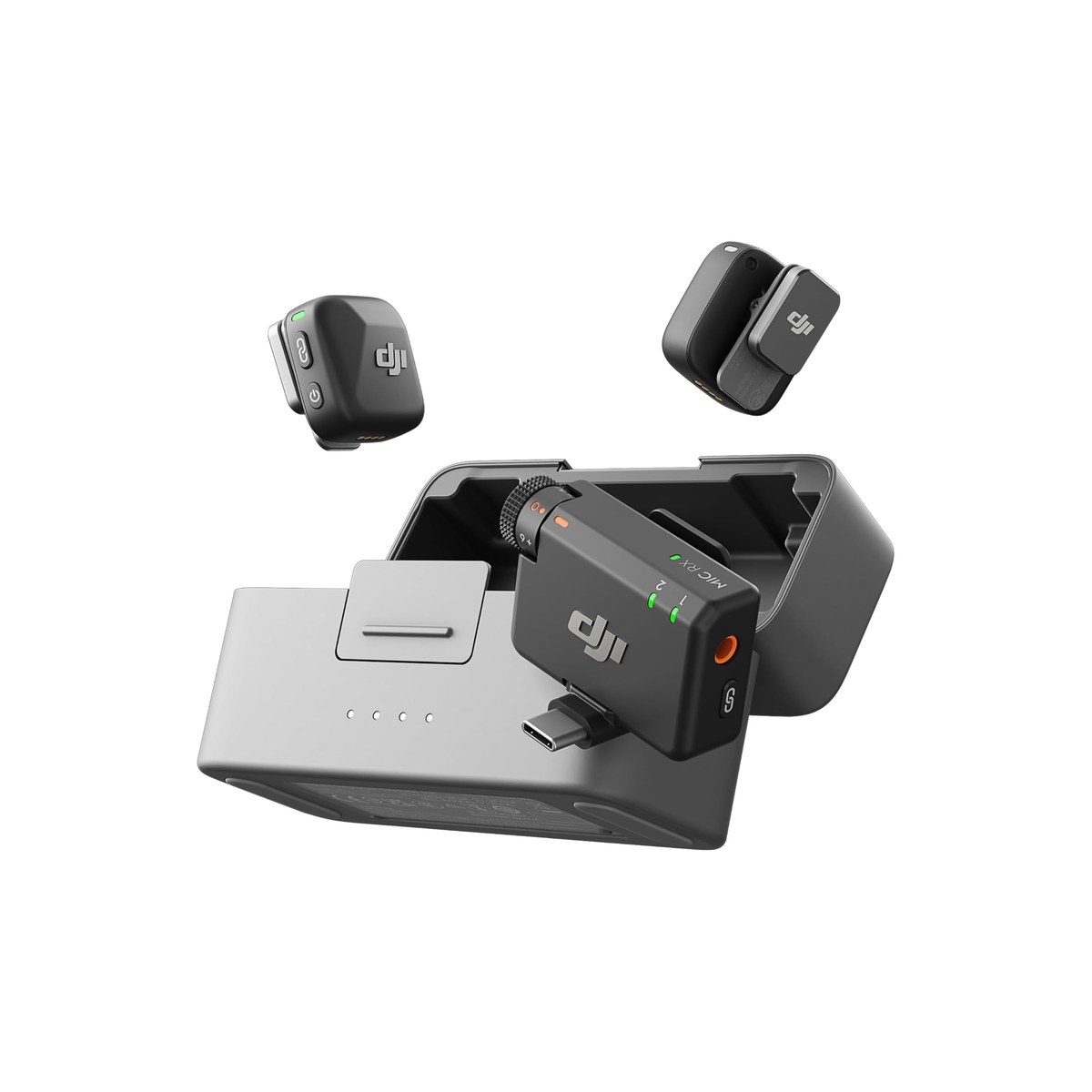
DJI Mic Mini (2 TX + 1 RX + Charging Case)
The cheapest, most-reviewed mic here, tiny and made for phone filming.
Who it's for: the creator who films on a phone and wants clean, clip-on audio for the least money, without needing a backup track. The pick for the new vanlife vlogger or the casual creator who shoots short clips, can re-shoot if a rare dropout happens, and wants the smallest, longest-lasting kit that plugs straight into a phone or a camera.
What we found: the DJI Mic Mini is the value champion, and the owner record proves it, over 9,000 ratings at 4.7 stars, the deepest and cheapest here. It is a two-transmitter kit with a charging case that plugs into an iPhone, Android phone, or camera, weighs almost nothing clipped to a collar, runs noise cancelling, and lasts up to 48 hours with the case, which matters off-grid. The honest gap is the one this guide cares about most: it does not record an onboard backup track, so if the wireless link drops you lose that audio. For casual clips you can re-shoot, that is a fair trade for $79.
Bottom line: buy the DJI Mic Mini if you film on a phone, want clean audio for the least money, and shoot the kind of clips you can redo if one rare take drops. It is the most mic for $79 you will find. Step up to the DJI Mic 2 when your audio has to survive every time, or to the Rode Wireless Micro if you want furry deadcats in the box for windy shoots.
- + Cheapest and most-reviewed here, over 9,000 ratings
- + Tiny and light, up to 48 hours with the case
- + Two transmitters, plugs into a phone or a camera
- + Strong noise cancelling for $79
- × No onboard backup track, a dropout is lost audio
- × Deadcat for outdoor wind sold separately
- × Fewer manual controls than the pricier kits
Also worth considering.
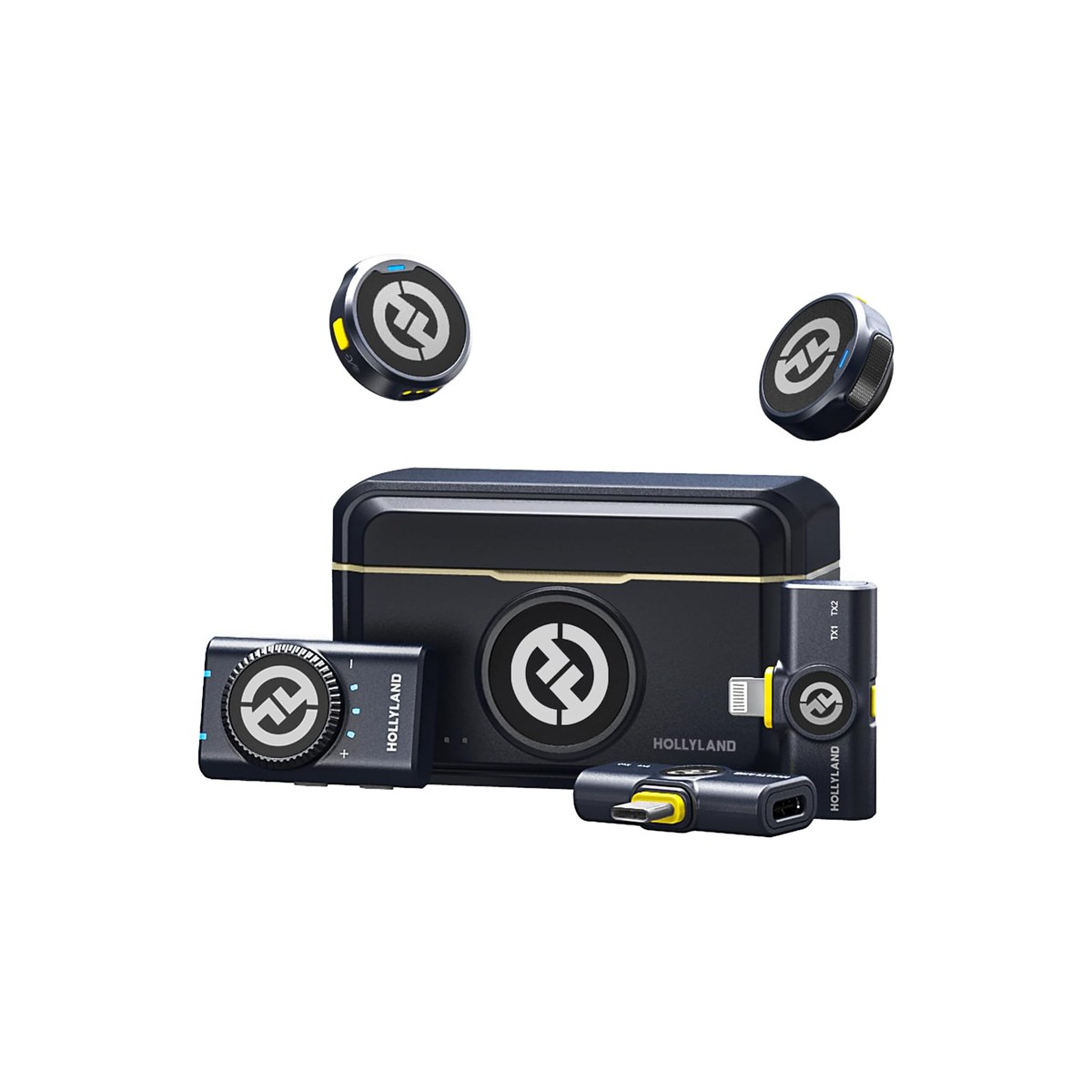
Hollyland Lark M2 (2 TX + 3 RX + Charging Case)
A value dual-mic kit with both phone receivers and a charging case.
Who it's for: the creator who wants a capable two-person wireless kit for the least money and does not need a famous camera brand on it. The pick for the rig vlogger or podcaster who films interviews or two-handers, wants both a USB-C and a Lightning receiver plus a charging case in the box, and is happy to trade the onboard backup track for a price near a third of the premium kits.
What we found: the Lark M2 is the value alternative to the DJI pair, and the owner record is huge, over 7,700 ratings at 4.7 stars. For about $99 you get two clip-on transmitters, a charging case, and receivers for both a USB-C and a Lightning phone plus a camera cable, with 48kHz audio and up to 40 hours of runtime. It covers the same two-person filming job as the DJI Mic Mini with a deeper accessory bundle. The catch is the same as the budget tier: no onboard recording, so a dropped 2.4GHz link is lost audio, and the included windscreens are light for real outdoor wind.
Bottom line: buy the Lark M2 if you want a complete two-person kit with every receiver in the box for under $100. It is the most accessories for the money. If audio reliability is critical, step up to the DJI Mic 2 for the backup track; if you film solo on a phone, the cheaper DJI Mic Mini covers it.
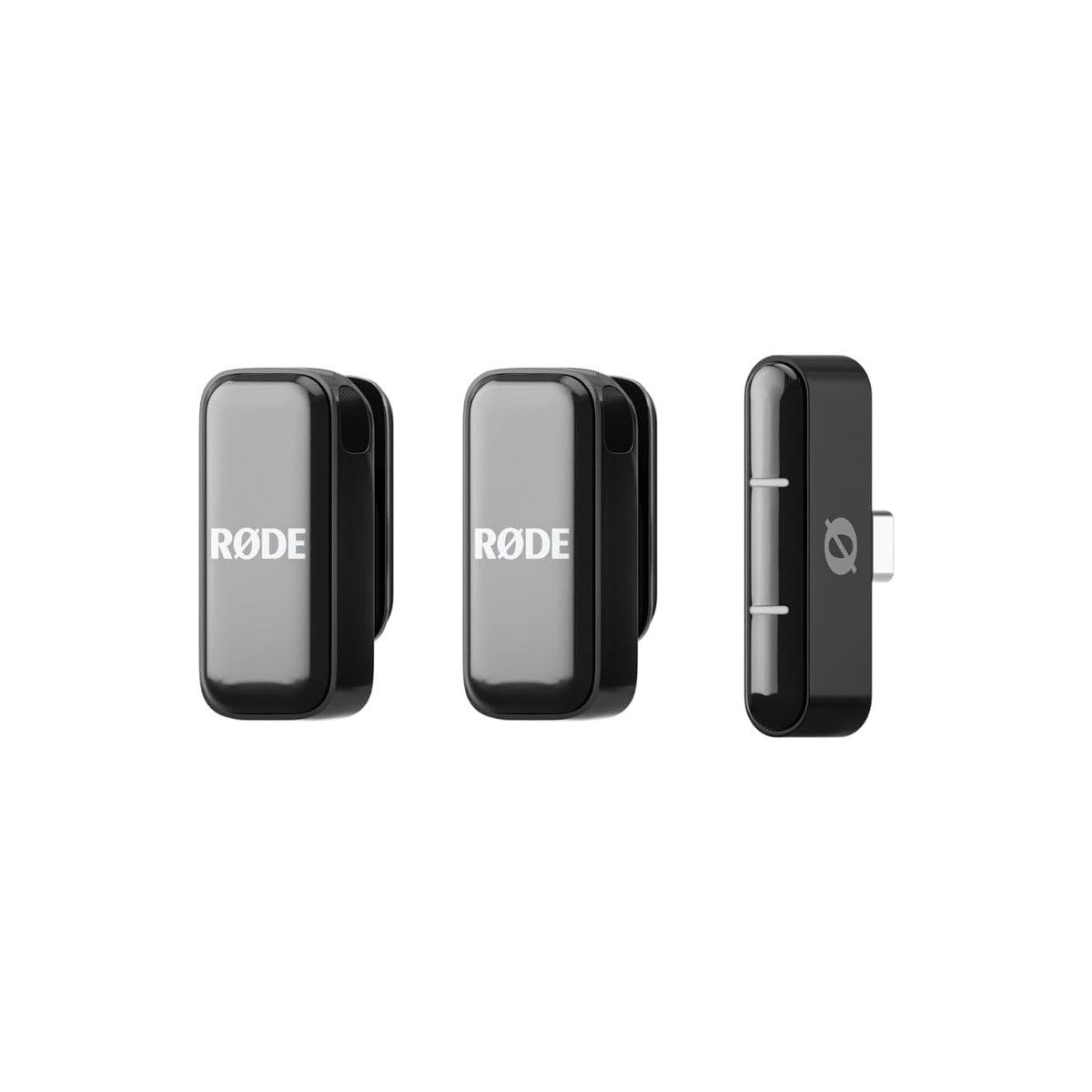
Rode Wireless Micro
The phone pick that comes with furry deadcats in the box for windy shoots.
Who it's for: the phone creator who films outdoors a lot and wants the wind kit in the box, not as a separate order. The pick for the vanlifer who shoots at windy campsites, beaches, and open decks, films on a phone, and would rather pay a few dollars more for a kit that ships with furry deadcats and Rode's build than save them on a cheaper kit and chase down the wind covers later.
What we found: the Rode Wireless Micro's standout is the wind kit, it is the rare system that includes furry deadcats in the box, where the DJI Mic 2, DJI Mic Mini, and Rode GO kits all make you buy them separately. Since a furry cover is the fix for outdoor audio, that bundled accessory is worth real money to a creator who films outside. It is a two-transmitter kit with a charging case and a plug-in USB-C receiver, with automatic levels, and it rates 4.7 stars for about $86. The catches are the same as the rest of the value tier: no onboard backup track, and a shorter range than the bigger kits.
Bottom line: buy the Rode Wireless Micro if you film on a phone outdoors and want the deadcats included rather than ordered separately. It is the wind-ready phone pick. If you want the deepest owner record, the longest battery, and the lowest price instead, the DJI Mic Mini is the same idea for $79, and you can add a furry deadcat to it for about twelve dollars.
Skip this guide if...
Your phone or camera audio is already good enough for what you post, or you only film in a quiet space close to the mic. If you shoot short clips indoors with the camera an arm's length away, the built-in mic may be fine. A wireless mic earns its place once you film while moving, record outdoors in wind, talk to camera from across a campsite, or capture a second person, where the built-in mic goes thin and noisy.
Don't bother with.
- × Skip A karaoke or PA wireless handheldThe cheap wireless handhelds and party-speaker mic sets are built for singing and speeches, not filming, with handheld forms and receivers made for a speaker or mixer, not a camera or phone. They will not clip to your shirt or feed clean audio to an edit. For filming, get a clip-on lavalier system made for content.
- × Skip An XLR wireless system that needs a receiver and mixerPro UHF rack systems and bodypack rigs sound great but need a receiver, cables, and often a mixer or interface, another powered box and a setup you do not want in a moving rig. A 2.4GHz clip-on kit that plugs straight into a phone or camera is the right tool for run-and-gun travel filming.
- × Skip A wired lavalier for run-and-gun filmingA wired lav like the Sennheiser XS Lav is cheap, has no battery, and cannot drop out, which is genuinely useful, but the cable tethers you to the phone or camera, so you cannot walk and talk or film a tour. Keep one as a backup, but for moving filming a wireless kit is what the job needs.
How we picked.
How we picked, and why we don't claim to test
We don't run a lab. We read the owner-review signal across Amazon and the maker spec sheets, weighted for a creator filming from a rig, and ranked five by what matters on the move: whether the mic records a backup track against dropouts, how clean it sounds, how it handles outdoor wind, how it connects to a phone or camera, and value. We verified every pick was in stock at a current price the day we published. We left out karaoke and PA handhelds, church and stage wireless systems, and pro UHF rack rigs, which serve a different audience, and we kept this guide to wireless lavalier kits, the clip-on lapel microphone you have seen on TV, each a wireless microphone system that plugs straight into a phone or camera, with one wired lav noted only as a backup.
Why onboard recording is the feature that matters in a rig
The first thing to check is whether the mic records its own backup track, and in a rig it is the difference between a usable clip and a lost one. Every wireless lavalier here sends audio over 2.4GHz, the same band as wifi, and that signal bounces off the metal of a van, RV, or boat and cancels itself in spots, so the feed to the receiver can cut out just when you walk behind a wall or step outside. The mics that record a 32-bit float file to the transmitter itself, the DJI Mic 2 and the Rode Wireless GO III, give you a perfect backup even when the live feed glitches. The cheaper kits, the DJI Mic Mini, Hollyland Lark M2, and Rode Wireless Micro, have no safety net, so a dropout is lost audio. To be fair, for most casual filming, with the transmitter on your collar and the receiver a few feet away, even the no-backup kits rarely drop; the backup track earns its cost when a lost take is expensive, a one-time shoot, a guest you cannot re-interview, or filming through the metal cabin wall. If that is you, pay for the backup.
The second rig-specific thing is wind, and the fix is a furry deadcat, not the foam tip in the box. Stock foam windscreens handle a light breeze, but a campsite, a coastline, or an open deck will roar straight through them. A furry deadcat slips over the transmitter and kills that wind noise, and it is usually a separate ten-to-fifteen-dollar purchase, the Rode Wireless Micro is the rare kit that includes one. The last thing to confirm is the connector: phones split between USB-C and Lightning, and several kits sell separate receiver versions, so buy the one that matches your phone, and prefer a plug-in receiver over a Bluetooth link, which drops the audio quality.
What our scores mean, and a note on the picks
Our scores reflect how consistent the owner signal is and how well each mic fits filming from a rig, not lab measurements. Two honest notes. The Rode Wireless GO III scores just below the DJI Mic 2 not because it is worse, it is excellent and lighter, but because its receiver workflow suits a camera better than the phone most rig creators film on, and its review base is far shallower. We rank the top two by the role each fills, the best all-rounder and the best camera-first kit, both with the backup track, so the Rode sits at number two on its job, not on review depth, where the cheaper picks beat it. And the DJI Mic Mini scores high for a $79 mic precisely because the owner data is overwhelming, over 9,000 ratings, even though it lacks the backup track. We name the cheaper or more reliable alternative on every pick so brand is never the reason to buy.
FAQs.
Q01 What is the best wireless microphone for filming from a van or RV?
+
Q02 Do I need a wireless or a wired lavalier microphone?
+
Q03 Why does onboard recording matter for a wireless mic?
+
Q04 What is the best wireless mic for vlogging on a phone?
+
Q05 How do I stop wind noise when filming outside?
+
Q06 Will a wireless mic reach far enough around my rig?
+
Q07 Is the DJI Mic 3 better than the DJI Mic 2?
+
If you, then this.
- IF you film seriously and want a backup track against dropoutsGET DJI Mic 2$199 →
- IF you shoot mostly on a camera and want the lightest backup-track kitGET Rode Wireless GO III$177 →
- IF you film on a phone and want clean audio for the least moneyGET DJI Mic Mini$79 →
- IF you want a complete two-person kit with every receiver in the boxGET Hollyland Lark M2$99 →
- IF you want the simplest phone mic with deadcats includedGET Rode Wireless Micro$86 →
Work-from-Anywhere Gear: The Complete Guide
The whole mobile-office picture →Every system in a work-from-anywhere setup, organized in one place, with the foundation every remote worker needs and the one guide we trust for each.
- Why wireless mics drop out, and how to prevent it · RF Venue
- Best lavalier microphones, an independent roundup · Digital Camera World
- DJI Mic 2 specifications (32-bit float, range) · DJI