Best USB Microphones: The 5 We'd Pack to Sound Clear From a Van, RV, or Boat (2026)
A rig is a noisy place to work. A generator hums, road noise leaks through thin walls, a marina clanks, and your laptop's built-in mic picks all of it up, so you sound thin and distant on calls. The fix is a USB microphone, and the choice that matters most is the type. In a loud cabin a dynamic microphone is the right tool, because it hears mostly your voice and ignores the room. A condenser hears the whole space, which is why the famous Blue Yeti is the wrong buy here. We don't run a lab. We read the owner-review signal across Amazon and the maker specs for 2026, weighted for someone working from a van, and ranked 5 mics from a $68 budget dynamic to a $319 broadcast pick. Four of the five are dynamic, the right call for a noisy rig; one condenser earns its spot for recording in a quiet, parked cabin.
- 01 Shure MV6 , top pick, dynamic USB-C that rejects rig noise, about $169
- 02 Shure MV7+ , the broadcast step-up, onboard rumble filter, XLR path
- 03 Fifine K688 , best budget, dynamic, over 4,000 reviews for about $68
- 04 Samson Q2U , compact handheld, deepest review record, now USB-C
- 05 Audio-Technica AT2020USB-X , the one condenser, for recording in a quiet, parked rig
How they compare.
| Rank | Product | Best for | Price | Our score |
|---|---|---|---|---|
| 01 | Shure MV6
Top Pick
| All-round, USB-C, noise rejection | $169
Buy → | 8.8/10 |
| 02 | Shure MV7+ | Best sound, broadcast | $319
Buy → | 8.7/10 |
| 03 | Fifine K688 | Cheapest, deepest reviews | $68
Buy → | 8.6/10 |
| 04 | Samson Q2U | Compact, handheld | $100
Buy → | 8.4/10 |
| 05 | Audio-Technica AT2020USB-X | Quiet-room recording | $169
Buy → | 8.2/10 |
Prices are current Amazon prices at time of publication and can change. Scores reflect our editorial evaluation, not vendor input.
Our #1 pick: Shure MV6 USB Microphone.
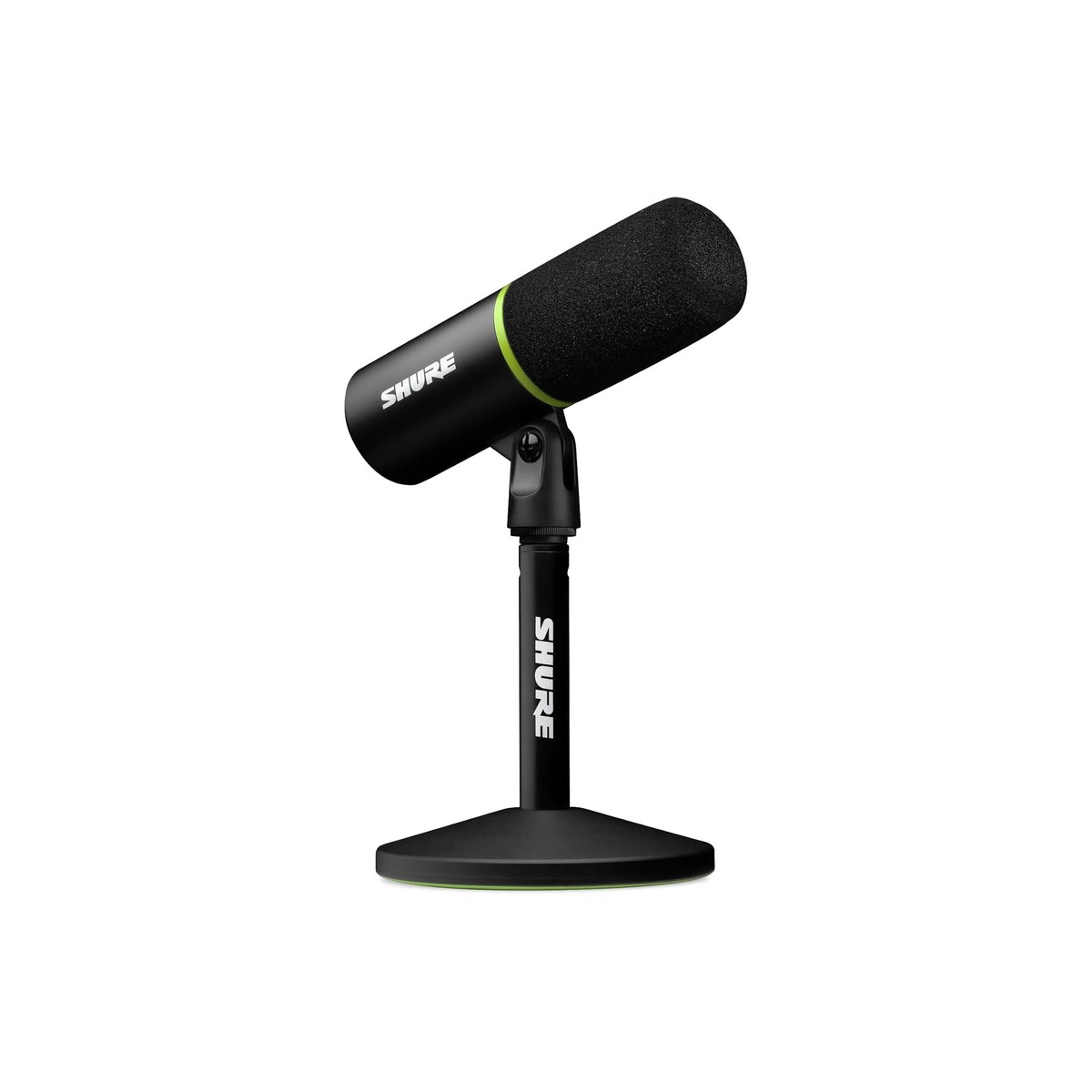
Shure MV6 USB Microphone
A dynamic USB-C mic that rejects rig noise and needs no adapter.
Who it's for: the remote worker who takes video calls or records from a rig and wants one mic that sounds clear without fuss. The pick for someone in a van, RV, or boat who is tired of sounding thin on Zoom, wants a dynamic mic that ignores the generator and the road, and uses a modern laptop or a phone with only USB-C ports, so a mic that plugs in with no dongle matters.
What we found: the MV6 is the dynamic mic we would hand most rig workers. It hears your voice and largely ignores the room, so a humming fridge or road noise stays out of the call, and its built-in processing sets a usable level on its own. It connects over USB-C straight to a laptop, an iPhone, or an iPad with the cable in the box, with a headphone jack for monitoring and a tap to mute. At about $169 it rates 4.6 stars across more than 1,100 owners. The honest catch is that the step-up MV7+ sounds a touch richer and adds an XLR output.
Bottom line: buy the MV6 if you want the best balance of clean sound, true USB-C convenience, and price for working from a rig. It rejects the noise a cabin throws at it and plugs into anything modern. Step up to the MV7+ if you record often and want the richest sound and an XLR path, or drop to the Fifine K688 if you want most of the noise rejection for far less.
- + Dynamic capsule rejects generator, road, and cabin noise
- + True USB-C, plugs into a laptop, iPhone, or iPad with no adapter
- + Headphone monitoring and tap-to-mute, with an auto level mode
- + 4.6 stars across more than 1,100 owners at about $169
- × The MV7+ sounds a little richer and adds an XLR output
- × More than a budget mic like the Fifine costs
- × Gaming-branded box undersells a serious work mic
Runner-up: Shure MV7+ Podcast Microphone.
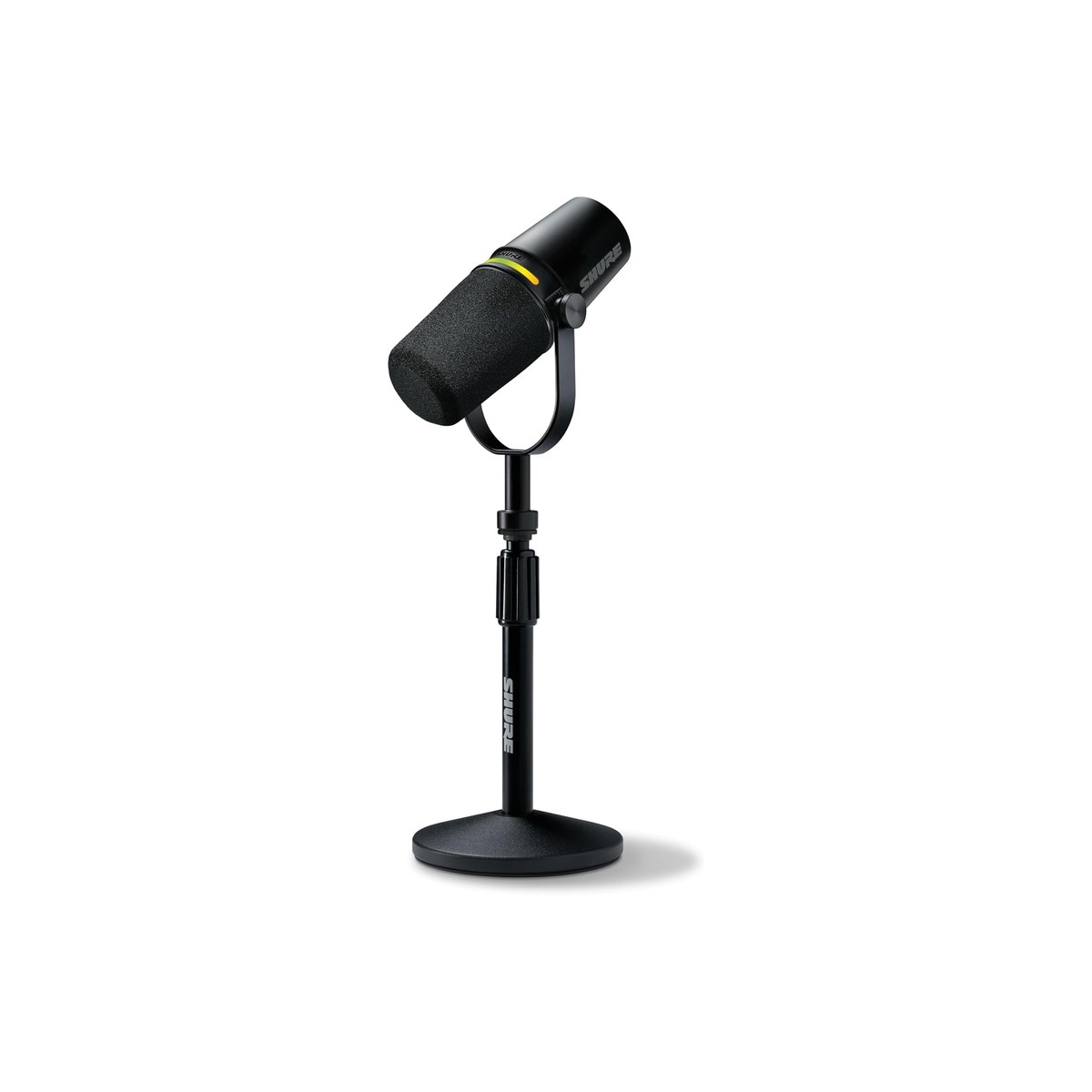
Shure MV7+ Podcast Microphone
The broadcast step-up, with an onboard filter that kills low rumble.
Who it's for: the worker who records a podcast or YouTube from the road often enough to want the best dynamic mic, not just a good one. The pick for the serious creator in a rig who wants broadcast sound, an onboard high-pass filter to roll off engine and HVAC rumble, and the option to add an XLR interface later, and who is happy to pay more for a mic they will keep for years.
What we found: the MV7+ is the step-up, and it earns the price. It is a dynamic mic with the same noise rejection as the MV6, plus an onboard high-pass mode that rolls off the low rumble where a generator, engine, and cabin fan live, and richer sound for recording. It ships with a stand and runs over USB-C or XLR, so you can start simple and add an interface and a second mic later. It rates 4.8 stars, the highest here, across more than 500 owners. The catches are price at about $319 and a body big enough that it wants a stand or a boom arm.
Bottom line: buy the MV7+ if recording is a real part of your work and you want the best dynamic mic in this guide, with room to grow into XLR. It is the sound and the build to keep. For most rig workers, though, the MV6 rejects noise nearly as well, plugs in the same way, and costs about half, so step up only if the richer sound and the XLR path will earn their keep.
- + Best-sounding dynamic here, with broadcast-grade clarity
- + Onboard high-pass mode rolls off engine and HVAC rumble
- + USB-C and XLR, so you can add an interface later
- + 4.8 stars, the highest rating here, and ships with a stand
- × About $319, the most expensive pick
- × Body wants a stand or boom arm, not a tiny desk
- × More mic than most rig workers need for calls
Budget pick: Fifine K688 Amplitank Microphone.
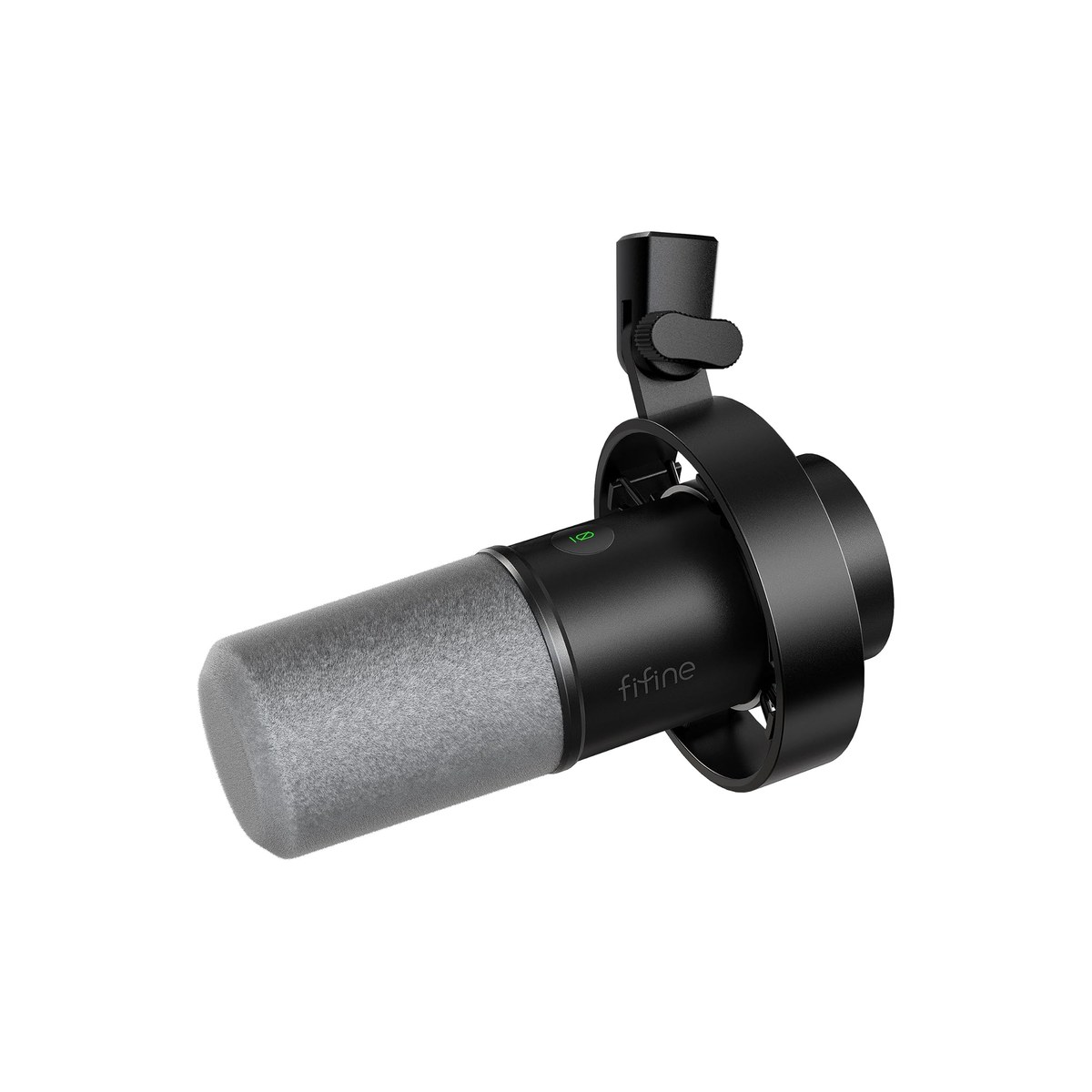
Fifine K688 Amplitank Microphone
A dynamic mic under seventy dollars that ignores keyboard and fan noise.
Who it's for: the worker who wants real dynamic noise rejection for the least money and does not need a famous name on the mic. The pick for the new nomad, the side-project podcaster, or anyone outfitting a first rig setup who wants a metal-built dynamic mic that keeps keyboard and fan noise out of a call or a recording, with a mute button and a headphone jack, for under seventy dollars.
What we found: the K688 is the value pick, and the owner record backs it up, over 4,000 ratings at 4.6 stars. It is a dynamic mic that, like the Shure pair, hears mostly your voice and leaves the keyboard, the fan, and the road behind, and it comes with a metal body, a gain knob, a mute button, a headphone jack, and a shock mount for about $68. The honest catch is the cable: the mic has a USB-C port but ships a USB-C-to-USB-A cable, so a laptop with only USB-C ports needs a cheap adapter or a hub.
Bottom line: buy the K688 if budget decides it, and do not feel like you settled, over 4,000 owners rate it highly and it rejects noise like mics that cost more. Just budget a few dollars for a USB-C adapter if your laptop has no USB-A port. Step up to the MV6 when you want true USB-C convenience and a touch better sound, or to the Samson Q2U if you want a handheld you can hold or mount anywhere.
- + Dynamic capsule keeps keyboard, fan, and road noise out
- + Metal build with a gain knob, mute, headphone jack, shock mount
- + Over 4,000 reviews at 4.6 stars for about $68
- + Runs over USB or XLR
- × Ships a USB-C-to-USB-A cable, so USB-C laptops need an adapter
- × Controls work over USB, not over XLR
- × Not the polish or resale of the Shure pair
Also worth considering.
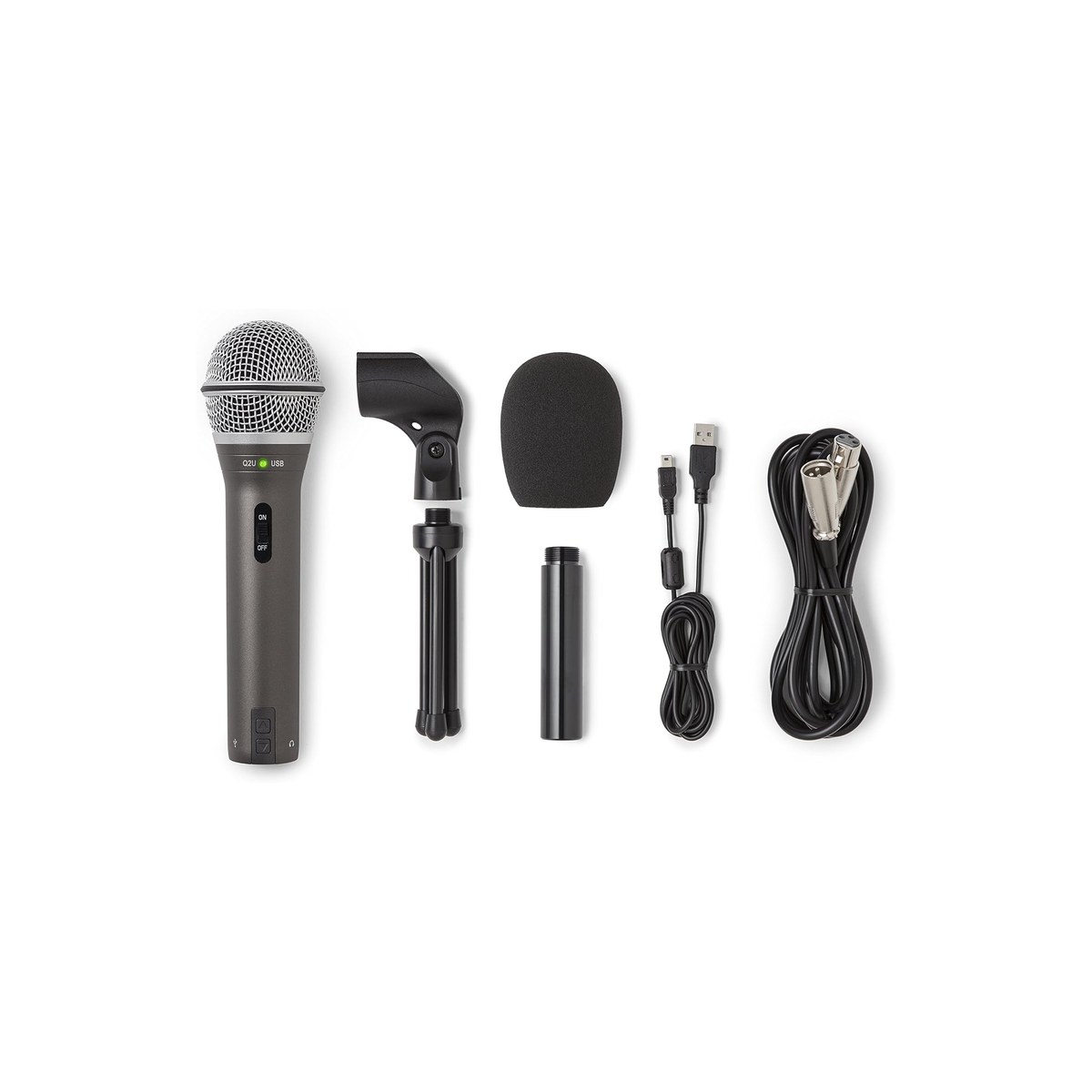
Samson Q2U Dynamic Microphone
A rugged handheld dynamic mic that travels well and runs on USB-C.
Who it's for: the worker who wants a tough, compact dynamic mic that travels well and can be held or stood on a cramped desk. The pick for the mobile podcaster or interviewer who wants a handheld dynamic mic with a deep owner record, now over USB-C, that shrugs off a knock in a bag and a noisy room alike.
What we found: the Q2U is the compact, travel-tough pick, and it has the deepest owner record here, over 5,500 ratings at 4.5 stars. It is a handheld dynamic mic that rejects room noise well, runs over USB-C or XLR, and includes a headphone jack for monitoring, for about $100. Being handheld, it is as happy on a small stand on a dinette as it is held for an interview, which suits a tight cabin. The catch: at $100 it costs more than the Fifine, and it skips the onboard processing and auto-level the Shure pair use to clean up a voice on their own.
Bottom line: buy the Q2U if you want a rugged handheld that works on a stand or in your hand and travels without worry. It is the road-trip workhorse of the group. If you mostly sit at a desk and want the cleanest USB-C setup, the MV6 is the better buy, and if price is the deciding factor, the Fifine K688 rejects noise just as well for less.
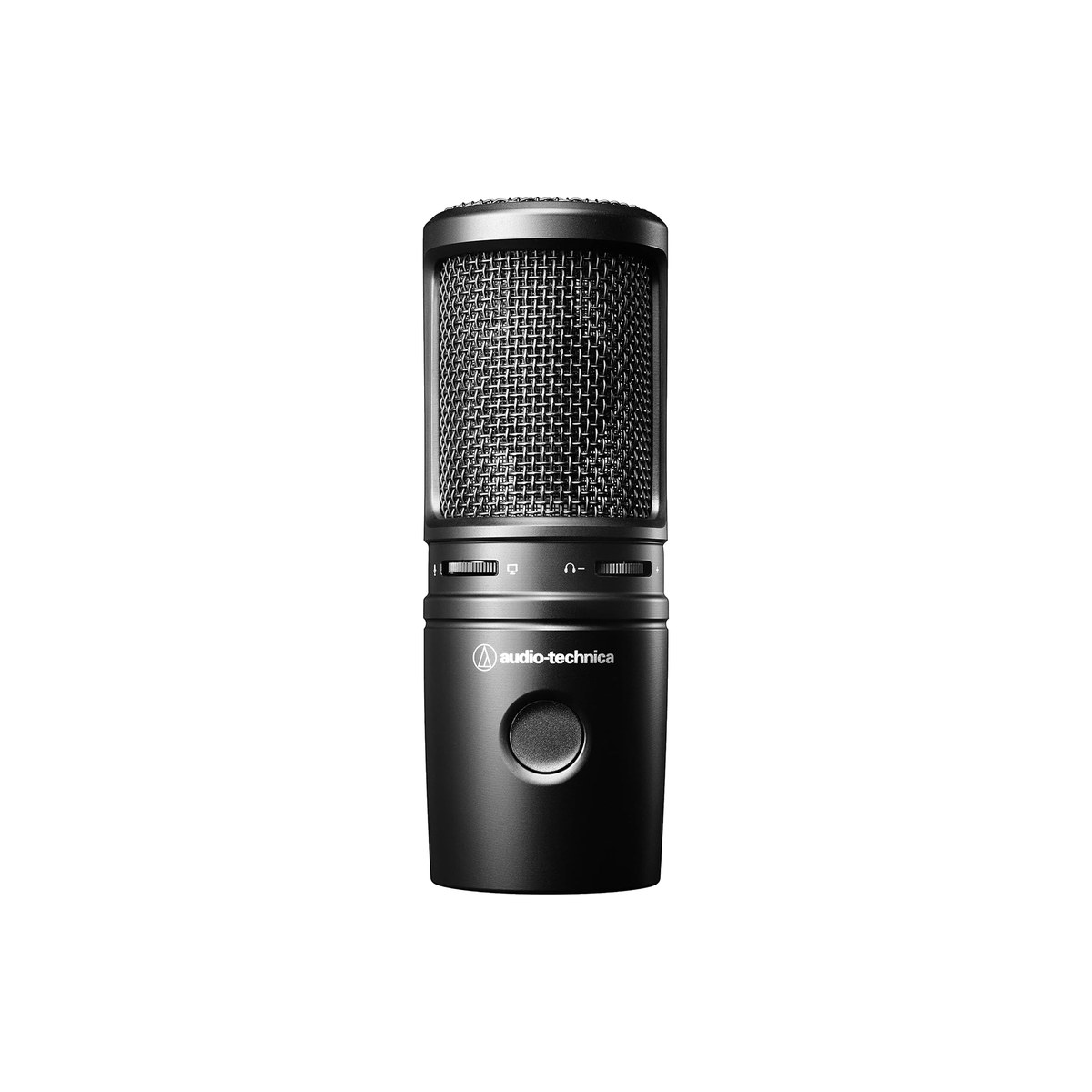
Audio-Technica AT2020USB-X
The one condenser here, for richer recording in a quiet, parked cabin.
Who it's for: the creator who records in a rig that is parked and quiet, and wants the richer, more detailed sound a condenser gives. The pick for the podcaster or voice worker who records when the engine is off and the cabin is calm, wants studio-style detail over maximum noise rejection, and understands this is the one mic here that is not built to fight a loud room.
What we found: the AT2020USB-X is the one condenser we include, and it is here for a reason, when the rig is quiet, a condenser captures warmth and detail a dynamic mic does not. It is a USB-C cardioid condenser microphone with a headphone jack, a mix control, and a touch-mute, well-rated at 4.5 stars across nearly 800 owners for about $169, and it makes a fine USB microphone for recording in a calm cabin. The catch is the whole point of this guide: a condenser hears the room, so the moment a generator, a fan, or road noise starts, it picks all of it up.
Bottom line: buy the AT2020USB-X only if you record in a genuinely quiet, parked cabin and want the richest sound. It is the wrong tool for calls from a moving or noisy rig, where the dynamic picks above will sound far cleaner. Think of it as a recording mic for calm moments, not an everyday call mic, and pair it with one of the dynamic mics if you need both.
Skip this guide if...
Your laptop or phone already sounds fine for what you do, or you mostly listen rather than talk. If you take the odd call and nobody complains about your audio, the built-in mic is enough. A USB microphone earns its place once you are on calls most days, record a podcast or video, or work from a noisy van, RV, or boat where the built-in mic picks up the whole cabin along with your voice.
Don't bother with.
- × Skip A condenser mic for a noisy cabinThe famous Blue Yeti and most studio condensers hear the whole room, so in a van with a fridge, a fan, or road noise they make you sound worse, not better. A condenser microphone rewards a treated, quiet space. In a rig, choose a dynamic mic that hears your voice and ignores the room, and save a condenser for a parked, quiet recording session.
- × Skip An XLR mic that needs an audio interfaceStudio favorites like the Shure SM7B and Rode PodMic are XLR-only, so they need a separate powered interface, cables, and desk space, another box on a 12-volt system. For a rig you want a mic that plugs straight into the laptop or phone over USB. Buy an XLR mic only if you already own and travel with an interface.
- × Skip An RGB mic chosen for its lightsPlenty of RGB streaming mics look the part, but the glowing ring is the selling point, not the sound, and some are condensers that pick up the room. Pick a mic for how it handles background noise, not how it looks on camera. If you want a Fifine, get the plain dynamic K688, not the light-up version.
How we picked.
How we picked, and why we don't claim to test
We don't run a lab. We read the owner-review signal across Amazon and the maker spec sheets, weighted for someone working from a rig, and ranked five by what matters on the road: how well each mic rejects background noise, how it sounds for calls and as a USB microphone for podcasting, how it connects to a modern laptop or phone, and value. We verified every pick was in stock at a current price the day we published. We left out XLR mics that need a separate interface and studio condensers built for treated rooms, which solve a different problem, and we cover both types here: four dynamic mics for noisy cabins and one condenser for quiet, parked recording.
Dynamic vs condenser, the choice that matters most
The first choice is condenser or dynamic microphone, and for a rig it is the whole game. A dynamic microphone has a tighter pickup that hears mostly what is close to it, so it captures your voice and largely ignores a humming fridge, a fan, road noise, or a marina outside. A condenser microphone is far more sensitive and hears the whole room, which is wonderful in a treated studio and a problem in a van. This is why the most famous USB mic, the Blue Yeti, is the wrong buy for a noisy cabin: it is a condenser, and it picks up everything. For most rig work, choose a dynamic mic; reach for the condenser only when the engine is off and the cabin is quiet. A dynamic mic is not magic, though: it rejects the room because you speak close to it with the gain set low, and a cardioid pickup pattern matters as much as the capsule, so work it within a hand's width and keep the level modest.
The second thing to check is the connector. Several good mics, the Fifine K688 and older handhelds, have a USB-C port on the mic but ship a USB-C-to-USB-A cable, so a modern laptop with only USB-C ports needs a cheap adapter you did not plan for. The Shure MV6 ships a true USB-C-to-USB-C cable and works on a phone or tablet too, and the Samson Q2U and AT2020USB-X are USB-C as well, so any of them makes a no-fuss USB-C microphone. It is a small thing until you are set up in a rig with no adapter, so confirm the cable matches your ports before you buy.
What our scores mean, and a note on the picks
Our scores reflect how consistent the owner signal is and how well each mic fits work from a rig, not lab measurements. Two honest notes. The MV7+ scores just below the cheaper MV6 not because it is worse, it is the best-sounding mic here, but because at about $319 it is more than most rig workers need to spend to sound clear. And the condenser AT2020USB-X scores lowest not because it is a poor mic, it is excellent, but because it is the one pick that fights a noisy cabin instead of ignoring it, so it fits fewer readers. We name the cheaper or better-suited alternative on every pick so brand is never the reason to buy.
FAQs.
Q01 What is the best USB microphone for working from a van or RV?
+
Q02 Should I get a condenser or dynamic microphone for a noisy rig?
+
Q03 Why not just use a Blue Yeti?
+
Q04 Do USB microphones need an audio interface or phantom power?
+
Q05 Will a USB microphone work for both video calls and podcasting?
+
Q06 What is the best budget USB microphone?
+
Q07 How do I sound less echoey on calls from a van?
+
If you, then this.
- IF you want one mic that rejects rig noise and just plugs inGET Shure MV6$169 →
- IF you record often and want the best sound with an XLR pathGET Shure MV7+$319 →
- IF you want real noise rejection for the least moneyGET Fifine K688$68 →
- IF you want a rugged handheld you can hold or mount anywhereGET Samson Q2U$100 →
- IF you record in a quiet, parked cabin and want richer soundGET Audio-Technica AT2020USB-X$169 →
Work-from-Anywhere Gear: The Complete Guide
The whole mobile-office picture →Every system in a work-from-anywhere setup, organized in one place, with the foundation every remote worker needs and the one guide we trust for each.