Best RV Security Cameras: 5 for No-WiFi, Cellular, and Off-Grid Rigs (2026)
The first question about an RV security camera is not which brand, it is how it connects when you have no campsite wifi. A camera sold as wireless usually means wire-free power, not wire-free internet, and most of them still need home wifi to work at all. For a parked or boondocking rig, that distinction decides everything. We read the RVers who actually run these cameras and verified every price live on Amazon on June 11, 2026. The honest headline: only a cellular camera with its own SIM, or a hardwired DVR that records to a card, works with no internet, and the popular Blink and Wyze picks need a hotspot you have to supply. We sorted the five by how they connect, then by what they cost to run, because the monthly data bill is the cost no vendor leads with.
- 01 eufy 4G LTE Cam S330 (B0CZ6KW4NP) , top pick, true no-wifi cellular with a wifi backup, ~$200
- 02 Reolink Go PT Ultra (B087M67PZQ) , best cellular value, 4K pan and tilt, ~$180
- 03 Wyze Cam v4 (B0CJ9YX7DG) , best budget, but needs your wifi and power, ~$36
- 04 Reolink Argus 4 Pro (B0D8HY411D) , best no-fee on a hotspot, not cellular, ~$180
- 05 Fookoo 12V DVR (B0CL76NS25) , zero internet, records locally to a card, ~$126
How they compare.
| Rank | Product | Best for | Price | Our score |
|---|---|---|---|---|
| 01 | eufy 4G LTE Cam S330 (B0CZ6KW4NP)
Top Pick
| best overall, true no-wifi cellular with automatic wifi backup | $199.99
Buy → | 9.0/10 |
| 02 | Reolink Go PT Ultra (B087M67PZQ) | best cellular value, 4K pan and tilt, no wifi, 1,400+ reviews | $179.99
Buy → | 8.6/10 |
| 03 | Wyze Cam v4 (B0CJ9YX7DG) | best budget, needs your wifi and power, 12,000+ reviews | $35.97
Buy → | 8.5/10 |
| 04 | Reolink Argus 4 Pro (B0D8HY411D) | best no-fee if you run a hotspot, not cellular | $179.99
Buy → | 8.4/10 |
| 05 | Fookoo 12V DVR (B0CL76NS25) | zero internet, hardwired local recording, no fees | $125.99
Buy → | 8.2/10 |
Prices are current Amazon prices at time of publication and can change. Scores reflect our editorial evaluation, not vendor input.
Our #1 pick: eufy Security 4G LTE Cam S330, 4K Cellular Solar Security Camera, Pan and Tilt, 4G and WiFi Duo-Mode, SIM and 32GB SD Included (true no-wifi, ASIN B0CZ6KW4NP).
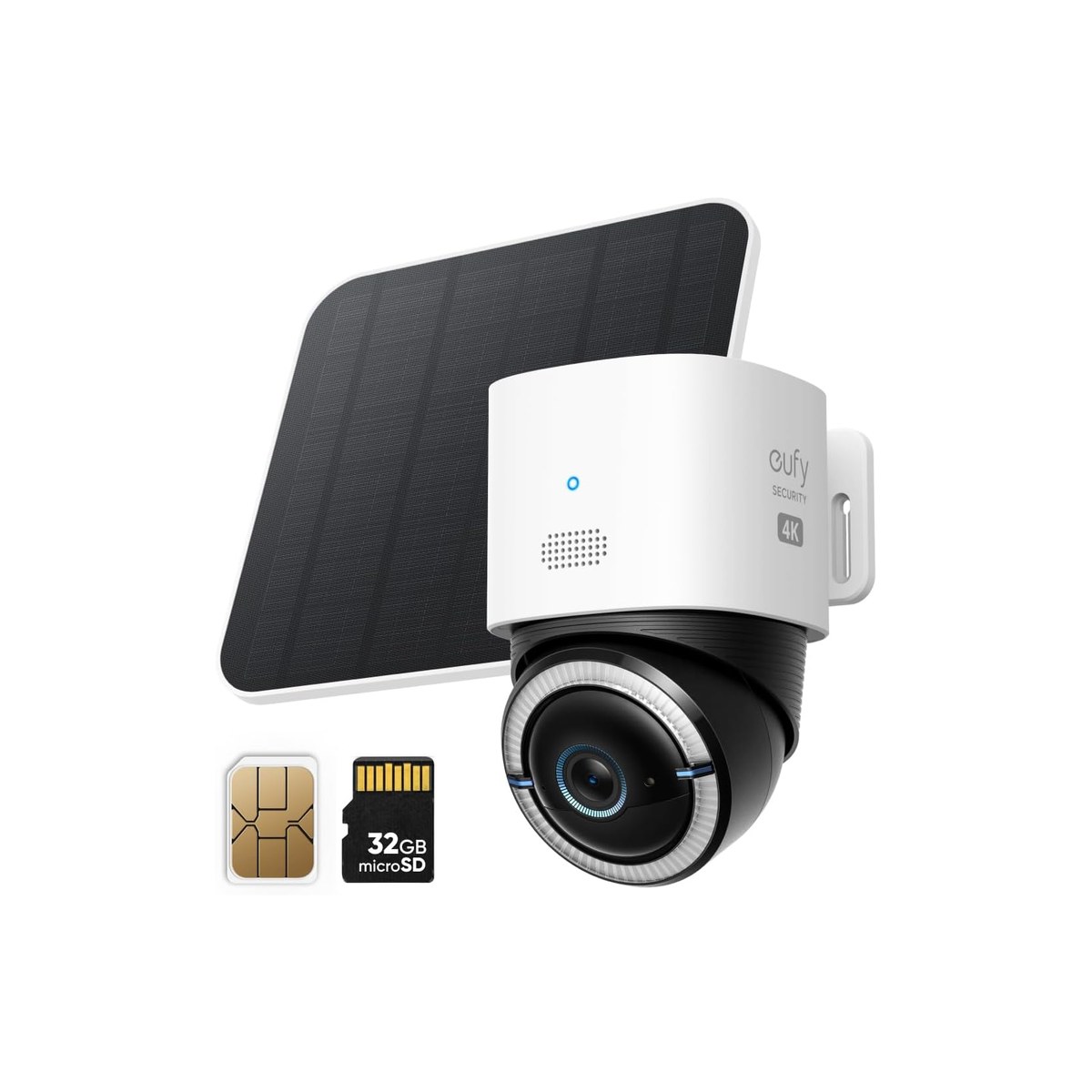
eufy Security 4G LTE Cam S330, 4K Cellular Solar Security Camera, Pan and Tilt, 4G and WiFi Duo-Mode, SIM and 32GB SD Included (true no-wifi, ASIN B0CZ6KW4NP)
The one camera that just works with no campsite wifi.
Who it's for: The RVer who parks, stores, or boondocks where there is no reliable campsite wifi, and wants a single camera that works on its own cellular signal without setup gymnastics. The eufy S330 suits the owner who would rather pay a small data plan than depend on a campground network, and who wants the memory card and solar panel in the box instead of as extra purchases.
What we found: The S330 is the most complete true no-wifi camera here. It runs on a 4G LTE SIM and, unusually, falls back to wifi automatically when a hotspot is in range, so it covers both the boondocking site and the wifi campground. It is 4K with pan-and-tilt tracking, a large 9,400 mAh battery, an integrated solar panel, and a 32GB card included, and it sits at 4.1 stars across more than 1,100 ratings, the highest-rated cellular pick, though the cheaper Reolink has more reviews at a lower average. It records locally with no required subscription, so your only recurring cost is the data plan, which stays modest if you tune the motion zones.
Bottom line: If you want one camera that works wherever you park, buy the eufy S330: cellular when you have no wifi, wifi when you do, with the card and solar included, and the wifi backup earns its keep if you mix wifi parks and boondocking. Step down to the Reolink Go PT Ultra for pan-and-tilt at a similar price, cheaper on Prime, trading wifi backup a pure boondocker never uses; drop to the Argus or Wyze only if you run your own hotspot.
- + Runs on a 4G LTE SIM and falls back to wifi automatically, so it works with no campsite internet, the whole point for a parked or boondocking rig
- + 4K with pan-and-tilt tracking, a 9,400 mAh battery and a solar panel, and a 32GB card included, at 4.1 stars across more than 1,100 ratings
- + Records locally to the card with no required subscription, so the only recurring cost is the cellular data plan
- × The cellular SIM needs a paid data plan, the real monthly cost, and heavy motion at a busy site uses more data
- × Like every battery camera here, it records on motion, not 24/7, so it is for alerts and evidence clips, not continuous footage
- × At about $200 it is the priciest of the cameras here, though the included card and solar narrow the gap
Runner-up: REOLINK Go PT Ultra 4K LTE Cellular Security Camera, No WiFi 3G/4G, Solar Powered, 355-degree Pan and Tilt, Auto Tracking, SIM Card Included (ASIN B087M67PZQ).
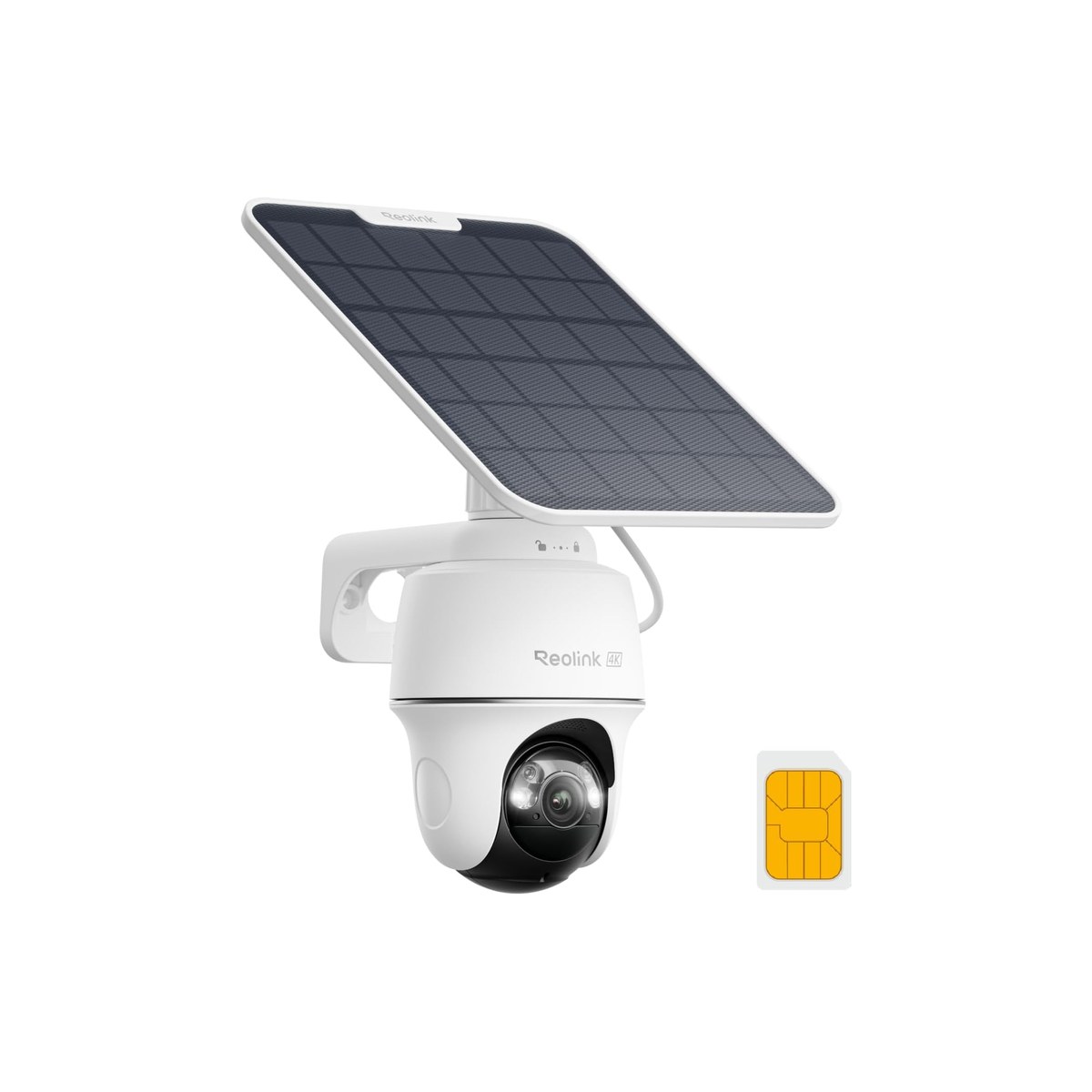
REOLINK Go PT Ultra 4K LTE Cellular Security Camera, No WiFi 3G/4G, Solar Powered, 355-degree Pan and Tilt, Auto Tracking, SIM Card Included (ASIN B087M67PZQ)
A 4K cellular pan-and-tilt cam, the Prime-price value pick.
Who it's for: The boondocker who wants one camera to cover more than a single fixed angle, sweeping a campsite or a stored rig by remote pan and tilt, on a true cellular link with no wifi. This is the buyer who wants the off-grid coverage of the eufy but would rather have a wider sweep, and who is comfortable with a lower average rating in exchange for the pan-and-tilt and, on a Prime membership, a lower price than the eufy.
What we found: The Reolink Go PT Ultra is the value play in the cellular lane for Prime members. It runs on its own 3G/4G LTE SIM with no wifi required, adds a 355-degree pan and 140-degree tilt with auto-tracking so one unit watches a whole site, and ships 4K with a solar panel, a 32GB card, and the SIM all in the box. It carries more than 1,400 ratings, the deepest review history of any cellular camera here, though the average is 3.8 stars with the usual app quibbles. The $179.99 is the Prime price; the regular price is $229.99, and the data SIM is the recurring cost.
Bottom line: Choose the Go PT Ultra if you want cellular coverage that pans across a whole site, and you accept a 3.8-star average backed by a lot of reviews. For a pure boondocker its 355-degree sweep often matters more than the eufy's wifi backup, which a no-wifi site never uses anyway. Step up to the eufy for the higher rating and flat, non-Prime pricing, or down to a hotspot camera only if you reliably carry your own internet.
- + True 3G/4G LTE cellular with no wifi needed, and a 355-degree pan with 140-degree tilt, so one camera sweeps a whole site
- + 4K with auto-tracking, and a solar panel, a 32GB card, and the SIM all included in the box, so it is ready to set up out of the box
- + More than 1,400 ratings, the most real-world data of any cellular pick here, even if the average sits at 3.8 stars
- × 3.8 stars is the lowest rating of our scored picks, with owners citing app and connection quibbles, so it is proven but not flawless
- × The $179.99 is a Prime-member price; the regular price is $229.99, above the eufy, and like all cellular cams it needs a paid data SIM to view remotely
- × No automatic wifi-backup mode like the eufy, so it is cellular or nothing, which is fine for pure boondocking but not for mixed wifi-and-boondock travel
Budget pick: WYZE Cam v4 2.5K Security Camera, Indoor/Outdoor, Color Night Vision, Local microSD Storage, No Subscription Required (needs your wifi and power, ASIN B0CJ9YX7DG).
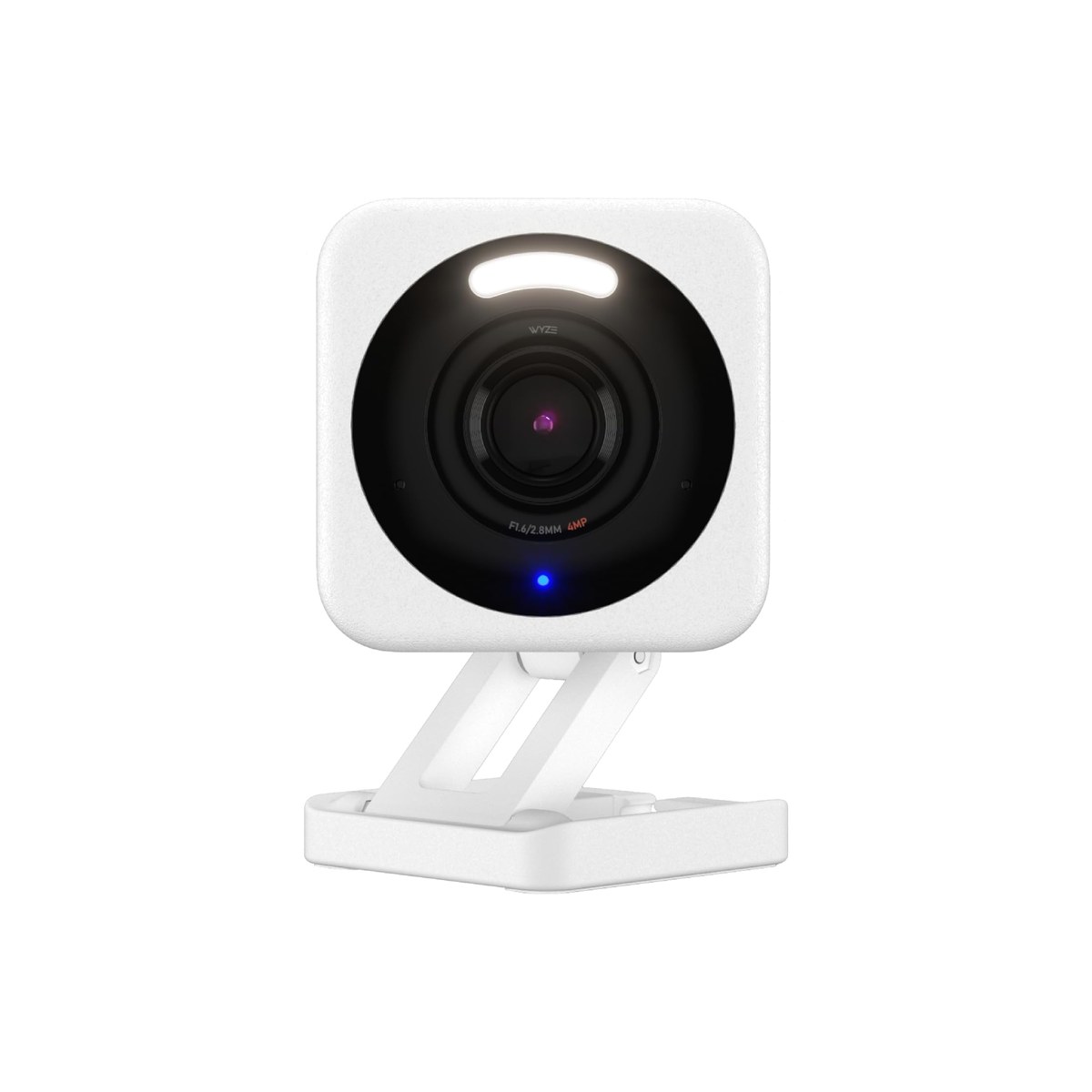
WYZE Cam v4 2.5K Security Camera, Indoor/Outdoor, Color Night Vision, Local microSD Storage, No Subscription Required (needs your wifi and power, ASIN B0CJ9YX7DG)
Unbeatable value if you already supply wifi and power.
Who it's for: The RVer who already carries a cellular hotspot or mostly stays at wifi campgrounds, and has 12-volt or USB power where the camera mounts. This is the value buyer who wants the most camera for the least money, is happy to record to a card with no subscription, and clearly understands that this is a wifi camera, not an off-grid one. For a wired rig with internet, it is the cheapest way to add eyes.
What we found: The Wyze Cam v4 is the budget champion, and it is not close on value: about $36 for 2.5K video with color night vision, at 4.4 stars across more than 12,000 ratings, the deepest proof in this guide. It records to a local microSD card with no required subscription, so you can run it fee-free. The catches are exactly the off-grid ones: it needs 2.4 GHz wifi to work at all, so a no-wifi site leaves it blind unless you run a hotspot, and it is plug-in only, so you supply USB or 12-volt-to-USB power. The cloud AI alerts cost extra.
Bottom line: Buy the Wyze Cam v4 if you already supply wifi and power, where it is unbeatable value and you can run several for the price of one cellular cam. Do not buy it expecting off-grid security, because without a hotspot it does nothing. If your rig has no campsite internet, step up to the eufy or Reolink cellular picks; if you want recording with no internet at all, look at the hardwired DVR below.
- + About $36 with 2.5K video and color night vision, at 4.4 stars across more than 12,000 ratings, by far the most-proven camera here
- + Records to a local microSD card with no required subscription, so there is no monthly fee if you skip the cloud
- + Tiny and easy to place, and several of them cost less than one cellular camera if you already have wifi and power
- × Needs 2.4 GHz wifi to function, so on a no-wifi site it does nothing unless you supply a hotspot; it is not a cellular camera
- × Plug-in power only, so you run USB or a 12-volt-to-USB adapter to it, with no battery or solar option
- × The advertised AI alerts (person, package, pet) need a paid Cam Plus plan, though basic local recording does not
Also worth considering.
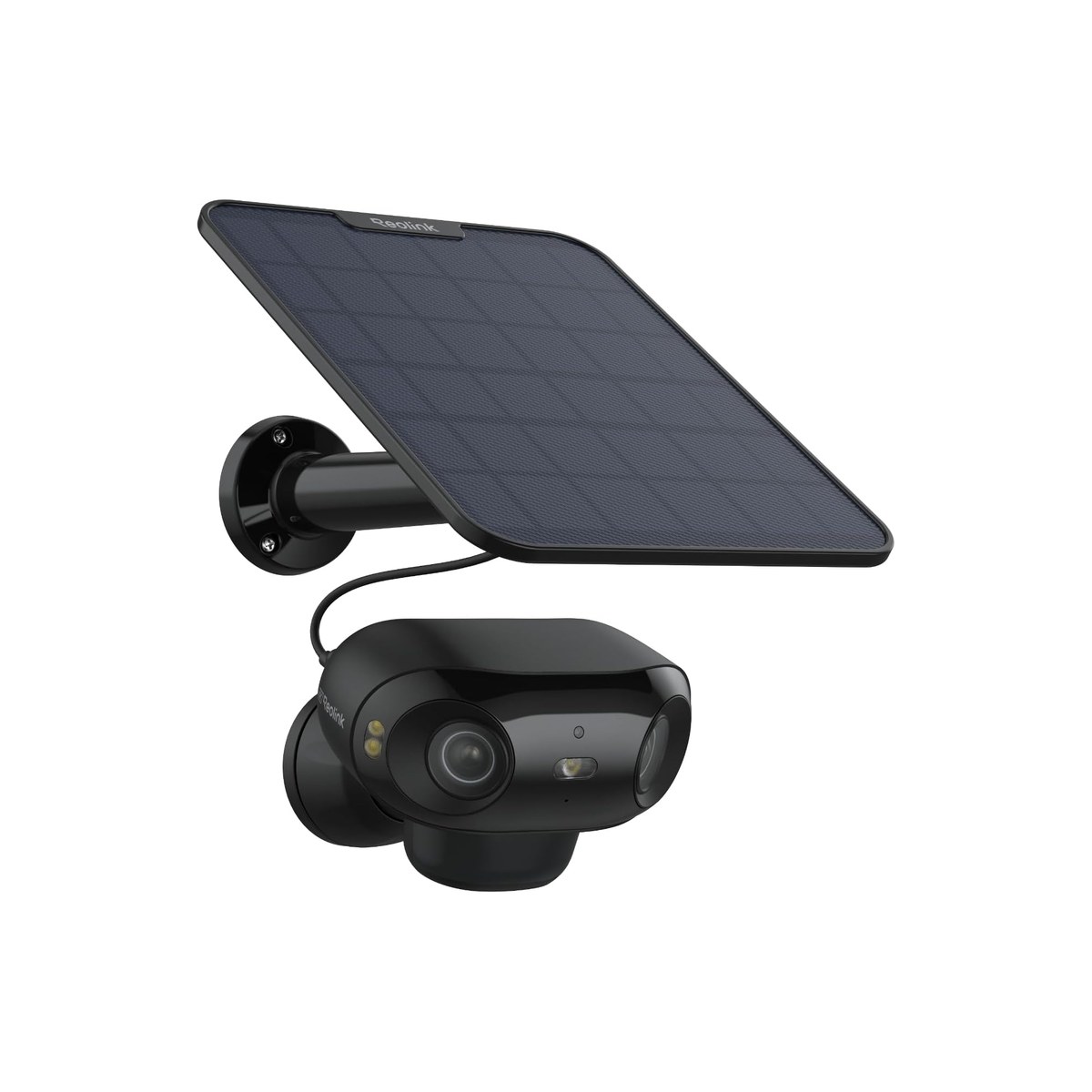
REOLINK Argus 4 Pro, 4K Dual-Lens 180-degree Solar Security Camera, Wireless Outdoor, ColorX Night Vision, No Subscription (needs wifi or a hotspot, ASIN B0D8HY411D)
No-fee 4K solar coverage, if you bring the wifi.
Who it's for: The RVer who reliably runs a wifi hotspot in the rig and wants a battery-and-solar camera with no subscription and a wide view. The Argus 4 Pro suits the buyer who likes the off-grid power story, a solar-topped battery and no wires, but who connects through their own hotspot rather than a cellular SIM, and who wants a 180-degree dual-lens picture to cover a whole side of the rig from one mount.
What we found: The Argus 4 Pro is the best no-fee camera here for a rig that supplies its own wifi. It is 4K with a 180-degree dual-lens view, ColorX low-light color night vision, a rechargeable battery, and solar compatibility, at 4.0 stars across more than 500 ratings for about $180. Crucially, it is a wifi camera, 5 GHz or 2.4 GHz, not cellular, so it needs a hotspot or campground wifi to connect. Reolink markets no subscription, and local storage backs that up. So the power is off-grid but the connection is not, the distinction that defines this whole category.
Bottom line: Buy the Argus 4 Pro if you carry a hotspot and want a wide, no-fee, solar-powered camera, and you would rather not pay for a cellular SIM. It is a lot of camera for $180. Skip it if your sites have no internet you control, because it cannot connect on its own; for that, the eufy or Reolink cellular picks are the answer. Pair it with a 12-volt hotspot left on in a cabinet and it covers a side of the rig nicely.
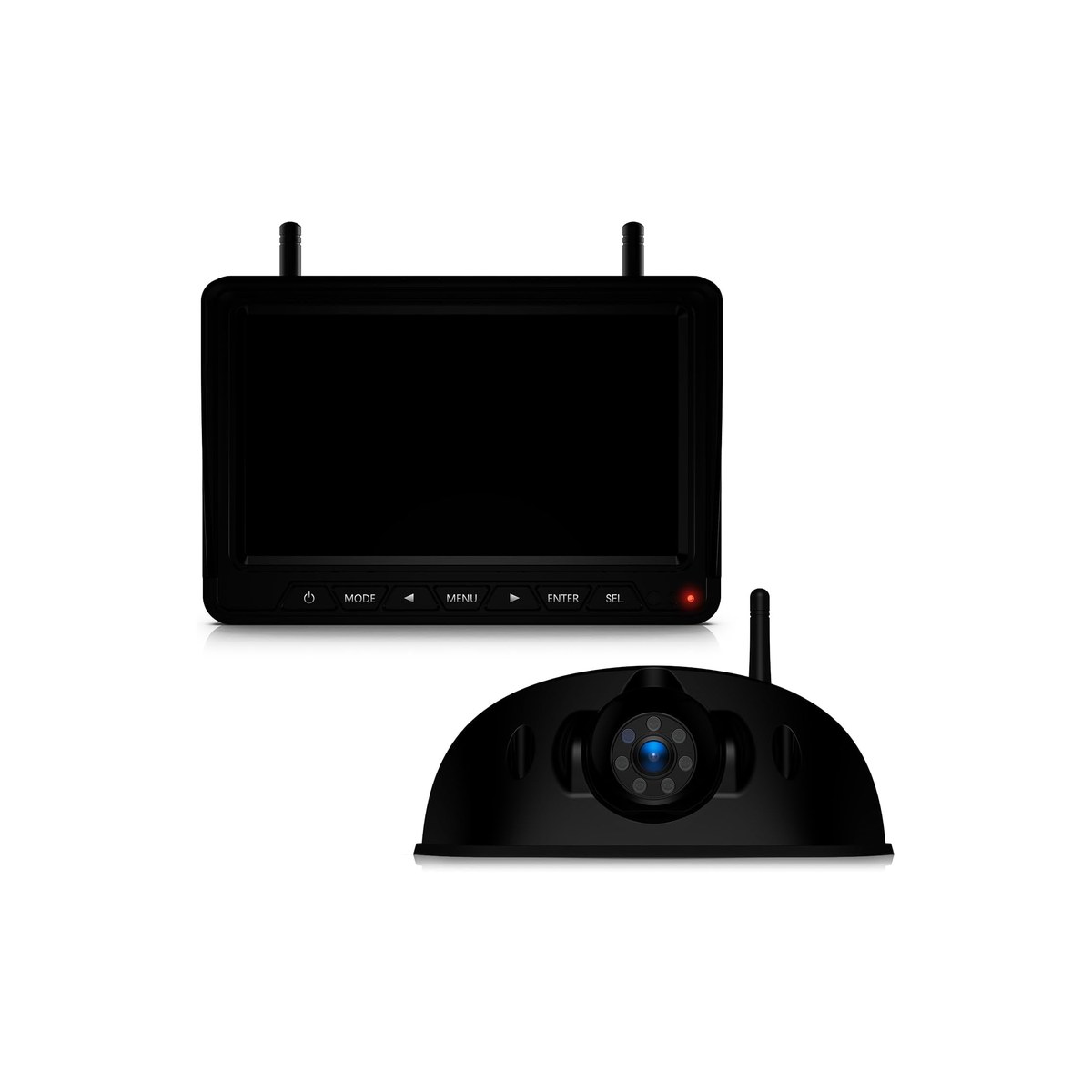
Fookoo 12V Hardwired DVR Camera System, 7-inch IPS Monitor, IP69 Waterproof Cameras, Local SD Loop Recording, up to 4 Cameras, No Internet (ASIN B0CL76NS25)
Zero internet, zero subscription, records locally to a card.
Who it's for: The boondocker or storage-lot owner who wants to record around a parked rig with no internet and no subscription at all, and is fine with evidence after the fact rather than live phone alerts. This is the buyer who distrusts cloud cameras and recurring fees and wants footage saved to a card they hold. Note up front: this is a hardwired DVR system, sold as an RV backup-camera kit, repurposed here as the only true zero-internet option.
What we found: The Fookoo system is the honest answer for no internet whatsoever. It is a 12 to 24-volt hardwired kit, a 7-inch IPS monitor with a built-in DVR, IP69 waterproof cameras on a 2.4 GHz cam-to-monitor link (not wifi, not the internet), with local SD loop recording, support for up to four cameras, and no subscription, at 4.6 stars across nearly 800 ratings for about $126, the highest rating in this guide. Because it is fundamentally an RV backup-camera DVR, it shows and records on the monitor in the rig, with no app, no remote viewing, and no motion alerts to your phone. It needs constant 12-volt power to keep recording while parked.
Bottom line: Buy the Fookoo if you want footage with zero internet and zero fees, and accept a monitor-and-DVR setup instead of phone alerts. It is fundamentally an RV backup-camera kit, here doubling as a parked local recorder off your 12-volt system, so size the card to your check-in habit, because loop recording overwrites the oldest footage. Skip it if you want to check your rig from your phone, which needs a cellular camera. Its recorder lives inside the rig, so a thief cannot pocket it like a battery camera.
Skip this guide if...
Skip this guide if you have reliable wifi and power where you park, in which case any cheap indoor wifi cam or even an old phone will do, and you do not need a rugged off-grid system. Skip it too if what you actually want is a camera to see behind you while driving and backing; that is a backup camera, our sibling Best RV Backup Cameras guide in this Safety and Monitoring section, not a security camera. A security camera earns its place when you leave a rig parked, stored, or boondocked and want to watch it from your phone or record what happens while you are away.
Don't bother with.
- × Skip Buying a 'wireless' camera and expecting it to work with no wifiThis is the defining mistake in the category, and even the top-ranked RV blog makes it by recommending Blink, which needs an always-on wifi connection through its Sync Module. Wireless almost always means wire-free power (a battery), not wire-free internet. Blink, Wyze, eufy SoloCam, and Ring all still need 2.4 GHz wifi or a hotspot to function, so on a no-wifi boondocking site they do nothing. Only a cellular camera with its own SIM, or a hardwired local DVR, works with no internet. Read the connection type, not the word wireless.
- × Skip Buying a cellular camera without checking the LTE signal at the mountA cellular camera is only as good as the cell signal where you mount it, and no solar panel or big battery rescues a camera that cannot reach a tower. Boondocking sites are often chosen precisely because they are remote, which is also where LTE is weakest. Before you rely on a cellular cam, confirm there is usable signal at the exact spot, and favor a multi-carrier SIM (the eufy and Reolink units auto-select among carriers) so you are not locked to the one network that happens to be weak at your site.
- × Skip Assuming a battery or solar camera records 24/7Buyers expect a security camera to record continuously, but every battery and solar camera here, the eufy, both Reolinks, and the Argus, records on motion only, to save power. There is no continuous footage to scrub through, only triggered clips. If you genuinely need 24/7 recording, the only off-grid path is a hardwired DVR like the Fookoo running off your 12-volt system, or a mains-and-PoE setup you will not have while boondocking. Match the expectation to the power source before you buy.
- × Skip Paying for a cloud subscription you do not needMost of these cameras record to a local microSD card or a built-in DVR with no subscription required, yet buyers default to the cloud plan out of habit. The eufy, both Reolinks, the Wyze, and the Fookoo all store locally for free; the cloud plan mostly adds off-site backup and, on some, the smart AI alerts. Watch for the reverse trap too: cameras marketed at RVers, like Waggle, that require a paid plan (about $24.99 a month) to work at all. And check one thing before you count on a fee-free setup: the smart person-and-vehicle detection we recommend for cutting data and false alerts is sometimes the paid upsell, with Wyze Cam Plus the clearest case, so confirm the detection you want is included in the free local tier.
- × Skip Expecting one camera to cover a whole rigA single camera will not cover a 30-foot rig and its surroundings; it watches one angle. Owners who want real coverage run two or three, a door view, a slide or storage-bay view, and a hitch or rear view, which is why systems like the Fookoo support up to four cameras and the cellular cams let you add units to one app. Decide what you actually need to see, the door, the bays, or the whole site, and budget for the number of cameras that covers it, not one magic unit.
- × Skip Pointing it at your neighbors instead of your rigA security camera at a campsite can record the family fifteen feet away, their kids, and their conversations, and that brings real limits. Many parks restrict cameras aimed at common areas or neighboring sites, and audio recording runs into two-party-consent laws in some states. Aim cameras at your own door, bays, and site, angle or turn off audio where you are close to others, and check the campground rules before you mount. A pan-and-tilt camera that sweeps 355 degrees, like the Reolink, is especially easy to point somewhere it should not be.
How we picked.
Sources we read and how we picked
We did not run a lab rack of cameras. We read the RVers who actually live with these systems: the remote-monitoring and no-internet threads on iRV2, Forest River, and Sprinter forums, the off-grid camera write-ups from working full-timers (including the offgridyo guide that currently ranks first for this search), and the cellular-versus-wifi documentation from Reolink, eufy, and Arlo. Then we verified every price, rating, and review count live on Amazon on June 11, 2026.
Our filter was the decision RVers actually face, in order: does it work with no campsite wifi, then what does it cost to run each month, then power and storage, then coverage and mounting. That is why the lineup leads with two true cellular cameras, then a no-fee hotspot camera, a budget wifi cam, and a zero-internet hardwired DVR. Every connection claim was checked against the live listing, because wireless and no-subscription are the two most misleading words in this category.
First, how it connects with no wifi
The single most important question is how the camera connects when you have no campground wifi, and the marketing actively hides it. Wireless almost always describes the power (a battery), not the internet. There are three real connection types: cellular, where the camera has its own SIM and works anywhere with a cell signal; local-only, where a hardwired DVR records to a card with no internet at all; and wifi-dependent, where the camera is useless without a network you supply.
This is where the popular advice fails RVers. The top-ranked blog recommends Blink, then admits its hub needs persistent internet, fine for a full-timer paying for mobile data, useless for a true boondocker. Of our picks, the eufy S330 and Reolink Go PT Ultra are cellular and work with no wifi; the Fookoo DVR is local-only and needs no internet; the Argus 4 Pro and Wyze v4 are wifi-dependent and only work if you run a hotspot. Sort by this first, because it decides whether the camera works at all where you park.
The monthly data cost no vendor leads with
A cellular camera solves the no-wifi problem, but it introduces the cost the vendor pages bury: a data plan. The camera may advertise no subscription, meaning no cloud fee, while still requiring a paid SIM to send video over LTE. Reolink and eufy include a SIM and sell data by the month; reviewers report a 1080p stream can eat a couple of gigabytes quickly. The Arlo Go 2 is the costliest to run because it needs a cellular data plan and pushes an optional but full-featured Arlo Secure plan on top, so it can run up two bills, where the data plan alone is the only truly mandatory one.
Keep the bill down by tuning the camera, not by buying more data. Tight motion zones, person-and-vehicle detection instead of any-motion, and shorter clip lengths cut data use sharply, and a busy roadside site will always cost more than a quiet lot. Roughly a one-to-three-gigabyte monthly plan covers a sensibly-tuned single camera, which is where the five-to-fifteen dollars lands; treat unlimited-data claims on cheap RV-branded cams skeptically, because that is where the mandatory subscription often hides. And mind the limit of cellular itself: if the data plan lapses or you park where there is no signal, the camera keeps recording to its card but you lose live viewing and phone alerts until you top up or move back into range, so a cellular cam records continuously yet only protects, in the alert-me-now sense, when it has both data and signal.
Power, solar, and where the video lives
Off-grid power shapes the choice. Battery cameras with a solar panel, the eufy, the Reolinks, and the Argus, can run indefinitely if the panel gets a couple of hours of sun a day, but they record on motion only, never 24/7, to conserve power. In cold storage the math changes: lithium cells will not charge below roughly 40 degrees and a Blink, for example, is rated only to minus 4, so check each camera's own temperature spec, because one that sails through summer can die over a northern winter. A hardwired DVR sidesteps all of this by running off your 12-volt system, as long as you keep the house battery up.
On storage, prefer cameras that record locally so you own the footage and pay no fee: a microSD card in the eufy, Reolink, or Wyze, or the built-in DVR in the Fookoo. Cloud plans mostly add off-site backup, and that points to the one real weakness of local-only storage: a thief who grabs a battery camera grabs the only copy of the footage of themselves doing it. If theft is your main worry, a cloud backup plan or a high, hard-to-reach mount is the one place we would actually pay the monthly fee. Check the card ceiling (the Reolink Go PT Ultra takes up to 512GB) and remember that motion-only clips stretch a card far further than continuous recording would.
Coverage, mounting, and false alerts
One camera does not secure a rig; it watches one angle. Owners who want real coverage run a door camera, a storage-bay or slide camera, and a rear or hitch view, which is why the Fookoo supports four cameras and the cellular cams let you add units to one app. Decide what you need to see before you buy: deterrence at the door, the bays, or the whole site, then buy the number of cameras that covers it rather than expecting one unit to do everything.
Mount without butchering the rig. Magnetic bases need a steel plate stuck to fiberglass or aluminum skin, and highway vibration loosens cheap mounts, so favor rubber-gasketed brackets and check tightness. At a campsite, trees, traffic, and flags trigger far more false alerts than a driveway does, so set activity zones and person-or-vehicle detection to keep the notifications, and on cellular the data, under control. And confirm the camera can actually see what matters: a low car-style mount shows you a bumper, not the approach to a door.
FAQs.
Q01 Do RV security cameras work without wifi?
+
Q02 What is the best RV security camera with no monthly subscription?
+
Q03 How much does a cellular RV security camera cost per month?
+
Q04 Can a battery or solar RV security camera record 24/7?
+
Q05 How many security cameras do I need for an RV?
+
Q06 How do I mount an RV security camera without drilling?
+
Q07 Will an RV security camera survive winter storage?
+
If you, then this.
- IF you park or boondock with no campsite wifi and want the bestGET eufy 4G LTE Cam S330 (B0CZ6KW4NP; cellular with automatic wifi backup, card and solar included)$199.99 →
- IF you want true no-wifi cellular plus pan-and-tilt coverage for lessGET Reolink Go PT Ultra (B087M67PZQ; 4K cellular, 355-degree pan, SIM included)$179.99 →
- IF you reliably run a wifi hotspot and want a no-fee solar cameraGET Reolink Argus 4 Pro (B0D8HY411D; 4K dual-lens, no subscription, needs your wifi)$179.99 →
- IF you already supply wifi and power and want the cheapest eyesGET Wyze Cam v4 (B0CJ9YX7DG; 2.5K, local card, 12,000+ reviews)$35.97 →
- IF you want zero internet and zero subscription, recording locallyGET Fookoo 12V Hardwired DVR (B0CL76NS25; local SD, up to 4 cameras, no fees)$125.99 →
- IF you only want to see behind you while driving and backingGET nothing here; see our Best RV Backup Cameras guide insteadvaries →
RV & Van Gear: The Complete Guide
The whole-rig picture →Every system in a van, RV, or camper, organized in one place, with the safety and weight floor and the one guide we trust for each.