Best RV Air Conditioners: 5 for Rooftop, Off-Grid, and Everything Between (2026)
The first question about an RV air conditioner is not which brand, it is whether you have shore power. A rooftop unit pulls 1,200 to 1,800 watts running with a startup surge near 3,000 watts, so you cannot run one off solar and a battery for long. It needs a 30-amp hookup, a generator, or a soft start and a small generator. If you camp off-grid, the honest answer is a portable that cools one zone, or no AC at all. We read the RV and van owners who live with these units and verified every price live on Amazon, June 11, 2026. The split is the whole guide: rooftop if you plug in, a portable if you do not, and a soft start if you want a rooftop to run off a generator. And the cheapest fix is often upstream: a well-insulated van with a roof vent fan frequently needs no rv air conditioner at all.
- 01 RecPro 13.5K Low Profile Rooftop (B089N826FY) , top pick, the quiet vanlife rooftop with a heat pump, ~$1,450
- 02 Dometic FreshJet 3 13.5K (B0BGYXHZ72) , best value rooftop, trusted, lighter, 238 reviews, ~$855
- 03 Coleman-Mach 15 Plus 15K (B0C8PBYT5K) , the loud, bombproof legacy workhorse, ~$1,045
- 04 EcoFlow Wave 3 Portable (B0F4D4Z18S) , best off-grid portable, cools a zone for hours, ~$899
- 05 Zero Breeze Mark 3 (B0F8Q5JD7V) , the truly cordless ultralight, niche and pricey, ~$1,399
How they compare.
| Rank | Product | Best for | Price | Our score |
|---|---|---|---|---|
| 01 | RecPro 13.5K Low Profile Rooftop (B089N826FY)
Top Pick
| best overall, quiet, low-profile, heat pump (shore power) | $1,449.95
Buy → | 9.0/10 |
| 02 | Dometic FreshJet 3 13.5K (B0BGYXHZ72) | best value rooftop, trusted, lighter, most reviews | $854.98
Buy → | 8.4/10 |
| 03 | Coleman-Mach 15 Plus 15K (B0C8PBYT5K) | legacy workhorse, most airflow, bombproof, but loud | $1,045.47
Buy → | 8.3/10 |
| 04 | EcoFlow Wave 3 Portable (B0F4D4Z18S) | best off-grid portable, cools a zone, honest limits | $899.00
Buy → | 7.8/10 |
| 05 | Zero Breeze Mark 3 (B0F8Q5JD7V) | truly cordless ultralight, niche, thin reviews | $1,399.00
Buy → | 7.4/10 |
Prices are current Amazon prices at time of publication and can change. Scores reflect our editorial evaluation, not vendor input.
Our #1 pick: RecPro RV Air Conditioner 13.5K BTU Low Profile Non-Ducted with Heat Pump (widely regarded as a rebadged Houghton, quiet, 110-120V, for campers and RVs, ASIN B089N826FY).
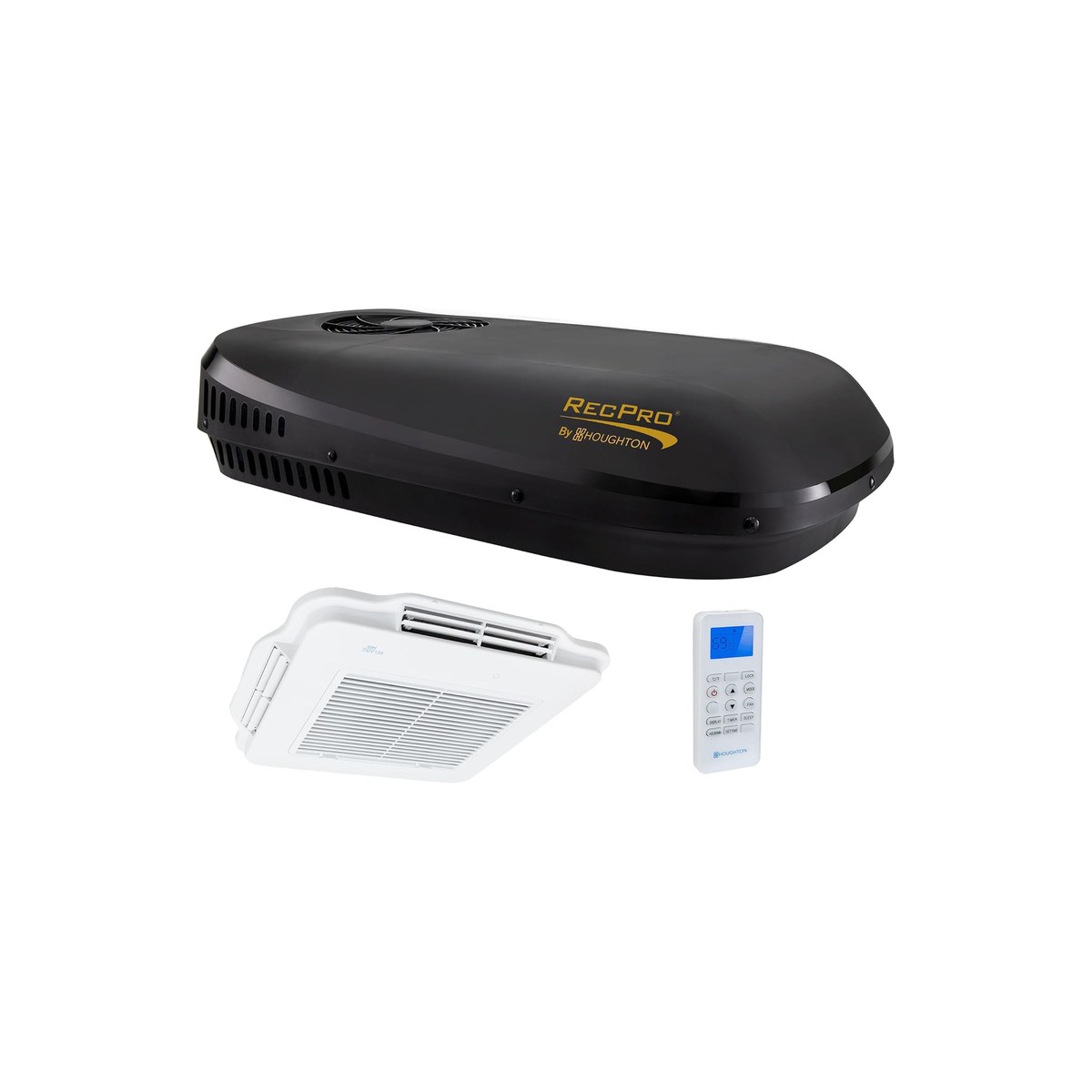
RecPro RV Air Conditioner 13.5K BTU Low Profile Non-Ducted with Heat Pump (widely regarded as a rebadged Houghton, quiet, 110-120V, for campers and RVs, ASIN B089N826FY)
The quiet, low-profile rooftop the vanlife crowd actually buys.
Who it's for: The RV or van owner with shore power or a generator who wants the best rooftop air conditioner and cares about noise. This is the buyer who sleeps under the unit and is tired of a roaring legacy AC, who values a low-profile shape that does not catch wind or add height, and who wants a heat pump so one unit both cools in summer and takes the chill off in shoulder season. It is the low profile rv air conditioner the vanlife forums recommend.
What we found: The RecPro 13.5K, widely regarded as a rebadged Houghton, is the unit that keeps coming up when owners rip out a loud Dometic or Coleman. It is genuinely quieter and draws notably less power while running, so it is friendlier to a generator or a big inverter than a legacy rooftop. It is low-profile, non-ducted, and includes a heat pump that both cools and heats. At about $1,450 it is the priciest rooftop here, with 4.5 stars across 64 ratings. The honest catch is the same as every rooftop: it runs on 110 to 120 volts, so it still needs shore power or a generator, not solar alone.
Bottom line: If you have shore power or a generator and want the best rooftop air conditioner, buy the RecPro 13.5K: quieter, lower-draw, and a heat pump on top. It is the rooftop to own if you sleep under it or run a generator you would rather not hear. Skip it if your budget is tight, where the Dometic FreshJet costs $600 less, or if you camp off-grid, where no 120-volt rooftop will run on solar alone and a portable is the honest answer.
- + Genuinely quieter than a legacy Dometic or Coleman, with a lower running draw; the unit owners upgrade to
- + A heat pump that both cools in summer and takes the chill off in shoulder season, in one rooftop unit
- + Low-profile and non-ducted with a notably lower running amp draw (it still needs a soft start to start on a small generator); 4.5 stars across 64 ratings
- × At about $1,450 it is the priciest rooftop here
- × Still a 110 to 120-volt unit: it needs shore power or a generator, and will not run on solar alone
- × A newer name than Dometic or Coleman, so fewer reviews; and like any rooftop, fitting it is a two-person roof job, so budget pro install if you are not comfortable up there
Runner-up: Dometic FreshJet 3 Series 13.5K BTU RV Rooftop Air Conditioner (non-ducted, lighter and higher-airflow than the Brisk II, white, ASIN B0BGYXHZ72).
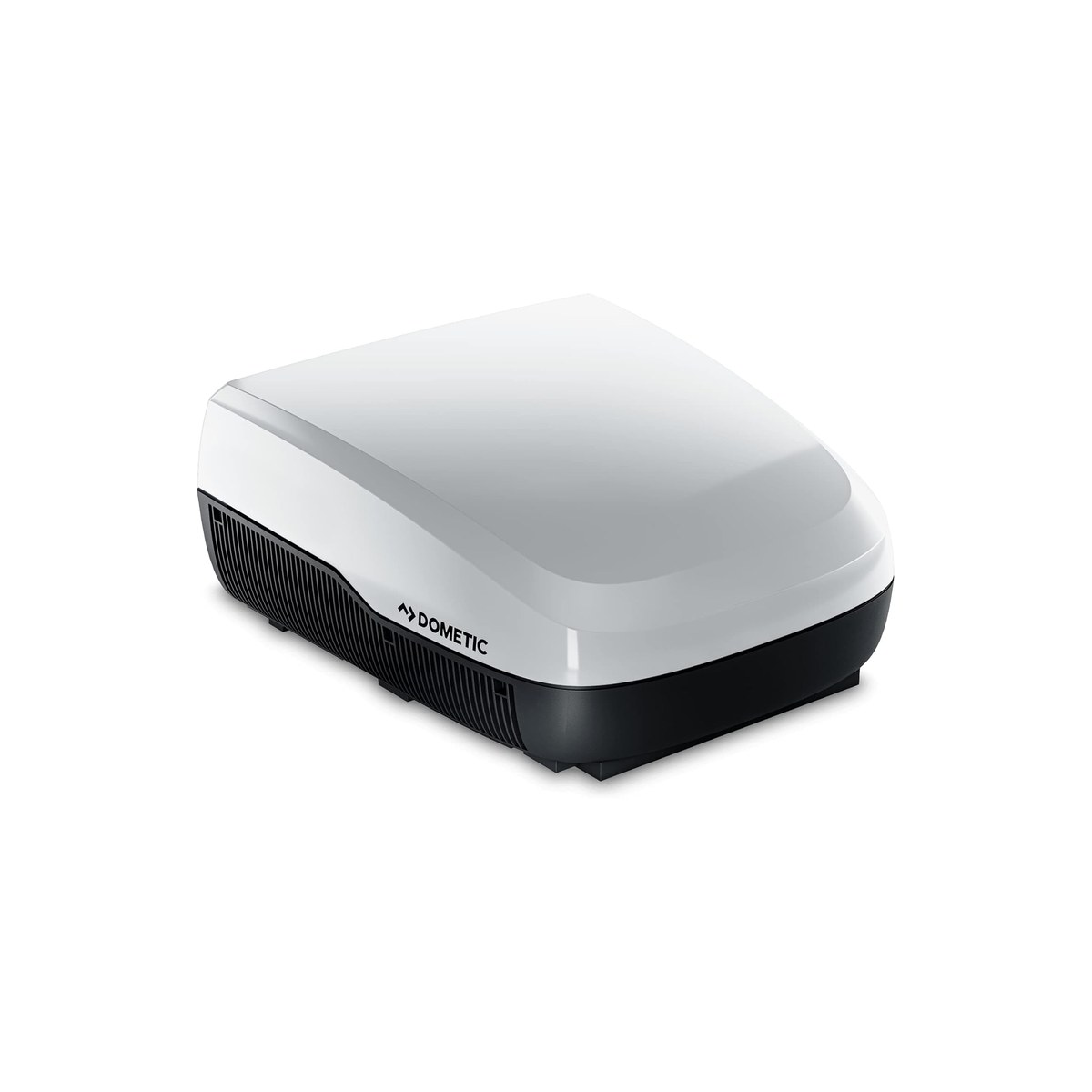
Dometic FreshJet 3 Series 13.5K BTU RV Rooftop Air Conditioner (non-ducted, lighter and higher-airflow than the Brisk II, white, ASIN B0BGYXHZ72)
The trusted, lighter value rooftop most RVs should buy.
Who it's for: The RV owner with shore power who wants a proven, well-priced rooftop from a name they trust, without paying the upcharge for the quietest unit. This is the buyer replacing a dead factory AC or outfitting a trailer, who wants Dometic reliability and parts availability, a 13.5K unit that cools a typical RV, and the most reviews of any pick here, and who will accept a bit more noise than the RecPro to save real money.
What we found: The Dometic FreshJet 3 is the value rooftop, and the dometic rv air conditioner most buyers actually land on. It is Dometic's newer line, 14 percent lighter than the old Brisk II with comparable airflow, a 13.5K BTU non-ducted rooftop for about $855. At 4.0 stars across 238 ratings it has by far the deepest track record in this guide, which matters for a big-ticket appliance. It is not as quiet as the RecPro and it is still a 120-volt unit that needs shore power or a generator, but as the trusted middle of the road it is hard to beat on value.
Bottom line: Buy the Dometic FreshJet 3 if you want a proven, affordable rooftop and do not need the RecPro's quiet or heat pump. It is the safe, well-reviewed default at about $855, lighter and better than the old Brisk it replaces. Spend up for the RecPro if noise matters or you want a heat pump; drop to a portable only if you camp off-grid, because this, like every rooftop, needs shore power or a generator.
- + The deepest track record here: 4.0 stars across 238 ratings, on the brand whose parts every RV dealer stocks
- + Newer FreshJet 3 design: about 14 percent lighter than the old Brisk II with comparable airflow, 13.5K BTU non-ducted
- + About $855, roughly $600 less than the RecPro, the value sweet spot of the rooftop tier
- × Not as quiet as the RecPro, and no heat pump at this trim
- × Still 120-volt: needs shore power or a generator, not solar
- × A standard-profile rooftop, taller than the low-profile RecPro
Budget pick: EcoFlow Wave 3 Portable Air Conditioner, 6,100 BTU Cooling / 6,800 BTU Heating (battery-ready, app control, for vanlife and RVs, ASIN B0F4D4Z18S).
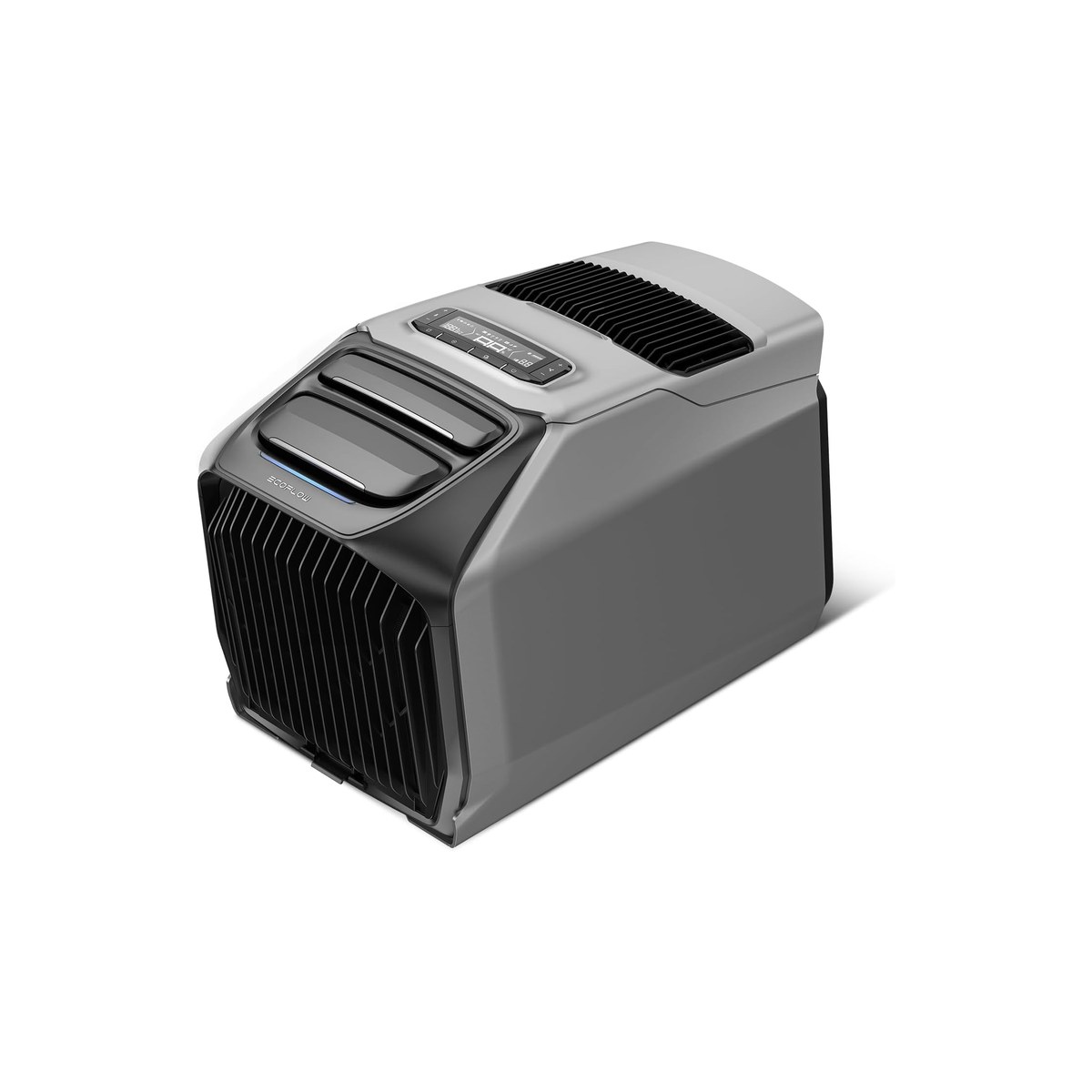
EcoFlow Wave 3 Portable Air Conditioner, 6,100 BTU Cooling / 6,800 BTU Heating (battery-ready, app control, for vanlife and RVs, ASIN B0F4D4Z18S)
The off-grid portable that cools a workspace, not the whole rig.
Who it's for: The off-grid van camper or boondocker who cannot run a rooftop and wants to cool one zone, a bed or a desk, for a few hours on battery. This is the buyer who has accepted that a rooftop needs shore power, who wants a self-contained portable rv air conditioner they can run from a power station, and who values that it doubles as a heater, as long as they go in clear-eyed about the runtime and the price per BTU.
What we found: The EcoFlow Wave 3 is the best-supported portable, a 6,100 BTU unit (with 6,800 BTU of heating) that cools a van zone fast. At about $899 for the unit it is the volume leader, with 3.9 stars across 65 ratings. The honest limits are why the rating is not higher: it is expensive per BTU, the add-on battery costs hundreds more, and runtime is short, up to about 8 hours in eco mode but only roughly 1.5 to 2 hours at full cooling per battery. Direct solar input is too unstable to run the compressor, so you charge the battery from solar, then cool off the battery. It cools a zone, not a whole rig.
Bottom line: Buy the EcoFlow Wave 3 if you camp off-grid and want to cool a sleeping or working zone for a couple of hours without shore power. It is the most capable, best-supported portable, and it heats too. Go in knowing the trade: short runtime at full cooling, a pricey add-on battery, and solar that charges it rather than runs it directly. If you have shore power, a rooftop cools far more for the money; if you barely need cooling, a vent fan may do.
- + Self-contained 6,100 BTU portable that cools a van zone fast, and reverses to a 6,800 BTU heater
- + Runs up to about 8 hours on its battery in eco mode, but only roughly 1.5 to 2 hours at full cooling per battery; 3.9 stars across 65 ratings
- + No install: it cools a sleeping or working zone from a power station, the honest off-grid answer when a rooftop is impossible
- × Expensive per BTU, and the add-on battery costs hundreds more
- × Short runtime at full cooling, and direct solar is too unstable to run the compressor, so you charge the battery from solar, then cool off it
- × Cools one zone, not a whole rig; 32 pounds and it eats floor space
Also worth considering.
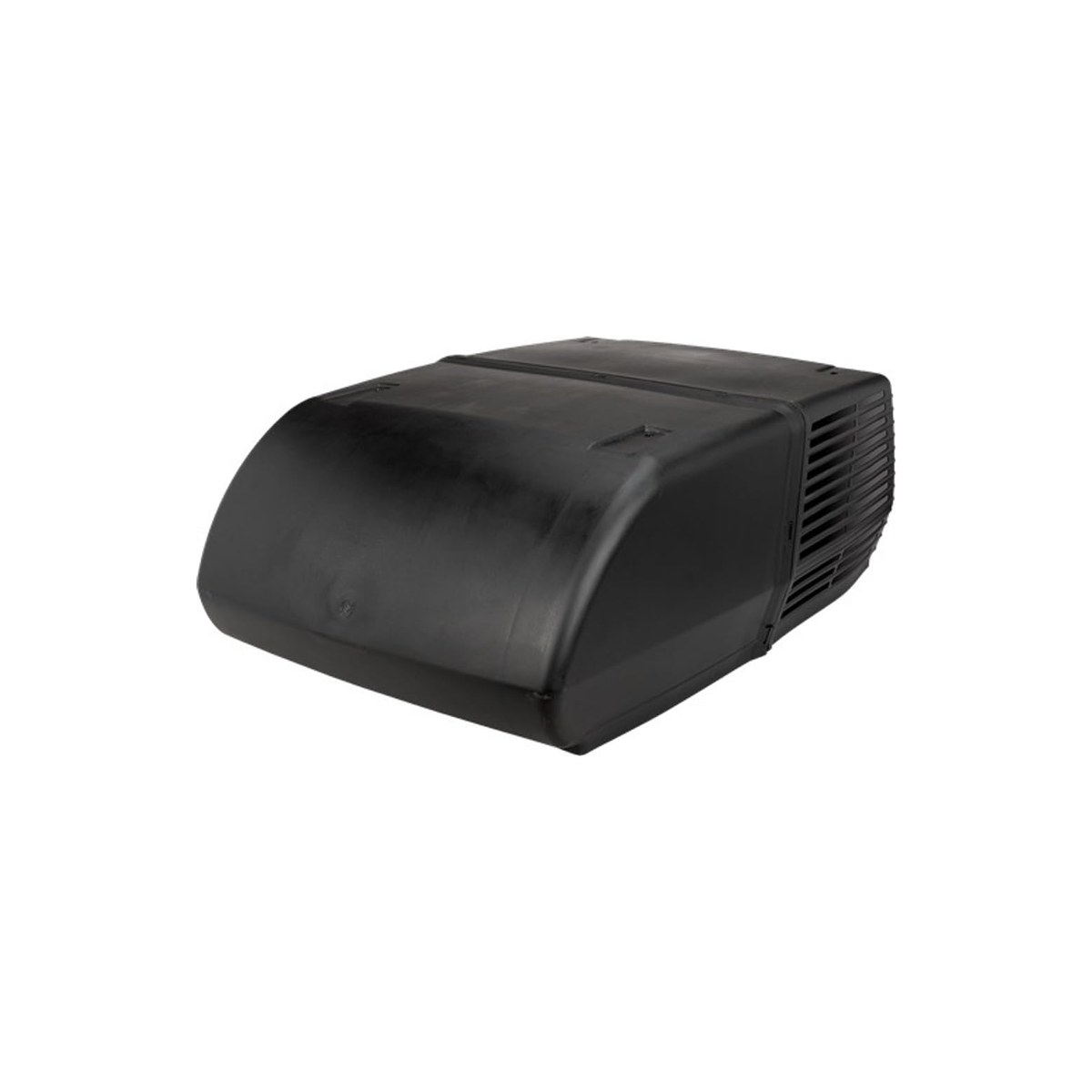
Coleman-Mach 15 Plus 15,000 BTU RV Rooftop Air Conditioner (highest-airflow legacy workhorse, bombproof and serviceable anywhere, black, ASIN B0C8PBYT5K)
The loud, bombproof legacy rooftop that just keeps working.
Who it's for: The RV owner who wants maximum cooling and decades-proven reliability, and does not mind noise. This is the buyer with a bigger rig or a hot climate who wants the most airflow they can get, values that Coleman-Mach parts are on every RV-dealer shelf in the country, and would rather have a loud workhorse that runs for fifteen years than a quieter unit with a shorter track record. The rv air conditioner coleman mach buyers have trusted for decades.
What we found: The Coleman-Mach 15 Plus is the legacy high-airflow workhorse, a 15,000 BTU rooftop that moves more air than almost anything here. It is bombproof and serviceable anywhere, which is why it is still a default on new RVs. The catch is noise: the Mach 15 is one of the loudest units on the market; Coleman publishes no decibel rating, but owners consistently report it as noticeably louder than the RecPro, so light sleepers should not put it over the bed. At about $1,045 with 4.5 stars across 93 ratings it is a proven buy for cooling power, not for quiet. Like the others it is 120-volt and needs shore power or a generator.
Bottom line: Choose the Coleman-Mach 15 Plus if you want the most cooling and the most bulletproof, serviceable rooftop, and noise does not bother you. It is the 15K workhorse for a big rig or a hot climate. Skip it if quiet matters, where the RecPro is far better, or if you want lighter and cheaper, where the Dometic FreshJet wins. If you go this route, a soft start makes even this big unit easier on a generator.
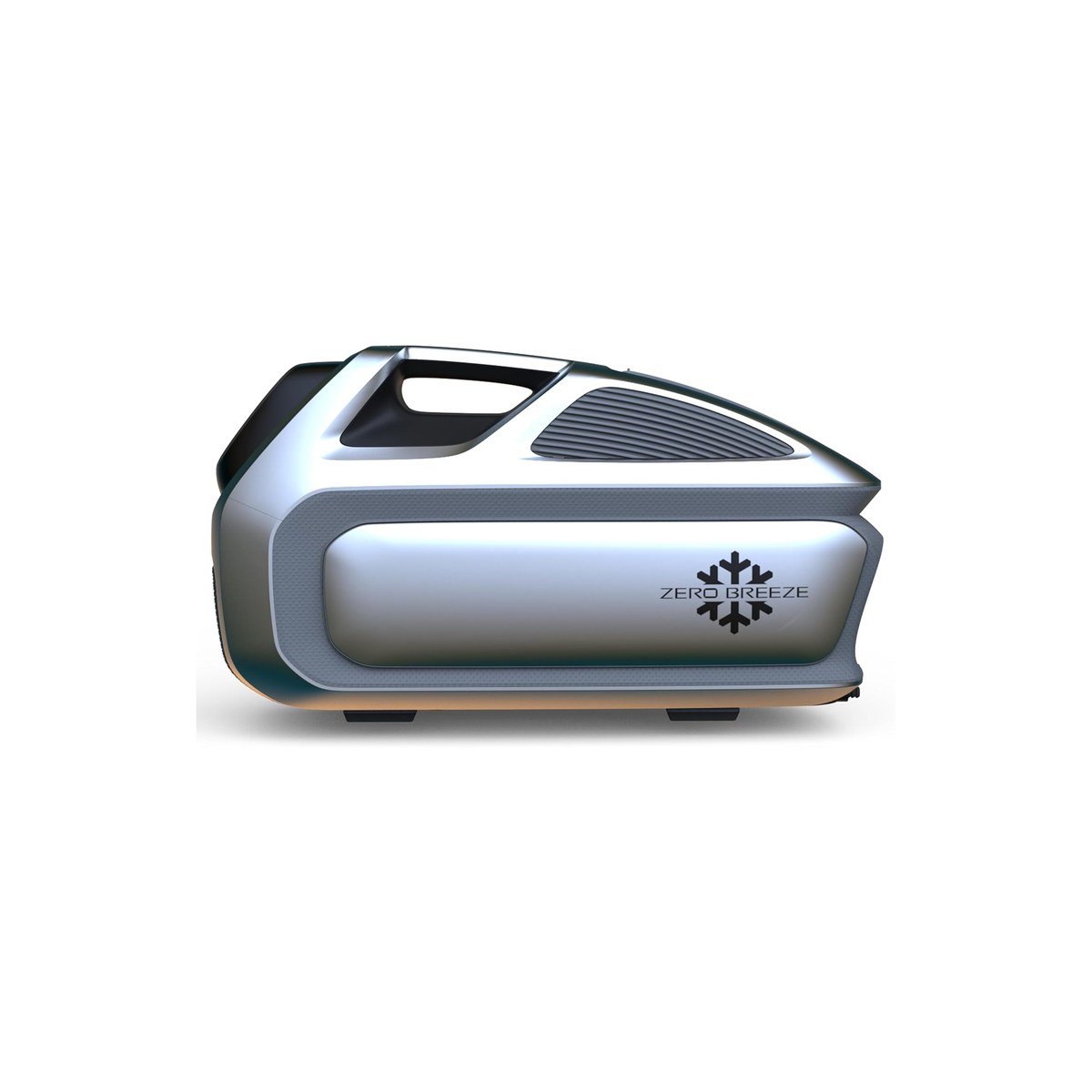
Zero Breeze Mark 3 Portable Air Conditioner, 5,280 BTU (22-pound suitcase-style, battery-ready for cordless use, battery sold separately, ASIN B0F8Q5JD7V)
The truly cordless one, if you accept its price and limits.
Who it's for: The camper who wants the most portable, grab-and-go cooling there is, a 22-pound suitcase-style unit you can carry to a tent, a truck bed, or a van bunk and run off its own battery. This is the buyer who prizes true portability over value, who already understands that cordless cooling is expensive and limited, and who wants the lightest real AC made rather than the most BTU per dollar.
What we found: The Zero Breeze Mark 3 is the cordless specialist, a 22-pound, 5,280 BTU portable built around its own removable battery for genuinely untethered cooling. It is the lightest real AC here and the most portable. But it is the hardest pick to recommend on the numbers: the battery is sold separately and adds roughly $700, so true cordless use is about $2,100 all-in, runtime is a few hours, it is expensive per BTU, and Zero Breeze sells mostly direct, so the Amazon listing is thin at 3.5 stars across only a handful of ratings. It is a niche answer for true portability, not a value buy.
Bottom line: Consider the Zero Breeze Mark 3 only if genuine cordless portability is the whole point and budget is not. It is the lightest, most carry-anywhere AC made, and nothing else here matches that. But for most people the EcoFlow Wave 3 cools more for less with a deeper track record, and a rooftop cools far more if you have power. Go in knowing the Amazon listing is new and thin, the battery adds about $700 for cordless use, and the runtime is short.
Skip this guide if...
Skip this guide, or at least an AC, if you do not actually need one. In a mild climate, or in a van you have insulated well and fitted with a roof vent fan, you may be comfortable without any air conditioner, for a fraction of the cost, weight, and power. If you only camp a few warm weekends a year, a vent fan and shade may be enough. And if you boondock off-grid full time, be honest about the power math before you buy a rooftop: there is no solar-and-battery setup that runs a 120-volt rooftop AC overnight without a very large, expensive bank. An AC earns its place when you camp in real heat, have a way to power it, and a vent fan alone is not enough.
Don't bother with.
- × Skip Expecting to run a rooftop AC off solar and a batteryThis is the myth the whole category is built on, and the numbers kill it. A 13.5K to 15K rooftop pulls 1,200 to 1,800 watts running with a startup surge near 3,000 watts, which means a 3,500 to 4,000-watt inverter just so it does not trip, and a 15K unit can pull well over 100 amps from a 12-volt bank when the compressor kicks in. One overnight is roughly 7,000 watt-hours, around 650 to 700 amp-hours of battery for the AC alone, and solar underperforms in the exact heat you need it. Daytime solar can offset some draw, but overnight off-grid on a 120-volt rooftop is not realistic. For off-grid, use a portable or a true 12V/48V DC unit.
- × Skip A single-hose home portable AC in a vanA residential single-hose portable air conditioner actively fights you in a small space. It exhausts hot air out one hose, which creates negative pressure that sucks hot, humid outside air back in through every crack and seam, so net cooling is poor. The portables here (EcoFlow, Zero Breeze) are designed for the job; a $300 home single-hose unit is a known disappointment in a van. If you want a portable, buy one built for it, and accept it cools a zone, not the rig.
- × Skip Oversizing the BTU for a small vanBigger is not better in a small, insulated van. An oversized AC short-cycles, blasting cold then shutting off before it dehumidifies, which leaves the cabin clammy and wastes power on every restart surge. A 13,500 BTU rooftop is plenty for most vans and many RVs; a 15,000 BTU unit is for big rigs or brutal heat. Match the BTU to the space and your insulation, do not just buy the biggest number, and remember that better insulation lets a smaller unit keep up.
- × Skip A residential window AC as your RV air conditioner window unitHanging a home window air conditioner off a van or trailer is a DIY hack that rarely ends well. It is not built for vibration, it is awkward to mount and seal, it blocks a window, and it is loud. A few teardrop and budget-trailer owners make it work, but for almost everyone a real rooftop or a purpose-built portable is safer, quieter, and better sealed. Treat the window-unit route as a last resort, not a plan.
- × Skip Skipping a soft start if you'll run it on a generator or inverterIf you ever want to run a rooftop off a small generator or an inverter, a soft start is the smartest $300 you can spend. A Micro-Air EasyStart cuts the startup surge by up to about 70 percent, which is the difference between a 13,500 BTU rooftop that will not start on a 2,000-watt generator and one that runs on it with power to spare. Skipping it means buying a much bigger, louder, heavier generator, or an oversized inverter, to handle a surge you could have tamed for a fraction of the cost.
How we picked.
Sources we read and how we picked
We did not bolt five ACs to five roofs in a lab. We read the people who live with these units: the off-grid power write-ups on EXPLORIST.life and FoxRVTravel, the RecPro-versus-legacy threads on the Forest River, Escape Trailer, and Airstream forums, and the portable-AC reviews from owners who actually camped with them. Then we verified every price, rating, and review count live on Amazon on June 11, 2026.
Our filter was Amazon-buyable units sorted by the decision that actually matters, shore-power-or-not, then by noise, BTU, and price. That is why the lineup is three rooftops (the quiet RecPro, the value Dometic, the legacy Coleman), one off-grid portable, and one cordless ultralight. The truly off-grid DC rooftops (RecPro 48V, Velit, Nomadic) are real but mostly sold direct with thin or no Amazon reviews, so we name them honestly rather than score an unproven listing.
The off-grid truth: solar alone won't sustain a rooftop
Here is the number every marketing page dances around. A 13.5K to 15K BTU rooftop air conditioner pulls 1,200 to 1,800 watts while running, with a startup surge near 3,000 watts. To run it off batteries you need an inverter in the 3,500 to 4,000-watt class just so the surge does not trip it, and when the compressor kicks in a 15K unit can pull well over 100 amps from a 12-volt bank.
Over one night, that is roughly 7,000 watt-hours, on the order of 650 to 700 amp-hours of 12-volt battery for the AC alone, before any other load. Solar cannot realistically backfill it: you would need 1,000 to 2,000 watts of panels, and they underperform in the heat when you need them most. Daytime solar can offset some of the draw, which helps because you need cooling when the sun is up, but overnight off-grid on a 120-volt rooftop is not realistic for most setups. This is the honest core of the whole guide.
Rooftop vs portable: the core decision
A rooftop rv air conditioner is the real appliance: 13,500 to 15,000 BTU, it cools the whole rig, and it mounts in a roof opening (often the standard 14 by 14-inch vent hole, so you trade a fan spot, or a dedicated cutout). It is also permanent, heavy, and tethered to 120-volt power. A standard rv air conditioner roof unit is the right answer if you have shore power or run a generator.
A portable is the off-grid compromise. It needs no install, runs from a power station, and cools a single zone, a bed or a desk, but it is weak per BTU, short on runtime, and must vent its hot air and condensate out a window. The honest framing: rooftop if you plug in, portable if you do not. And a portable cools a zone for a few hours, not a rig all night, so size your expectations accordingly.
BTU, fit, and ducted vs non-ducted
On sizing, a 13500 btu rv air conditioner cools most vans and many RVs; step up to a 15,000 BTU unit only for a big rig or brutal heat, because an oversized AC short-cycles and leaves the cabin clammy. Better insulation lets a smaller unit keep up, which is the cheapest way to need less AC. A 12v rv air conditioner or 48-volt DC unit exists for off-grid, but the good ones are pricey and mostly specialty-channel.
On fit, vans almost always run non-ducted (air dumps straight down through a ceiling plenum), while big motorhomes use a ducted rv air conditioner that distributes through ceiling ducts; the listing tells you which. Confirm your roof opening and footprint before buying, budget for a proper gasket and seal, and know that fitting a 70-to-100-pound unit is a two-person roof job, so plan on pro install if you are not comfortable up there. Brands beyond our picks worth knowing: the Furrion Chill Cube and the older Dometic Brisk II and Coleman Mach 3 Plus are all legitimate rooftops too.
Soft starts and the generator math
The startup surge, not the running draw, is what kills small generators and inverters. A soft start for rv air conditioner, like the Micro-Air EasyStart, cuts that inrush by up to about 70 percent. The practical payoff: with a soft start, a 13,500 BTU rooftop will start and run on a single 2,000-watt inverter generator, the quiet kind, instead of needing a 3,500-watt-plus open-frame unit.
If you plan to run a rooftop anywhere but a 30-amp hookup, a soft start is the smartest $300 in this whole category. It shrinks the generator for rv air conditioner use you need, makes a modest inverter viable for short bursts, and reduces wear on the compressor. It is not an AC, but for off-grid-ish rooftop use it is the single smartest add-on, which is why we feature it even though it is an accessory.
Do you even need an AC? (and working from the rig)
The most honest thing a cooling guide can say is that the cheapest fix is often upstream. Good insulation keeps heat out, and a roof vent fan exhausts the hot ceiling air and pulls a breeze through, and in dry or mild climates they keep a moving or shaded van comfortable without an AC at all, for a fraction of the cost, weight, and power. For a large share of van builds in those climates, a vent fan and insulation beat a $1,500 AC plus a $3,000 battery bank. In humid or sustained heat, though, ventilation is not enough and you still need the compressor. See our van insulation, roof vent fan, and RV dehumidifier guides, the other legs of the Climate and Air system.
If you work from the rig, treat cooling as a productivity tool: a hot cabin throttles a laptop and your focus. The smartest work-from-rig play is often a portable aimed at the desk to cool a single zone for a few hours of deep work, rather than trying to cool the whole van off your battery while a laptop and Starlink draw from the same bank. And if you lean on a generator for a rooftop, remember it is loud on calls, one more reason a soft start plus a quiet inverter generator, or a portable, fits the working nomad.
FAQs.
Q01 What is the best RV air conditioner?
+
Q02 Can you run an RV air conditioner on solar and a battery?
+
Q03 Rooftop vs portable RV AC: which should I get?
+
Q04 How many BTU does my RV air conditioner need?
+
Q05 What size generator do I need to run an RV AC, and do I need a soft start?
+
Q06 Is a 12V RV air conditioner worth it?
+
Q07 Will a rooftop RV air conditioner fit my roof?
+
Q08 Do I really need an air conditioner in my van?
+
If you, then this.
- IF you have shore power or a generator and want the best, quietest rooftop with a heat pumpGET RecPro 13.5K Low Profile Rooftop (B089N826FY; rebadged Houghton, low running amp draw, 110-120V)$1,449.95 →
- IF you want a proven, affordable rooftop from a trusted brandGET Dometic FreshJet 3 13.5K (B0BGYXHZ72; lighter than the Brisk II, 238 reviews)$854.98 →
- IF you want maximum cooling and bulletproof reliability and do not mind noiseGET Coleman-Mach 15 Plus 15K (B0C8PBYT5K; highest airflow, parts everywhere, loud)$1,045.47 →
- IF you camp off-grid and want to cool one zone for a few hours on batteryGET EcoFlow Wave 3 portable (B0F4D4Z18S; 6,100 BTU, battery-ready, also heats)$899.00 →
- IF you want to run a rooftop off a small generator or inverterGET Micro-Air EasyStart Breeze soft start (B0DKQFTHGX; cuts the startup surge ~70%) plus any rooftop above$319.00 →
- IF you might not need an AC at all in a well-built vanGET a roof vent fan plus good insulation first (see our guides), which often beats an AC plus battery bankvaries →
RV & Van Gear: The Complete Guide
The whole-rig picture →Every system in a van, RV, or camper, organized in one place, with the safety and weight floor and the one guide we trust for each.
- Calculating RV air conditioner power consumption (off-grid math) · EXPLORIST.life
- Running RV air conditioning on batteries and solar · Fox RV Travel